with Long Seh Ling, Gan Jason Yew Seng and Loke Wei Qi
If someone were to ask any scientist to sum up his reason for doing science in one word, the answer would most likely be : CURIOSITY
In this blog post Yek Sze Huei and coauthors tell us how their curiosity resulted in their latest publication out in Insectes Sociauxsurveying ant predation on turtle nesting beaches which resulted in an innovative elevated incubation system important for sea turtle conservation.
Ant infestations have been detected on sea turtle nesting beaches since the early 1990s on the East Coast of Peninsular Malaysia. Sea turtle conservationists take note of these infestations but rarely keep a consistent record of these lesser-known interactions. This had piqued the interest of an intern at Lang Tengah Turtle Watch (LTTW), a sea turtle conservation organization, to work on his invasive ant research during his internship.
Jason: My eyes lit up when Sze Huei told me about the opportunity in 2019. “There’s a sea turtle NGO on Lang Tengah Island,” she said. “Maybe get to know them and the island and it’ll make your job of collecting ant samples a bit easier?” Next thing you know, I’m on a small speedboat heading for a remote island in the South China Sea. During the day, I was making sure my pitfall traps weren’t flooded by unpredictable rains and at nighttime, I was patrolling nesting beaches, ensuring sea turtle mothers were free from disturbance and their eggs safe from poaching.
Foto 1: The hatchery where ant predation was detected. Jason Gan@LTTW
Jason: This led me to becoming a full-time sea turtle conservationist in 2020 after concluding my research with Sze Huei on yellow crazy ants (Anoplolepis gracilipes) on Lang Tengah Island. In 2021, while excavating green sea turtle (Chelonia mydas) nests on one of the nesting beaches in mainland Terengganu, Malaysia, we stumbled upon a shocking but fascinating discovery: sea turtle hatchlings (some even still alive) were being eaten by ants. I had to get in touch with Sze Huei – there were so many questions that needed to be answered!
Foto 2: D. laevigatus ants attacking newly emerged hatchlings. Photo credit Jason Gan@LTTW
Foto 3: Close up of D. laevigatus ants attacking newly emerged hatclings. Photo credit Long Seh Ling@LTTW
The dual interests of Jason connected Sze Huei Yek (his academic supervisor) and Seh Ling Long (his workplace supervisor) with the hopes of getting a clearer picture of the infestation pattern, factors of predation and the ant species responsible for these attacks.
Hence the birth of this short report that sheds light on the impact of ant predation on sea turtle eggs and hatchlings on the East Coast of Peninsular Malaysia, a critical nesting site for green and hawksbill turtles.
We contacted sea turtle conservation NGOs that keep consistent records and were willing to share their data with us — many expressed interest. However, only some kept the same data quality we required to compute ant predation rate. During our time of data collection, Bubbles Dive Resort, a small sea turtle conservation organization, was experiencing heavy ant infestation and was trying out an innovative ant-proof incubation method.
Wei Qi: During the regular nesting years there usually weren’t any ant predations on the project site at Bubbles Dive Resort. Predation began in June 2022 where it was quite fast and sudden. It started with two nests that were hatching. Due to safety precautions the team quickly checked the other nests that were still incubating in the hatchery and found out that all of them already had ants cutting into the turtle eggs and consuming their contents.
Wei Qi: We got involved in the study as we started asking around other projects if they had encountered a similar problem. We were hoping to find a solution that could work for our location or if this incident was new, to let other projects know that it could be a potential problem in the future. We found out that this problem was more prevalent than we thought. We got involved with this paper after speaking with Sze Huei. Wei Qi: There were a few different things that we did to counter the ant problem. Based on past literature, our hatchery was built with a minimum distance of 1 meter from the tree line, however that proved to be insufficient as the ants managed to tunnel to the hatchery and got around through the hatchery wall instead of a root network. Eventually our nests were elevated and incubated in buckets, away from the raiding territory of the predatory ants (Dorylus laevigatus). After the nests had been elevated for a significant amount of time, the ants finally left the area due to the lack of a food source.
Seh Ling: As ant predation is not always recorded, it is hard to gauge the severity of egg and hatchling mortality caused by ants. Therefore, standardizing ant predation recording across all sea turtle organizations where predation on both eggs and hatchlings are consistently recorded will provide a better picture of the scale of ant predation and its impact on the survival of sea turtles. Furthermore, by engaging with ant researchers, we are able to identify ant species and understand the ants’ behavior, in hopes to develop more effective strategies to mitigate ant predation on sea turtle nests.
Foto 5: Quantifying hatchling success rate & types of predation. Photo credit Azrin Asyikin binti Mohd Shukor@LTTW
Sze Huei: From an ant researcher’s perspective, it’s interesting to document this behavior of underground driver ants. Have nesting beaches always been these ants’ hunting ground? Can we (ant researchers and sea turtle conservationists) work together to predict ant predation and bait these destructive predators away from the nesting beaches? These are essential questions that urgently need addressing to ensure the long-term conservation of the sea turtles of Malaysia.
Pisno’s study, together with his colleagues Dinamarta V. Ferreira, Julia J. Ferla and José E. Serrão tested whether mite population growth is dependent on termite mortality. Their results indicate that termite mortality favors the increase of Australhypopus sp. populations. The paper can be found here.
Termites are recognized as ecosystem engineers since they modify the environment to obtain resources as food and nests components. Their nests are environments favorable to housing other organisms that interact indirectly (e.g., lichens that grow on the walls of termites) or directly, as in the case of termitophiles.
Termitophiles are organisms, mostly arthropods that must spend at least one stage of their lifespan inside the termite nest. These organisms have morphological, behavioral, or physiological adaptations that allow the coexistence with the hosts inside the nests. Flies (Phoridae) and beetles (Staphylinidae), for instance, present an enlargement of the abdomen, resulting in a body shape similar to termites.
Most of the termitophiles have small populations inside the host nests, making their ecological relationships a fascinating enigma since termite nests have controlled and uniform environmental conditions. Therefore, when we discovered a mite that rapidly increased its population, associated with a termite, we had a rare opportunity to study the ecological relationships between them.
The discovery of the mite and its ability to rapidly increase its population was unplanned. We collected nest fragments of the termite Cornitermes cumulans (Kollar 1832) (Blattodea; Isoptera: Termitidae) for other objectives. However, we found that some individuals had one or two mites attached to their body, mainly on the head. We sent some to the acarology laboratory at the Federal University of Viçosa, and it was discovered that it was actually a new species!
As time passed, the colonies kept in the laboratory weakened and the number of mites attached to the termites increased. At this point, we asked ourselves: Does the increase in the mite population weaken the termite population, or is the mite population increasing because the termites are dying?
Fig. 1 The team of researchers: a Raul M. Pisno; b Dinamarta V. Ferreira; c Julia J. Ferla; d José E. Serrão
First, we looked for an answer in the literature but found only very little concerning this subject. So we designed a setup to answer our question and simultaneously describe the relationship of the new species with its host. We made a new collection of termite nest fragments. They were kept in the laboratory for 15 days for periodic sampling to count mites and for survival analysis. On day 15, when colonies were weakened and the mite population had increased, we collected samples to test whether mite development depended on termite mortality.
The results did not come as a surprise, but it was fascinating to describe an unusual relationship. The mite remains in an immature stage stuck to the termite body, without feeding, until the host dies. Only then does the mite proceed with its development to complete its life cycle, including reproduction, while feeding on the carcass of the termite.
The discovery and description of this fascinating relationship, summarized in these few lines above, may have important implications for studying ecological and evolutionary relationships in social insects! If we look at the mite relationship from the point of view of the termites individually, we would have a commensal relationship; at the host colony level, we would have a mutualistic relationship, since the mite may provide a hygienic service by rapidly feeding on carcasses before microorganisms and harmful organisms infect the colony.
Fig. 2a Nests of the termite Cornitermes cumulans in the field; b petri dish with termites for mite count; c termites burying a beetle next to their nest in the field
From an evolutionary point of view, the mechanism used by mites to recognize the host as a corpse and then continue its development is only possible through a long evolutionary pathway, showing the importance of termites in the evolution of other species. If we look at the number of species that have developed some adaptation to be able to live with termites, we might recognize termites not just as ecosystem but as biodiversity engineers.
I am a tenured CNRS researcher working at the Research Institute of Insect Biology at the University of Tours, France. I did my PhD about 15 years ago on the resolution of social conflicts in ants, and since then I have been studying the early evolution of social life in insects (mostly using non-model species such as earwigs). In my group, we try to understand why individuals switched from solitary to social life (and vice versa), and what parameters may have allowed the maintenance of social life over evolutionary time. Our current projects focus on how early social evolution deals with the conflict/cooperation trade-off, the risk of pathogen transmission, and more generally, on how anthropic pollution may affect social evolution.
IS: How did you develop an interest in your research?
That’s a good question. I don’t really know. I think it’s a step-by-step construction that’s happened through encounters, opportunities and luck. For example, I became interested in behavioural ecology through an optional ecology course in my early years at university, which allowed me to realise that not everything in biology is about molecules and biochemistry. I then became interested in insects because it allowed me to avoid courses on dissecting rats (which I found quite difficult), and it quickly became clear that insect behaviour would be a fascinating subject. I ended up doing a PhD on ants without really knowing ants, having previously done internships on the behavioural manipulation of mosquitoes by a parasite and on chemical communication in dung beetles. It was during my PhD that it all took shape and my taste for social evolution developed.
IS: What is your favorite social insect, and why?
Earwigs, of course! During my PhD, I noticed that researchers interested in social evolution often focus on eusocial species or use comparative approaches between taxonomic groups that contain different forms of sociality. While the resulting work provides important information about the general evolution of eusociality, it is often less relevant for better understanding the very first evolutionary step of social evolution, i.e. when solitary individuals “decided” to adopt group living. To answer this question, one would need to study social (but not eusocial) insects that exhibit relatively simpler forms of sociality, such as family life and aggregation. After reviewing the literature, I realised that the European earwig met these criteria and could be a perfect model system to fill this knowledge gap. Having spent 15 years studying its biology and behaviour, I could not agree more! We are currently extending our knowledge of other species of earwigs, including F. pubescens – the subject of our study published in Insectes Sociaux. The results are very promising, and I have no doubt that these other earwig species will be of great importance to improve our general understanding of early social evolution in insects.
A mother of the European earwig providing care to her clutch of nymphs, copyright by Joël Meunier
IS: What is the best moment/discovery in your research so far? What made it so memorable?
A few years ago, we found that earwig larvae (called nymphs) share food during family life. This form of cooperation was very surprising, because in any animal the nature of sibling interactions typically ranges from competitive (up to and including cannibalism) to neutral. Here we showed for the first time that they can also cooperate, and that this cooperation occurs in a species where maternal care is not obligatory to ensure offspring development and survival! This opened up a large series of experiments to determine whether the benefits of this cooperation could be an evolutionary driver for the maintenance of family life (independent of maternal care), and thus a key promoter for the early emergence of family life. This was memorable because it was a very risky project (as we had no reason to believe that the outcome would be different from the other species) and we had no hope that it would work. It was a good lesson and showed me that sometimes we should test our crazy ideas!
IS: Do you teach or do outreach/science communication? How do you incorporate your research into these areas?
I love public outreach and science communication. Especially when you can make people realise that the insects they don’t like actually have fascinating lives. I often try to draw parallels between human and earwig family life, and I like to make people think: “Why should this happen to earwigs and not to us?”. The answers are often very illuminating, and the boundaries of the comparison are not always obvious.
IS: What do you think are some of the important current questions in social insect research, and what’s essential for future research?
The world as we know it is changing, and insects are at the forefront of the consequences. We often try to understand how species evolved towards sociality, what parameters led them to what we see today, and how social life was the solution to the problems these species faced. But the environment is changing dramatically, and we may wonder whether sociality will be an advantage in the near future. Chemical pollution, global warming, drought, and climatic events are potentially new challenges that these species will have to adapt to in a very short time. Perhaps sociality will be an inconvenience in this new world, and it seems important to me to question the impact of these anthropic changes on the future of social life in insects.
IS: What research questions generate the biggest debate in social insect research at the moment?
I don’t know if this is the biggest debate, but a major challenge in social insect research is the number of replicates. To date, many studies are still conducted on a very limited number of colonies (for practical reasons) and I think this is a significant problem in terms of repeatability. A growing number of studies show that colonies can have very different traits (e.g., personalities) and using a very small number of them can lead to misleading conclusions. This has recently been shown for epigenetic effects on caste determination, but I am convinced that it is a much broader issue.
A picture of the “Earwig group” just after a field sampling session in 2019, copyright by Joël Meunier
IS: What is the last book you read? Would you recommend it? Why or why not?
This is not the last book I read, but probably the one that had the most influence on my research: “The Other Insect Societies” by James R. Costa (ISBN 9780674021631). This book is very well written and provides a comprehensive overview of all forms of insect societies. If you are interested in any insect species that is social but not eusocial, this book is clearly for you. And if you are only interested in eusocial insects, this book will open your mind and make you realize that there are other fascinating forms of sociality out there.
IS: Outside of science, what are your favorite activities, hobbies, or sports?
I mainly play music (bass guitar). My band rehearsals are one of the few times during the week when I can really and effectively stop thinking about work – and it feels great! I also enjoy playing board (and video) games with my children.
IS: How do you keep going when things get tough?
I am lucky enough to be able to quickly put those moments into perspective: I have a fantastic and supportive family, I have great colleagues and friends that I get to interact with every day, I have a steady job where I do not have to worry about getting paid next month, and most importantly, that job is observing the behavior of earwigs! At the end of this argument, things often start to get much easier 😊
IS: If you were to go live on an uninhabited island and could only bring three things, what would you bring? Why?
I would probably bring a terrarium, a camera, and a guitar. The terrarium would allow me to maintain the insects I would catch on the island. The camera would be to take picture of them and to film their surprising behaviour. The guitar would just help me wait for a rescue boat to come 😊
A mother of the European earwig providing care to her clutch of eggs, copyright by Joël Meunier
IS: Who do you think has had the most considerable influence on your science career?
I have had the opportunity to meet many fantastic researchers during my career, and most of them have had a significant impact on me. If I had to choose three, I would go in chronological order and start with my PhD supervisor, Michel Chapuisat. He introduced me to ants and their social behaviour, and taught me how to conduct robust experiments and write papers. I would then move on to my postdoctoral supervisor, Mathias Kölliker. He introduced me to the fascinating world of earwig sociality (which I never left) and showed me that it was possible to be both an excellent researcher and a great human being. I’ve learnt a lot from him about how to create good working conditions in a group. The third is the head of the laboratory where I had my first assistant professorship, Susanne Foitzik. She was the first to give me the freedom and confidence to develop my own group. In addition, I was always fascinated by her extraordinary level of scientific knowledge on all subjects (!) and her endless enthusiasm for results and experiments.
IS: What advice would you give to someone hoping to be a social insect researcher in the future?
Be open-minded, resilient and believe in yourself. Make sure you do what you love, be passionate about it and you will create your own space. Remember that there are as many ways to be a social insect researcher as there are social insect researchers, and there are many ways to be happy in life.
IS: Has learning from a mistake ever led you to success?
I like Nelson Mandela’s phrase: “I never lose. I either win or I learn”. I think it applies very well to a scientific career. You never fail. You either find what you expected, or you learn something new.
IS: What is your favorite place science has taken you?
I am not really a “field” person, as I mostly sample my insects in Europe and in orchards. My favorite place to be is therefore not very exotic. It is probably the labs where I have been invited to present my research and talk with students and colleagues. These meetings are a source of endless energy, ideas and excitement for me, and I always look forward to them!
Sudhakar’s study, examining waste dumping behaviour in Australian desert ants can be found here. They found that ants choose their dumping distance based on how spoilable the experimental materials are.
——————————
Do you take your garbage out to be collected? Or do you just leave it lying around in the house? Well, a good number of ant species dispose of their waste outside too, but they, of course, do not have a garbage-collection service provided by the municipality. They have to drop their unwanted items on the ground somewhere. We have been studying the red honey ant, Melophorus bagoti, in their natural habitat in Central Australia for quite a while now and can’t help but notice their waste-dispsoal behaviour, which we dubbed dumping. We finally decided to look more systematically at their dumping behaviour.
If you had to dispose of household garbage yourself on the ground outside, how far would you take the refuse? Would it depend on the stuff being tossed out, whether it was some blades of grass and some grains of sand or some past-use-by-date meat? Our study asked red honey ants such questions experimentally, by introducing different materials into their nest or placing scraps near their nest. The ants’ workforce inevitably took hold of such experimental materials in their mandibles and either dropped the item somewhere outside or else tossed it with a stereotypical lunge looking a bit like a two-handed pass in basketball. We have yet to characterise the kinematics of such dumping acts (which could form a future study). In this study, we measured how far from the nest the ants dropped the experimental waste. But first, let us briefly introduce the red honey ant.
Australian red honey pot ant colony members
The red honey ant, Melophorus bagoti, is found across a wide swath of central Australia, where the land is decribed as semi-desert. We have been working in the convenient town of Alice Springs on a private property. The ant is the most heat-loving and heat-tolerant on the continent and is one of the most thermophilic ants world wide. This red ant, colour-coordinated with the soil of Australias Red Centre, stores nectar in the abdomen of repletes, a practice that gave rise to their name. The species is well known throughout history to the Indigenous people of Australia, who have given them nicknames such as ituny ituny, meaning sun sun. We only have the southern summer to study their activities outside. They hunker down in their nest for much of the cooler part of the year. Occupying a thermophilic niche, these timid centimetre-long ants share the physical habitat with other, less heat-tolerant ants, but red honey ants still mostly have the space to themselves in an ecological hot-desking arrangement. “Hot-grounding” is probably the better description, because red honey ants forage in the heat of the day, when it is too hot for other ants to walk around outside, and too hot for many other kinds of desert animals too. We sometimes call them nine-to-five ants. With long legs to lift their bodies a bit off from the burning hot ground that can crack 70°C, they run fast, often more like sprinting than jogging. We know quite a bit now about how they navigate: as a capsule summary, they rely much on their surroundings visual panorama. After opening up for the day and before starting foraging, the workers often dump sand and other materials around their nest.
With regard to the experimental garbage, we predicted that animal matter would be dumped far from the nest, while plant and mineral matter would be dumped close to the nest. We reasoned that animal remains have the potential to spoil, and ants would sense the potential for something to harbour pathogens, if not sense the contamination itself. We thus put dead larvae and ants, bits of a dead moth, the exoskeleton of a cicada, their own nestmates cocoon shells, and foraged food (mostly arthropod pieces) in the predicted-far category and sand, buffel grass (invasive grass common in the area), and cookie crumbs in the predicted-close category. The cookies contained a small amount of milk solids, but were mostly composed of plant materials; these delicacies can sit unrefrigerated on supermarket shelves for weeks. We measured the distance from the nest at which the dumpers dumped these experimental materials.
We were correct in our predictions in all materials but the ant cocoon shells, which were dumped on average less than 1 m from the nest entrance. The cicada shells, moth bits, foraged food, and dead ants were dumped on average about an order of magnitude farther away, the cookie crumbs were dumped about 1 m away, and the buffel grass and sand about 1/10 of a metre on average.
Why were we wrong on the cocoon shells? Digging further into research literature, cocoon shells are made of fine silk, which does not make good breeding ground for pathogens. Besides, the carer cohort of workers lick the cocoon coverings to disinfect them. Thinking back with the proverbial non-myopic hindsight, disinfected silk is not like rotting meat. We think that we overestimated the potential pathogenicity of cocoon shells.
Besides the kinematics of the dumping act, much else about dumping still needs examination. How do the ants determine the distance that they have travelled? Ants possess an internal odometer based largely on counting steps, and they can also learn a location based on the views around that spot. In dumping, do the ants as a group spread out randomly in all directions? Does each individual dumper head off in roughly the same direction on each trip, showing a kind of sector fidelity that characterises the trips of foragers? And can they differentiate actually contaminated materials from uncontaminated versions of the same stuff? This house-cleaning job that serves the health of eusocial societies so well can use further research.
You can read the interviewee’s study, where they investigated factors that limit successful nest-founding by ant queens, specifically whether belowground predation by ants affects survivorship of founding fire ant queens here.
IS: Who are you, and what do you do?
JK: My name is Joshua King. I am an Associate Professor at the University of Central Florida in Orlando Florida. I am a social insect ecologist and most of my effort (and interest) in social insects is directed into better understanding the ecology of ants in Florida, subterranean termites in the eastern US, and, generally, how social insects impact the world around them.
IS: How did you develop an interest in your research?
JK: I was always interested in ants, but it was not until I did a semester abroad study in northeast Queensland, Australia as an undergraduate that I decided that ants and other social insects were what I really wanted to work on as a scientist. That was a formative experience because I saw ants in a whole new light – enormously abundant and a variety of forms that my small brain struggled to understand. Also, seeing Myrmecia for the first time made me believe that THEM! might actually have been, at least loosely, based on reality.
IS: What is your favorite social insect, and why?
JK: My favorite ant that I commonly see here in Florida is Dorymyrmex bureni. So frantic and busy, stinky, and gaudy. Toiling away in the hottest part of the day when everyone else is taking a snooze belowground. But I like lots of ants. Even fire ants. I also have a growing affinity for subterranean termites. As a myrmecologist, I have developed some sympathy and a liking of these “ant snacks.”
IS: What is the best moment/discovery in your research so far? What made it so memorable?
JK: When I was a postdoc with Walter Tschinkel, he had proposed a preposterous idea to the USDA – that it was possible to manipulate fire ant populations without insecticides and by doing so, it was possible to directly test the competitive effect of fire ants on other ants. So the USDA, while snickering under their breath, said “OK, here’s some money, show us some magic.” Walter then hired me as a postdoc on the project and said, “Josh, we have a problem…” After a few months of steam burns and lots of chewed finger nails, we figured out a way to generate enough hot water to kill lots of fire ant colonies that we could transport around in the back of a truck. It was memorable because for a while, neither of us was sure that we could actually pull off the planned experiments. This is my favorite example because Walter and I always have so much fun doing science together and that is a special thing. But there have been many such examples in my career where the necessities of research prompt new approaches and methods to working with and manipulating social insects in the field and lab, and when they succeed, it is really satisfying.
IS: Do you teach or do outreach/science communication? How do you incorporate your research into these areas?
JK: The university where I am faculty (the University of Central Florida) is likely the largest university in the US that you have never heard of. In fact, it is one of the largest universities in the US, and, in fact most people haven’t heard of it because we are in Orlando, and the only thing anyone ever notices about Orlando is that it is where you fly to when visiting Disney World. Our current undergraduate enrolment is around 68,000 undergraduates and we also have thousands of graduate students as UCF is a major research university. I teach a variety of courses, including non-majors biology and general biology (for majors) and these classes often have over 400 students in them. Thus, every time I step into the classroom it is a sort of outreach because my audience is usually huge. I frequently talk about and use examples from my research in my teaching and usually this is in the form of using something about social insect biology, physiology, or ecology to illustrate a general concept.
One of the field sites. A view of the longleaf pine/wiregrass ecosystem common throughout the Apalachicola National Forest in northern Florida.
IS: What do you think are some of the important current questions in social insect research, and what’s essential for future research?
JK: One of the most obnoxious, but admittedly compelling, questions that I am frequently asked by the public when I’m out counting fire ant mounds on the roadside or by students in my classes is: “what good are ants?” As a myrmecologist it is easy to give some canned answer about “ecosystem services” or “seed dispersal” or something. But in my mind, at least, I don’t think we really have a compelling answer that can compete with, say, the answer to “what good are plants?” That is, well, without plants, we’d all be dead (or something equally dramatic). Termite ecologists have it made because they can answer that without termites, we’d all be drowning in dead wood and not even Elon Musk could save us from the avalanche of cellulose. I’m not confident that we can give such an answer for ants, so I think that the hottest topic that everyone should be working on is an answer to the question: “What good are ants?” A necessity of this work is to understand how ants impact the world around them and ultimately (and this is the hard part) to scale that impact beyond what we see happening on a particular branch or at a bait to entire ecosystems. That is something we have not been very good at doing and the idea of scaling social insect impacts to whole ecosystems, in my opinion is very important.
IS: What research questions generate the biggest debate in social insect research at the moment?
JK: I’m not really sure. For me personally, my biggest debate is whether or not I should keep doing fire ant research because I get really tired of being stung by fire ants. But they are really cool and they keep teaching me new stuff. So, I go back and forth.
IS: What is the last book you read? Would you recommend it? Why or why not?
JK: I almost never read science books (or for that matter, books based in any way on reality) in my spare time. I do enough science reading during work hours. I am currently reading Chapterhouse: Dune and just finished Heretics of Dune. If you like science fiction and complex story lines, then I would recommend these books.
IS: Outside of science, what are your favorite activities, hobbies, or sports?
JK: I am into weightlifting and fitness activities. I play basketball on occasion. I play with my miniature dachsunds at home and I like to go watch my kids do sportsball activities as they are all pretty serious athletes. .
IS: How do you keep going when things get tough?
JK: I remember that I live a life of privilege working as a scientist at a major research university in the US and most of the things that might be “tough” in my life (currently) are not actually tough in the broader sense. Rejection, petty reviewers, unethical scientists, bloviating “geniuses,” etc. are all pretty easy to deal with if you’ve ever had a taste of real problems.
Monte and Matilda. Joshua King’s miniature dachsund companions who also sometimes help him find ants.
IS: If you were to go live on an uninhabited island and could only bring three things, what would you bring? Why?
JK: My partner, enough food, and enough water. Humans need to eat and drink to survive and ultimately, we are social animals, so having someone around to complain to about the state of the world is necessary for survival.
IS: Who do you think has had the most considerable influence on your science career?
JK. Sanford Porter and Walter Tschinkel.
IS: What advice would you give to someone hoping to be a social insect researcher in the future?
JK: Spend substantial time with social insects you are interested in out in nature, if at all possible. Just observing.
IS: Has learning from a mistake ever led you to success?
JK: Absolutely. Mistakes in experimental designs and approaches have led many times to failures, that once corrected, have succeeded.
IS: What is your favorite place science has taken you?
JK: I am privileged to work in some of the nicest remaining natural areas in Florida on a regular basis. These are special places that I really enjoy visiting.
All:…We are researchers from Brazil with wide interest in ecology and evolution, focusing on different biological systems, including ants/social insects.
MAS works on molecular ecology of ants since 2011, with special interest in understanding patterns of genetic diversity and the underlying processes that maintain it at small spatial scales. Her work has been developed mainly in Brazilian cerrados, our Neotropical savanna. Likewise, GM is also interested in the intersection between ecology, evolution and genetics of neotropical organisms like mangrove trees and has learned to truly appreciate ants as he started working with Marianne a few years ago.
IS: How did you develop an interest in your research?
All: We all perform basic research, in which our goal is to unveil the fundamentals of species attributes. Thus our research interest arose from the curiosity to understand behavior, ecology and natural history of species, including the most fundamental level of biodiversity, the genetic diversity. Regarding our published paper in INSO (Pereira-Romeiro et al. 2022), it was a follow-up of previous studies conducted by MAS as an undergraduate student and during her masters. She participated in research with two carpenter ants, Camponotus renggeri and C. rufipes, in the Cerrado. Those findings raised the curiosity of MPPR and GTV to evaluate if similar patterns of ecology and natural history of these species would change with the environment. Thus, they investigated these Camponotus species at a different biome, the Atlantic Forest.
Figure 1. A perspective of a part of the Xixova-Japuí State Park, where the study was carried out. Specifically this area correspond to an inactive mining area within the protected area.
IS: What is your favorite social insect, and why?
ALL: Definitely, ants! We are fascinated by the immense variation in natural history traits, modes of colony organization, and ecological roles played by these insects. We are also attracted by their huge species diversity, with many morphologies, and with the fact that they are extremely abundant and occur in almost all places around the world, remarkably in Brazil!
IS: What is the best moment/discovery in your research so far? What made it so memorable?
Gabriel: Definitely this moment was when I was able to observe the possible start of a nest being built on a single leaf.
Miguel: I would say this latest (and first!) publication is one of the most memorable! We had some tough moments during the development of this research, and seeing it pay off is definitely rewarding!
MAS: I think the best moment was during IUSSI 2022, when I realized that ants have taken me so far! Many people, mainly from outside academia, do not understand why I focus my research on ants and this, sometimes, makes me think if I am doing it right. However, when I see the number of places and people that I know due to ants, it makes me feel rewarded.
GM: I have been quite fortunate to work and learn with many colleagues and future colleagues. Seeing them defend their graduate and undergraduate theses, having their research accepted by peers and published are among the best moments in my research path.
Figure 2. Miguel takes a nap before he returns to the ants’ observation.
IS: Do you teach or do outreach/science communication? How do you incorporate your research into these areas?
GM: In the genetics and evolutionary biology undergraduate courses I teach, I often emphasize how disciplinary subdivisions are human-made, not necessarily a nature’s feature. Within these courses, my goal is to explore the knowns and unknowns of each field, and discuss how they may relate to other disciplines like ecology, physiology, and systematics. Similarly, in the outreach activities my team carries out with high school students, we share our recent interdisciplinary discoveries with curious young students. Also, we discuss how enrolling in aHigh Education program may change one’s life, remarkably in a country like Brazil.
MAS: I communicate science mainly for my peers, during congress and symposiums. Sometimes, I also give classes for undergraduate Biological Sciences students. However, unfortunately, doing outreach/science communication outside academia is not a frequent practice for me, mainly now during my PhD. It is a practice that I hope to incorporate as soon as possible in my career.
GTV + MPPR: As undergraduate students, Gabriel and MPPR haven’t had as many opportunities to do outreach communication or even teaching. That being said, we’ve taken every opportunity we had, such as presenting talks or banners on congresses and symposiums, even though it might not reach an audience much broader than the scientific/myrmecology community itself.
IS: What do you think are some of the important current questions in social insect research, and what’s essential for future research?
All: Despite the incredible technological advances like the many “omics”, we still lack very basic information on social insects’ natural history, mainly in highly threatened habitat. For instance, in the Neotropics, a region with high diversity of social insects, we have little information on the species variation in colony organization, natural history and ecological traits across their distribution. Without such knowledge, we may obtain terabytes of omics data and misinterpret it. We believe that the current challenge is to appreciate and integrate many sources of information (like observations in the field and omics data). This is crucial to predict how social species will respond to anthropogenic changes and how the ecological roles played by them will be affected.
Figure 3. Miguel looking for carpenter ants.
IS: What research questions generate the biggest debate in social insect research at the moment?
All: We believe it is regarding how anthropogenic changes affect the different levels of social organization and how these modifications will alter the ecosystem services promoted by social insects.
IS: What is the last book you read? Would you recommend it? Why or why not?
GTV: The last book I read was “Outsiders” by Howard S. Becker. I would easily recommend it to anyone, as this book helped me understand a little better about society and served as a basis for several reflections.
MPPR: It has nothing to do with biology, or even science at all, but the last one I read was “The Shadow of Kyoshi”, by F. C. Yee. It was a blast, and a great way to wear off some of the pressure when needed! I highly recommend it to all fantasy lovers and fans of the Avatar franchise!
MAS: The Metamorphosis, by Franz Kafka. It is a bit disturbing, but I definitely recommend it! I read it for therapy, and recommend it for readers who like symbological texts about our society.
GM:I have recently read Daniel Kahneman’s “Thinking, Fast and Slow”. It provides quite an interesting perspective on how one thinks and makes decisions, including bad ones. I do recommend it!
Figure 4. An unoccupied nest basically made of straw and dry leaves, similar to the ones we observed that were occupied by Camponotus renggeri and C. rufipes.
IS: Outside of science, what are your favorite activities, hobbies, or sports?
GTV: I like games, whether cards, boards or video games. Lately I’ve been playing a lot of Brawlhalla. I also like to sit at a bar table with friends and, whenever possible, challenge myself in the kitchen.
MPPR: I have always enjoyed spending time doing something art-related, mostly drawing. Beyond that, cooking and gaming (especially Pokémon) have always been a leisure. As of late, working out and practicing physical activities have also become part of the routine, and one that I like very much!
MAS: I have discovered a passion for arts! I have painted and drawn for therapeutic purposes and these have become my favorite activities nowadays. I also take classes of “forró”, a very typical Brazilian dance, which has become a hobby for me! Finally, I practice physical exercises almost everyday.
GM: Music is my passion and I do enjoy live rock and heavy metal concerts! Also, I work out and practice physical activities like running and cycling regularly. Cooking regular (and ‘special’) meals is also part of my daily little pleasures.
IS: How do you keep going when things get tough?
GTV: I take necessary breaks, talk about problems that have arisen with different people – a lot of the answers and new ideas come from these conversations – and when I’m really confused, I take these challenging questions to my analyst, who has helped me get to know myself and deal better with different situations.
MPPR: Ideally, I would settle into a balanced routine that doesn’t allow for breakdowns to happen, but that isn’t always the case. When it gets rough, I like to take breaks and lean on the hobbies that make me comfortable. Also, having the support of family and friends helps wonders!
MAS: Fortunately, I have the support of my family and friends, which makes life much easier. However, therapy has been crucial for me since I started my PhD and this is my main strategy to deal with difficulties.
GM: As challenges appear, I do my best to take a step back and rationalize the difficult scenario. I often try to break it into smaller chunks to understand and evaluate it more clearly. It does not mean that I succeed most of the time. But I do consider it as part of my long term learning process. Having the support of loved ones makes everything much easier.
IS: If you were to go live on an uninhabited island and could only bring three things, what would you bring? Why?
GTV: I would take my dog, Chewbie, to keep me company and also because she would love to sniff and run all over the island. Material for taking notes and drawing and a guitar.
MPPR: If this question refers only to survival equipment, I’d definitely bring a fishing rod, something to light up a fire and a swiss army knife. If not, I’d certainly bring a boat to get me out of there whenever I wanted!
MAS: First of all, my cats! I could not live apart from them! Secondly, a knife, that would help me to cut different stuff and protect myself. Finally, my material for drawing and painting!
GM: I hope this is a tropical island! I would bring a swiss army knife to survive, a tent for comfort, and snorkeling gear to appreciate the island both above and below the waterline.
Figure 5. Miguel (a) and Gabriel (b) building their ant neste made of autoclaved aerated concrete.
IS: Who do you think has had the most considerable influence on your science career?
GTV: My teachers without a doubt, especially my advisor and friend Gustavo.
MPPR: As mentors, Gustavo and Marianne have definitely made a greater impact than they can imagine in my science career. Beyond them, listening to a talk by Natalia Pasternak has also shaped the way I view science as a whole.
MAS: Undoubtedly, my supervisor, Professor Paulo S. Oliveira. He always supported me and gave me opportunities to grow in my career. More than mentoring my master and PhD, Paulo and I have become good friends and he always gives me advice that makes me go further.
GM: I had the pleasure to learn a lot with prof. Sérgio Furtado dos Reis, who was an informal mentor when I was a PhD candidate. His perspectives on teaching and learning have carved my approach to scientific inquiry and teaching.
IS: What advice would you give to someone hoping to be a social insect researcher in the future?
All: In view of our last published paper in INSO (Pereira-Romeiro et al. 2022), we would say: expect the unexpected. MPPR and GTV, lead authors of this paper, worked hard in the field to obtain the data and faced some challenges that are hard to imagine by Global North researchers – like having firearms pointed at them by police officers within the borders of a protected area. Moreover, our study system did not collaborate as well: Camponotus renggeri and C. rufipes frequently changed their nest location, which made it difficult for our team to observe the very same nests across seasons. It led to many adjustments in the original project. Finally, our research was affected by the COVID pandemic, forcing us to stop collecting data much earlier than planned. Thus, it is important to be prepared for the unexpected and, collectively in your research team, think of strategies to overcome it.
Such ‘behind-the-scenes’ experiences are not commonly shared, despite their impacts on our study, and this is why more ‘informal’ venues like the Insectes Sociaux blog are really valuable!
IS: What is your favorite place science has taken you?
GTV: This was one of the most difficult questions for me. Choosing a single place was not an easy task. As I have to choose one, the Parque Estadual Marinho Laje de Santos, a marine protected area, was the last paradise I had the opportunity to visit as part of the rehabilitation team of a NGO. Seeing an enormous amount of boobies and a humpback whale mother with her calf was truly an unforgettable experience.
MPPR: Science has taken me to some places I would have never expected. One place that comes to mind is the Itatiaia National Park, as I spent some time there during an internship. What an amazing place!
MAS: Ants have taken me so far! I have been to places that I never thought about before. I think the most incredible one was Japan, where I spent three months for an Internship during my masters.
GM: I had the opportunity to live for approximately eight months on a Japanese tropical island, Iriomote. It is such a marvelous place. There, one may find an amazing sea, a well preserved forest and lovely welcoming people.
If you want to know more about the research and researchers in the Molecular Ecology Lab at UNESP, check out their website.
Zhuang-Dong’s study, exploring the evolution of a harmonious behavioral strategy to reduce conflict over reproduction in the lower termite Reticulitermes labralis can be found here. Like it -> check him out on ResearchGate.
Eusocial insects such as ants and termites represent an important biomass on Earth and ecologically dominate many ecosystems (Tuma et al. 2020; Wilson 1990). One key to this success is the reproductive division of labor among colony individuals, meaning that a minority of specialist individuals monopolize reproduction, whereas workers and soldiers raise the offspring of these breeders as helpers (Wilson 1971). In some species, when the primary queens are too old or lost, other colony individuals have the capability to develop into replacement queens soon after to undertake reproduction. In these species, the differentiation of reproductive individuals in the colony is particularly important for its prosperity. However, my supervisor put forward a simple but profound question: “If most or all colony individuals have the same reproductive potential to differentiate into queens, conflicts are difficult to avoid because there will be a similar reproductive interest among colony members, are there any behavioral cues performed by individuals to indicate that they have priority to become replacement reproductives?” By reviewing the literature, we found that research of this question has mainly focused on the primitive eusocial wasp Ropalidia marginata, in which, when the wasp queen is lost or removed, one and only one of the workers becomes hyper-aggressive and is then considered as the next queen of the colony. Surprisingly, this species has not just one designated heir, but a long reproductive queue and these workers successively take over the role of egg laying (Bang and Gadagkar 2012; Bhadra and Gadagkar 2008). In the termite Cryptotermes secundus, it has been first reported that butting and proctodeal trophallaxis (anal feeding) are the ‘dominance’ behaviors that indicate which workers inherit the breeding position when reproductives are absent (Hoffmann and Korb 2011). Both examples suggest that some differences of an individuals’ behavioral profile may prevent overt conflict in colonies during the replacement of reproductives. However, these behavioral traits are all shown by workers in the absence of the queen. Do workers also show some behavioral traits in the presence of the queen and do these predict differential outcomes when they have a chance to differentiate in the future? Here, to study this aspect, we used the lower termite species Reticulitermes labralis as experimental subject, whose workers may develop into replacement queens when queens are artificially removed or dead (Su et al., 2017). First, we collected five colonies of Reticulitermes labralis from northern Qinling Mountains, Xi’an, Shaanxi Province, China (108° 46´ E, 34° 00´ N). Then, we put 100 termites (96 workers and 4 soldiers) into a Petri dish with moist filter paper at the bottom. In total, we set up 15 groups from five colonies, and all these 15 groups were reared in a controlled climate chamber to produce replacement reproductives. After one month, one or more replacement reproductives were differentiated in each group. We randomly picked out 50 individuals (48 workers, one soldier, and one replacement queen) from each of the 15 groups and kept them in another Petri dish for 2 days without disturbance to allow the termites to adapt to their new environment. Then, workers were marked with an individual color code consisting of one or two dots of paint on the abdomen and/or on the thorax.
Termites marked with color codes. The yellow arrow points out the queen, the blue arrow the soldier.
After two days, we recorded termite behaviors of these 15 groups with a camera for one hour for subsequent analysis. See an example of 10-seconds recording for two groups here:
Color marked termites in two Petri dishes.
Then, we removed the replacement queens from the Petri dishes and continued to observe the individuals until a new replacement queen appeared in each group. In the video, we tracked what the behavior of the replacement queen (when it was still at worker status) was towards other individuals in the presence of the queen. Moreover, we selected three female workers that did not differentiate into queens in each group as control. We kept observing for 3 days after the appearance of the first replacement queen to be sure that this worker who differentiated into a replacement queen was the only first one to differentiate. The behaviors measured were (i) the number of butting (one worker moves repeatedly backwards and forwards to contact another worker), (ii) the number of antennation with other workers (contacting other workers with antennae), (iii) the number of antennation with the queen (contacting the queen with antennae), (iv) the number of allogrooming by other workers, (v) the number of mouth-to-mouth feeding occurrences (as a receiver), (vi) the number of anus-to-mouth feeding occurrences (as a donor), and (vii) the locomotion time. Our results showed that when the queen was present, the workers who successfully replaced queens in the future had three different behavioral profiles compared to workers which did not develop into queens. That is, in a group with a queen present, the workers who differentiated into replacement queens moved less, performed more anal feeding, and were groomed more than others. Our study revealed that the significant differences in the behaviors exhibited by workers in a group with a queen present may give priority to these workers to differentiate into replacement queens when the queen is removed. And this could be considered as an important behavioral mechanism to reduce intra-colony reproduction conflicts. Anal feeding, allogrooming, and weak mobility of workers might function as the notable behaviors indicating their commitment in the differentiation pathway. These specific workers may be regarded as the “cryptic heir” designated to be the next queen (Bhadra & Gadagkar, 2008). Moreover, these could reduce the reproductive competition among workers, like the reproductive queue without overt conflict in the primitively eusocial wasp Ropalidia marginata (Bang & Gadagkar, 2012). Instead, these workers ensure that the colony will be quickly headed by a new queen in case of the sudden death of the original one.
References Bang A, Gadagkar R, 2012. Reproductive queue without overt conflict in the primitively eusocial wasp ropalidia marginata. P Natl Acad Sci USA 109:14494-14499. Bhadra A, Gadagkar R, 2008. We know that the wasps ‘know’: Cryptic successors to the queen in ropalidia marginata. Biol Lett 4:634-637. Hoffmann K, Korb J, 2011. Is there conflict over direct reproduction in lower termite colonies? Anim Behav 81:265-274. Su X, Yang X, Li J, Xing L, Liu H, et al., 2017. The transition path from female workers to neotenic reproductives in the termite reticulitermes labralis. Evol Dev 19:218-226. Tuma J, Eggleton P, Fayle TM, 2020. Ant-termite interactions: An important but under-explored ecological linkage. Biol Rev 95:555-572. Wilson EO, 1971. The insect societies. Cambridge, Massachusetts: Harvard University Press.
We will start off this years blog with an old friend. Madison has been Insectes Sociaux’s Social Media Editor until 2021. Her Insectes Sociaux article how the effects of ants on soil vary with elevation by comparing moisture, carbon, and nitrogen levels in soil samples can be found here.
IS: Who are you, and what do you do?
MS: I am a PostDoc, and I study ecology and genomics of social insects. My dissertation centers on understanding how ants build soil nests in different temperature environments and how climate plays a role in their ability to be ecosystem engineers. I am also a queer woman, and I think diversity in humans leads to a better world, just as diversity in insects does!
Madison in the lab. The research for the Insectes Sociaux Paper was done during her PhD. She is now a Postdoc at the University of Boulder, Colorado.
IS: How did you develop an interest in your research?
MS: I have been obsessed with insects ever since I was a little kid. When I was five years old, if you had asked me what I wanted to be when I grew up, I would have said “entomologist”! But I didn’t know that studying insects was an actual career path. I happened to take an animal behavior course on a whim during college, and it changed so much for me. The professor, Dr. Mike Breed, was teaching the class about his honey bee research, and I remembered my early love of these animals. Mike ended up being a tremendous mentor to me, helping me through my first ant research and encouraging me to apply to graduate school. He also took me to my first IUSSI meeting, where I remember thinking, I’ve found my people!
IS: What is your favorite social insect, and why?
MS: It’s hard to pick just one! As of now, my favorite is ants. Not only do they dominate soil ecosystems globally through their division of labor and outstanding architectural skills, but they offer a bottomless well of questions related to the evolution of sociality. But this answer may change as I learn more about other amazing insects throughout my career!
Clearly, our interviewee has changed her favourite insect over time. Although we must admit, butterflies are cool, so we’ll let it slide 🙂
IS: What is the best moment/discovery in your research so far? What made it so memorable?
MS: For some of my dissertation research, I built large ant farms and custom temperature chambers to observe ants building nests under the influence of various temperatures at the soil surface. Designing and building the boxes took a long time and lots of hard work and collaboration. It was the most incredible moment when I started to see the ants finally making a home in my boxes and knew I would be able to collect valuable data from my creation.
IS: Do you teach or do outreach/science communication? How do you incorporate your research into these areas?
MS: I view science communication as an integral part of my research. My work as a scientist feels incomplete if I’m not always working on a communication project alongside my research. Over time this has taken various forms, but currently, I am focusing my efforts on improving my infographic and data visualization skills so that anyone can understand my research.
IS: What do you think are some of the important current questions in social insect research, and what’s essential for future research?
MS: Understanding how we can harness the power of beneficial insects, both above and below ground, to make our agricultural practices more sustainable. Assessing the complex global factors leading to pollinator decline and developing methods to mitigate the harm.
For her PhD, Madison studied the fascinating topic of ant nest building in soil.
IS: What is the last book you read? Would you recommend it? Why or why not?
MS: Shantaramby Gregory David Roberts. I would highly recommend it. It’s loosely based on Robert’s life, a robber and heroin addict from Australia who escaped prison and went to live in Bombay, India. The book explores various sides of love, happiness, friendship, pain, and regret. What it teaches most is the power of forgiveness and compassion, both towards yourself and others, in living a free life. Learning to let go to keep moving forward.
IS: Outside of science, what are your favorite activities, hobbies, or sports?
MS: I spend a lot of time making art, including drawing, painting, collaging, and printmaking. I adore my bicycles and ride them to both familiar and unexplored places. Roller skating is another highlight of my days – I love being on wheels!
A bee collecting pollen for her colony.
IS: How do you keep going when things get tough?
I am lucky to have a support system through family and friends. This idea of the solitary Ph.D. student is nonsense. I can indeed attribute my success to my hard work and ambition, but also to the support of my people, who are always there for me.
I love reading interviews where creative people speak openly about failure. There’s a fantastic book I’ve read over and over called In the Company of Women, where makers, artists, and entrepreneurs give very candid advice. For the most part, everyone fails before they succeed. And only delusional people get through life without feeling like a huge loser and/or imposter at some point.
I try my best to get into a state of flow with my work. When I completely immerse myself in my work and lose a sense of time and all other to-dos, I forget how tough it can be, and I remember what I truly love about entomology.
Finally, I remind myself how lucky I am to wake up every day and do what I do. I put myself in the shoes of young Madison and think about how ecstatic she would be to know where her future self is at in life.
IS: What advice would you give to someone hoping to be a social insect researcher in the future?
There is no formula for success –just begin and then continue. Do the work over and over again. Everything worthwhile takes time.
You don’t need to give up parts of yourself to be a scientist. In fact, the more facets of life you explore, and the more dimensions of yourself you bring to the table, the better scientist you will be.
Don’t be afraid to express your genuine excitement about social insects! The world doesn’t need more closed-off researchers working away in the lab 24/7. Share your excitement and love for what you do.
Finally, keep doing what you enjoy, and don’t be afraid to go after what you want! Trust yourself and your ideas. You know best what you’re capable of.
IS: What is your favorite place science has taken you?
MS: During college, I spent a semester in Australia studying rainforest, reef, and cultural ecology. Those ecosystems are vastly different than the Rocky Mountains of Colorado, where I had done all my scientific studies thus far, and I was constantly blown away by their rich species diversity and beauty. It was also the first time I really observed the effects of anthropogenic climate change; I saw coral bleaching and deforestation first-hand. It significantly changed my understanding of the state of the world and my motivations for being a scientist.
Kirsten’s and Carmela’s study, where they and their colleagues ask if functional variation partitions discretely between Aphaenogaster species or along a continuum in this species complex, can be found here.
Ants are high on the list of good seed-dispersing animals. Many seeds of plants capitalize on dispersal by these small yet effective dispersers by producing seeds with lipid-rich appendages called elaiosomes that are attractive to ants and nutritious for growing colonies. Approximately 11,000 plants possess elaiosomes (“myrmecochores”), with several described hotspots of myrmecochory across the globe. North American (NA) eastern deciduous forests are one of these hotspots, where 30-40% of understory plants have adaptations for dispersal by ants. Ant-dispersed plants are many of the beloved showy spring ephemerals in the forest understory, including Trilliums, bloodroot, wild ginger, and violets.
We used seeds of four common ant-dispersed plant in NA eastern forests in our study: Anemone acutiloba (Sharp-lobed hepatica); Sanguinaria canadensis (Bloodroot); Asaurm canadense (Wild ginger); Trillium grandiflorum (White trillium). Seeds with eliaosomes are shown. Photo credits: K. Prior and C. Buono
Some ants are better at dispersing myrmecochorous seeds than others. Good seed-dispersing ants are attracted to the lipid-rich appendages on seeds. They grab the appendages, carry seeds to their nest, remove the nutritious appendage and feed it to the growing brood. They then deposit the intact seed in a waste midden – often a location conducive to germination. Some ants are poor-seed dispersers in that they interact with but don’t move seeds, rob elaiosomes (remove them but not disperse the seeds), or even eat whole seeds or damage them. In hotspots of myrmecochory, there are usually only one to a handful of good seed-dispersing ants, often called “keystone dispersers.” The common woodland ant, Aphaenogaster sp., is the keystone disperser of understory myrmecochores in NA eastern deciduous forests, as they are responsible for most dispersal.
However, there is not just only one species of the keystone disperser, Aphaenogaster, in NA forests – and as it turns out, it’s a bit complicated! There are multiple described species of Aphaenogaster in the eastern US that interact with seeds – including A. fulva, A. rudis, and A. picea – that we refer to as the Aphaenogaster seed disperser complex (ASDC). A. fulva is distinguishable from the other ASDC taxa based on both consistent differences in diagnostic traits and forming a discrete genetic clade. On the other hand, the relationship between A. rudis and A. picea is more nuanced and uncertain. Overlapping and inconsistent patterns from sequence data suggest that they may not be fully resolved species at all due to incomplete divergence of ongoing hybridization. Unsurprisingly, even with a trained eye, these two named species are challenging to delineate and have overlapping characteristics, especially where they co-occur.
We collected six populations of ants in the ASDC for our study. Here they are pictured in order of populations that are more A. picea like to more A. rudis like based on variation in thorax shape, including the length and direction of the propodeal spine.
Our research team is interested in how the identity of mutualist partners (i.e., seed dispersers) affects the outcomes of ant dispersed–plant communities. How do seemingly minor differences in the behavior of ants, such as how many seeds they move and which seeds they prefer, scale up to affect plant communities? For the ADDC in NA eastern deciduous forests, we predicted that there might not only be differences among named species but also intraspecific variation along a gradient within the ASDC that coincides with population-level differentiation.
In our new paper, “Uncovering how behavioral variation underlying mutualist partner quality is partitioned within a species complex of keystone seed-dispersing ants,” Our team from Binghamton University asked if behaviors relating to seed dispersal differed discretely or continuously along a gradient between named species A. rudis and A. picea. Graduate and undergraduate students from Kirsten Prior’s ecology lab (priorecologylab.com) and Tom Powell’s (powellevolab.com) evolutionary-ecology lab teamed up for this study. First, Carmela Buono (Ph.D. candidate) and undergraduate mentee Will Smisko (Undergraduate Summer Scholar Fellow) collected multiple colonies of six populations of putative A. rudis and A. picea. In arenas with myrmecochore seeds, they ran a behavior experiment to measure foraging rates, seed removal rates, and seed preferences. Next, Carmela and undergraduate mentee Allie Radin came up with the idea to test aggression within populations, among populations (within species), and among species – as our previous work shows that aggression can affect seed dispersal behavior.
Gabriella Quartuccia (Ph.D. candidate) and undergraduate mentee Andrew Lupinksi (Undergraduate Summer Scholar Fellow) developed an approach to quantify complex variation in the ASDC. Key diagnostic characteristics that delineate putative species are found in the thorax (for example, the length and direction of the propodeal spine). Gabby and Andrew created landmarks on the thorax to create 2D shapes and compared 2D shapes among colonies to uncover how they differed. This morphometric analysis delineated putative species, picking up known differences – such as A. rudis having shorter spines that point more upward. However, they also revealed significant colony-level (and population-level) variation, with some populations of what was initially described as A. rudis being more A. picea-like and vice versa. This approach quantified what was primarily descriptive before – that there are intermediate ants in this species complex!
Carmela Buono (Ph.D. student; first picture) led the behavior experiments with Will Smisko (Undergraduate student; third picture), and Allie Radin (Undergraduate; not pictured). Gabby Quartuccia (Ph.D. student; second picture) led the morphometric analysis with Andrew Lupinsky (Undergraduate student; not pictured). We collected colonies in ant boxes (shown in pictures). Photo credits: C. Buono, G. Quartuccia
What was exciting was when we compared colony morphometrics to colony behavior. We found differences in behavior between named species. However, we also found a relationship between colony morphometrics and behavior, such that colonies with intermediate morphotypes had intermediate behaviors!
This is an exciting finding with implications for uncovering variation in this critical ecosystem function. Our work shows that behavioral differences in ant partners are likely to affect plant communities – but not only between species but also among populations along a gradient in the ASDC. Uncovering how partner variation affects mutualisms is a critical question, yet few studies have considered intraspecific variation – despite its likely importance. Here we show that intraspecific variation is as significant (if not more) than interspecific variation, which should not be surprising in this system given that partners are in incomplete stages of speciation.
This study is an exciting starting point for understanding functional variation in this critical mutualism for our research teams. Gabby and Tom are performing population genomics in the ASDC, and the Prior lab, including Carmela and Ph.D. student Rosey Ines, are measuring variation in traits and setting up experiments to understand how functional differences in the ASDC scale up to affect plant communities.
Collecting ants in ant boxes. Video Credit: C. Buono
Eric’s article, where he and his co-authors analyzed whether beehives face predation threats from more than one hornet colony (Vespa velutina nigrithorax), using both hydrocarbons and microsatellites, can be found here.
IS: Who are you, and what do you do?
ED: I am an associate professor at the University of Tours, where I serve as director of the Agrosciences Department (one of the university’s teaching departments). I am also a researcher at the Research Institute for Insect Biology (IRBI; UMR CNRS 7261). I mainly study chemical communication in eusocial insects, such as hornets, termites, bees, and ants.
Dr Eric Darrouzet is associate professor in the University of Tours (France). He manages a team in the Research Institute for Insect Biology (UMR CNRS) to work on the Asian hornet Vespa velutina nigrithorax.
IS: How did you develop an interest in your research?
ED: Early on, I studied reproductive mechanisms in parasitoid wasps and quickly moved into analysing the chemical cues that females use to maximise reproduction. Within a few years, I became interested in eusocial insects, given that chemical communication is probably the most important structuring force in their societies. My initial work was with termites (Reticulitermes species). In 2007, I got interested in an invasive eusocial insect that had arrived in France just 3 years prior: the Asian hornet (Vespa velutina nigrithorax).
I was convinced that studying chemical communication (e.g., chemical signatures composed of cuticular hydrocarbons, alarm pheromones, sex pheromones) could help develop targeted and efficient systems for controlling this invasive species. Moreover, as very little was known about this hornet, it was possible to answer numerous biological and ecological questions about it and other hornet species.
A hornet nest
IS: What is your favorite social insect, and why?
ED: Hornet species, of course! In all seriousness, every social insect taxon is exciting to research. There are so many topics to study in insect societies, like nest architecture, communication systems, social structure, and how females become queens, just to name a few examples. At present, I am very interested in hornet species. This group was relatively little studied in the past, and so many scientific questions remain to be explored.
IS: What is the best moment/discovery in your research so far? What made it so memorable?
ED: That is a difficult question. However, when I discovered a parasite (Conops vesicularis) that could kill Vespa velutina foundresses (Darrouzet et al, 2015), that was a great moment. It happened like this: I was dissecting queens to show a colleague what their reproductive tracts look like. I was quite puzzled to observe a white mass in one of their abdomens because it was the first time I had observed such a structure. It turns out that it was a parasite! We demonstrated that this local species, a parasitoid fly, can parasitise and kill Asian hornet foundresses as colonies are getting started.
A hornet worker of the invasive species in Europe, Vespa velutina nigrithorax.
IS: Do you teach or do outreach/science communication? How do you incorporate your research into these areas?
ED: I regularly do outreach to share information about social insects, their nests, and the invasive hornet V. velutina (its biology and ecology; its impacts on biodiversity, our economy, and our health; and potential control strategies). My most common audiences are students, beekeepers, everyday citizens, and journalists. Sometimes I will draw on my own work to develop points made during these outreach efforts.
IS: What do you think are some of the important current questions in social insect research, and what’s essential for future research?
ED: In science, all questions are important and interesting. Because it is my field of specialty, I think it is essential to analyse communication systems in social insects. Communication is the link among all the individuals making up a group, such as a colony. Sociality can only exist because those individuals are communicating.
Moreover, by analysing communication systems, we can come up with better ways for controlling insect pests, including invasive species. For example, we can develop specific baits to improve trapping systems, synthetic pheromones to disrupt reproduction, or repulsive compounds to drive away specific species, like agricultural pests. Gathering knowledge about insect chemical communication is crucial to this work.
A member of the Hornet Team is collecting hornet workers in predation in front of a hive.
IS: What research questions generate the biggest debate in social insect research at the moment?
ED: What a difficult question! Whatever the scientific domain, you wll find debates around specific questions. Inf I focus on my area of expertise – chemical communication in insects – I question the function of every chemical compound in a pheromone blend. Is it that each compound possesses a specific function or that a mixture containing a particular relative quantity of these compounds givesrise to a function? One challenge is also linked to our technical capacity to identify all the compounds present. Maybe compounds present at low levels could have an active role in the pheromone blend. However, when we are cmparing blends among individuals, it is difficult (or impossible) to analyse all the compounds present. So, in general, we focus on the main compounds so that we can obtain several fundamental pieces of information. That said, we are left wondering what insects are actually perceiving. Is it the main compounds in the pheromone blend, or all of the compounds in the blend, including those present at very low levels? It is a difficult but interesting question! I think that if there are so many compounds present, each compound must have a function. But what function is that? The question remains open.
IS: What is the last book you read? Would you recommend it? Why or why not?
ED: The last book I read was written by a colleague at my university: Le bateau de Palmyre, quand les mondes anciens se rencontraient (The Palmyre boat, when ancient civilizations met”) (Éditions Tallandier). The author, Maurice Sartre, presents what we know about travel and exploration by ancient civilizations. He shows that global trade existed thousands of years before modern times…and that humans probably faced the same problems as we do today with regards to invasive species.
A hornet nest was collected in a tree.
IS: Outside of science, what are your favorite activities, hobbies, or sports?
ED: I am fascinated by ancient civilizations. I have read books about Mesopotamian and Egyptian civilizations, for example. It is amazing to see what these peoples built, how they lived, and what their cultures were like.
Since I study V. velutina, I am in contact with several beekeepers, and some have become friends. Consequently, I was inspired by them to try beekeeping myself! I have my own apiary, which I got started one year ago. It is extremely interesting. I spend a lot of time observing the workers’ activities and managing my colonies. Producing my “own” honey is also fantastic! What’s more, I now have my own experimental site, right there in my garden, where I can test traps targeting V. velutina, which preys on bees.
IS: How do you keep going when things get tough?
ED: Doing scientific research is always difficult. We have to keep at it, trying things again and again. I remember my PhD advisor telling me that research is 90% failure and 10% success. So, challenges are a normal part of the job.
A bee hive is attacked by some hornet workers. The honey bees are stressed and stay at the hive entrance to defend their colony.
IS: If you were to go live on an uninhabited island and could only bring three things, what would you bring? Why?
ED: First, I would like to bring my family. My wife and children are what is most important in my life. The second would be books. I have so many books at home, and knowledge is extremely important to me. Therefore, I would bring scientific books, technical books (we would need to figure out how to survive on that island!), and literature.
IS: Who do you think has had the most considerable influence on your science career?
ED: A scientific career is influenced by so many people and colleagues. Choosing a single person is really hard. My high school biology teacher had the earliest influence on me, and she is the reason that I studied biology in college. Next, I would probably say my PhD advisor, who taught me how to be a scientist, how to think, how to implement scientific protocols, and how to rigorously approach scientific results, among other things.
A honey bee colony could be attacked by a lot of hornets. In this example, 20 to 30 hornets were in predation. The colony was greatly impacted by the predation pressure and was killed in few months.
IS: What advice would you give to someone hoping to be a social insect researcher in the future?
ED: It is hard to become a scientific researcher these days. If speaking to a motivated student, I would say: choose and work with a good scientific lab and team during your PhD. This team should be publishing regularly. You need to learn different techniques and publish several articles to have a chance at obtaining a position. However, the best advice I could give to young people is to listen to themselves: think hard about how you feel about your potential dissertation topic, research lab and team, and, most of all, PhD advisor. You are committing to 3 years of work!
IS: What is your favorite place science has taken you?
ED: Thanks to my job, I have had the opportunity to travel to different countries. For example, I was lucky enough to go to China twice for a scientific collaboration. My collaborators and I conducted research on the viruses exchanged between honey bees and hornets. It was a fantastic project. Thanks to my Chinese colleague, Dr Chunsheng Hou, I learned about apiaries in China, different hornet species, how some companies rear hornets, and practical applications involving hornets (e.g., food, traditional medicine, pest control). Scientifically, it was very thrilling. Moreover, I was able to make one of my dreams come true: I took a walk along the Great Wall!
A hornet worker killed a honey bee. The hornet collects only the thorax to feed the larvae in its colony.


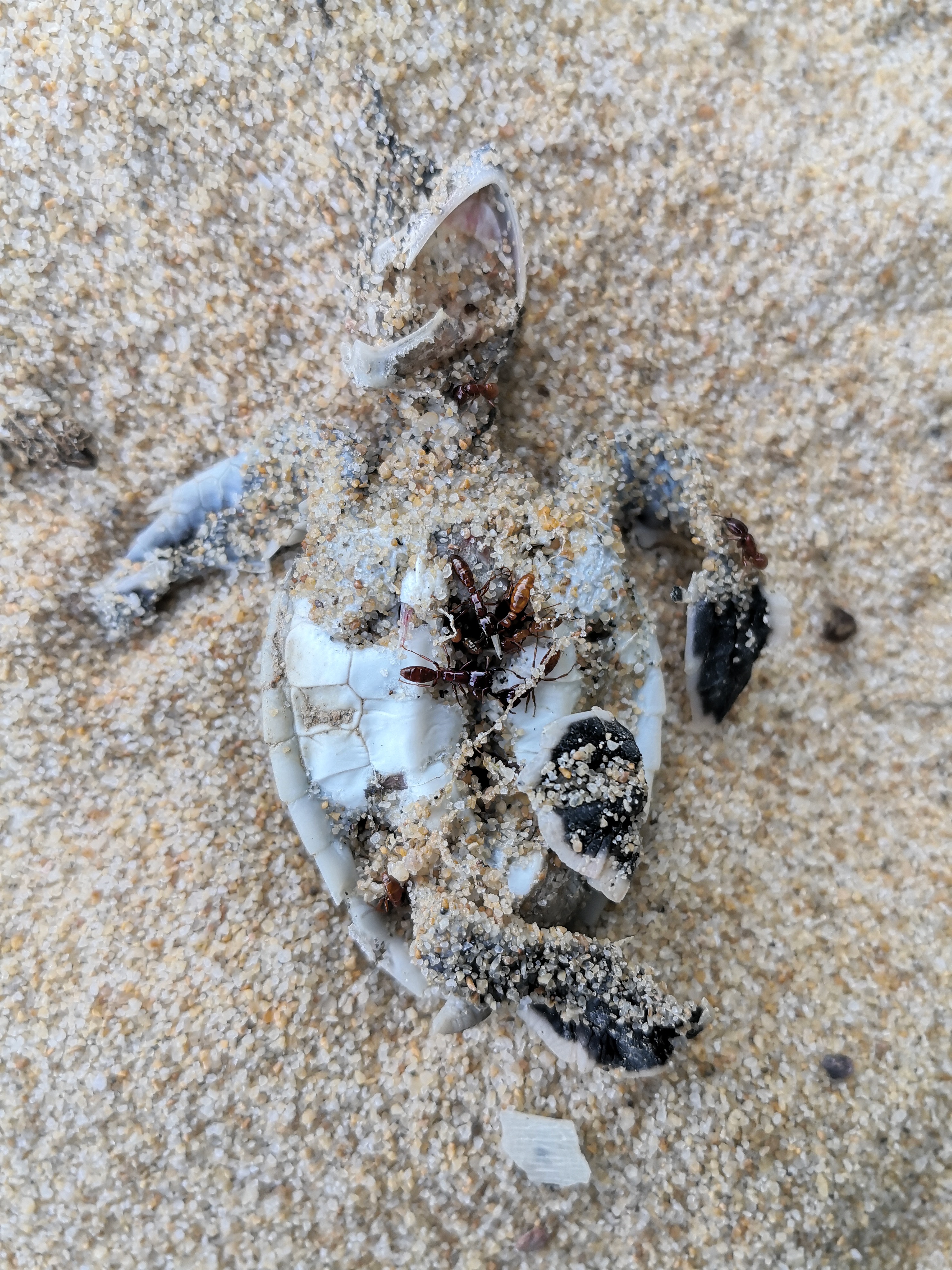


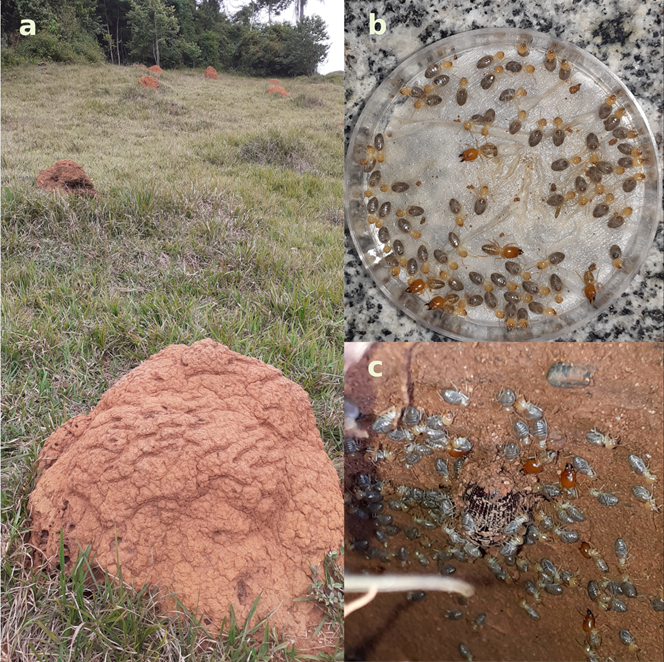

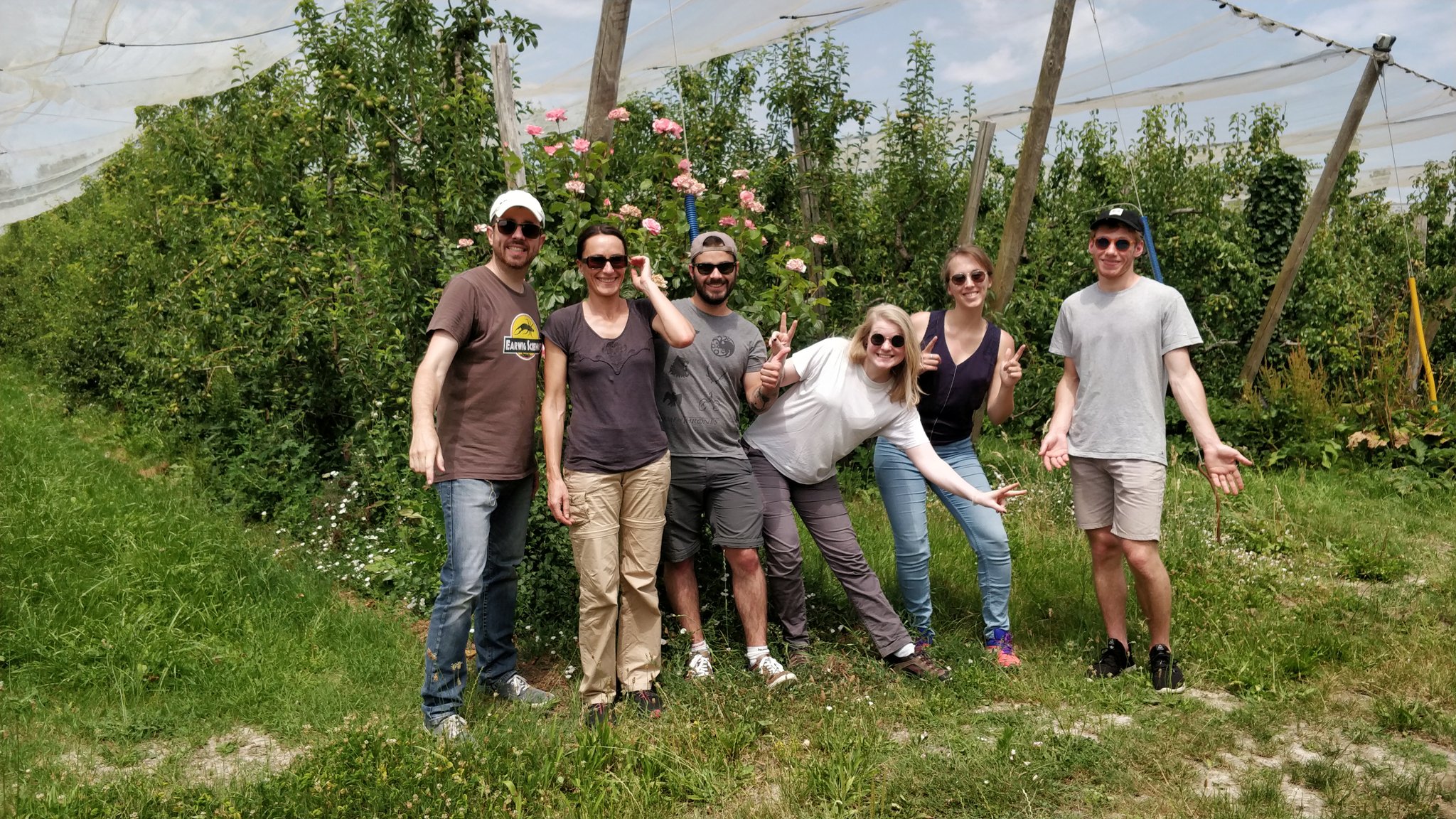

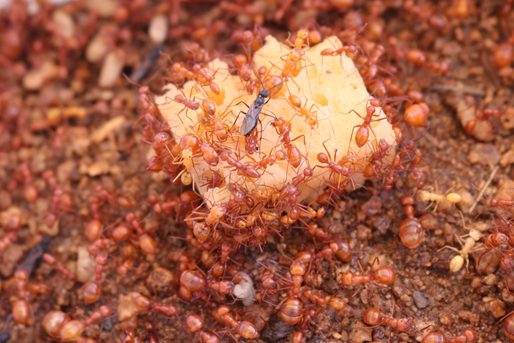


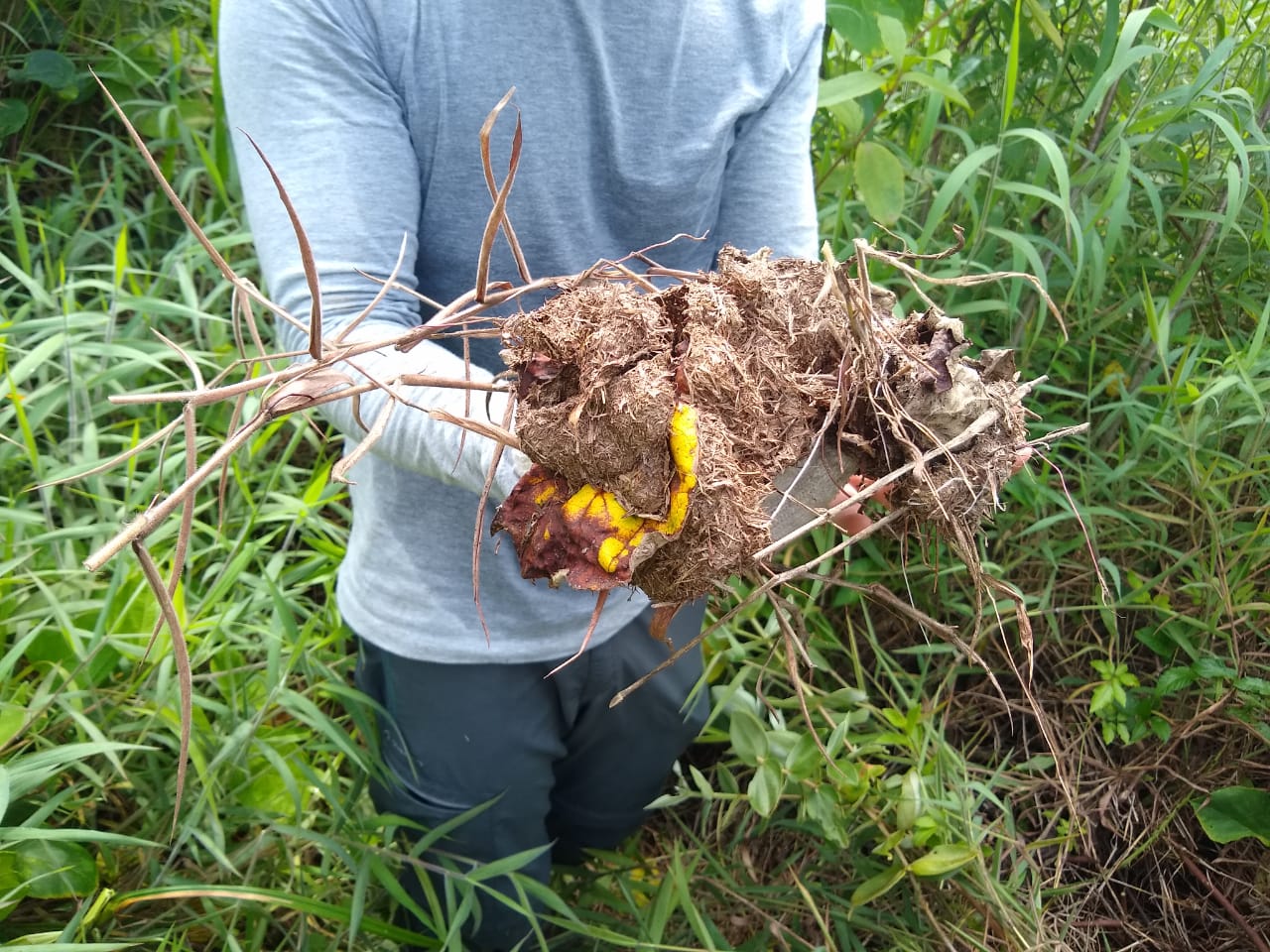
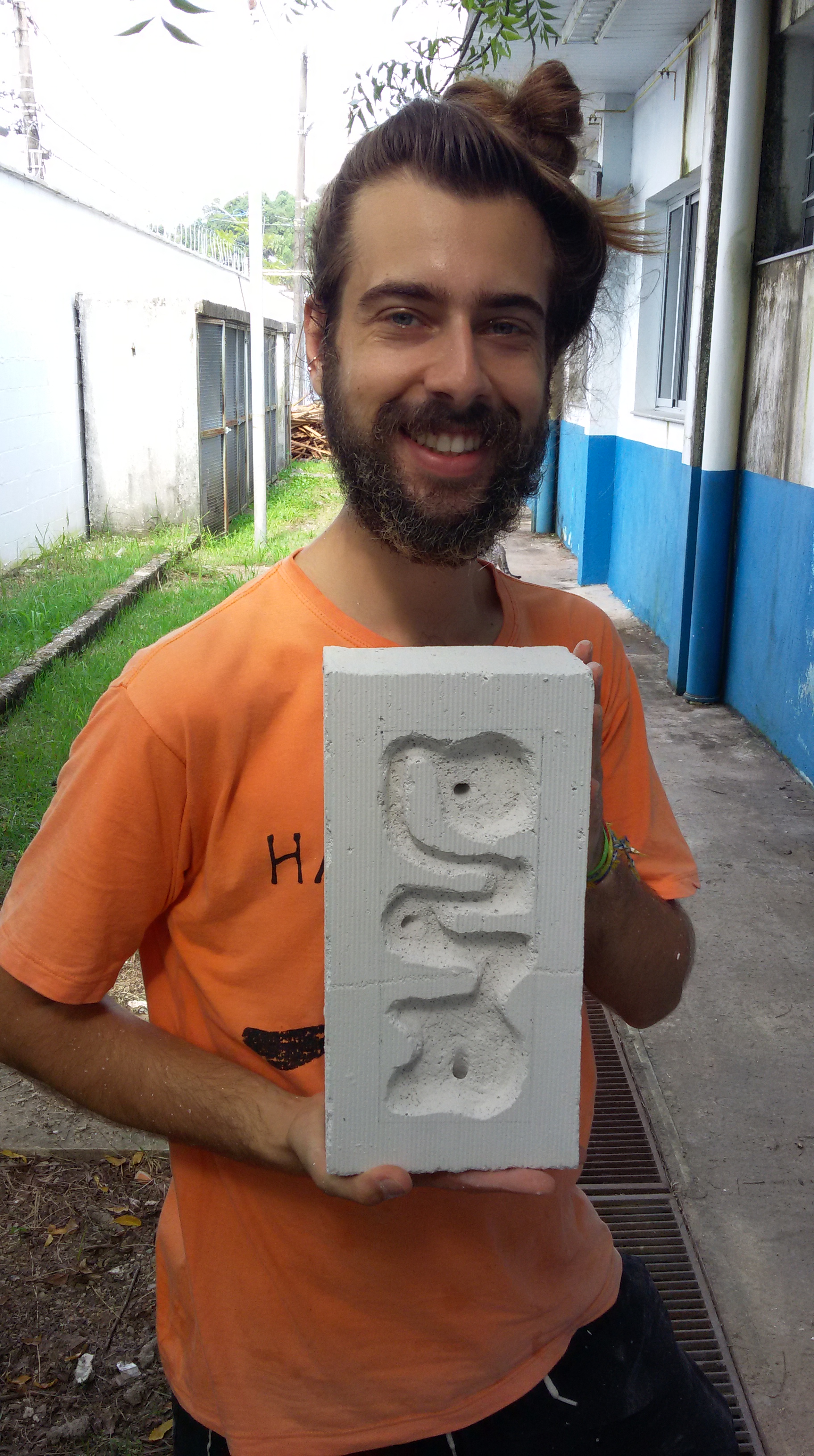


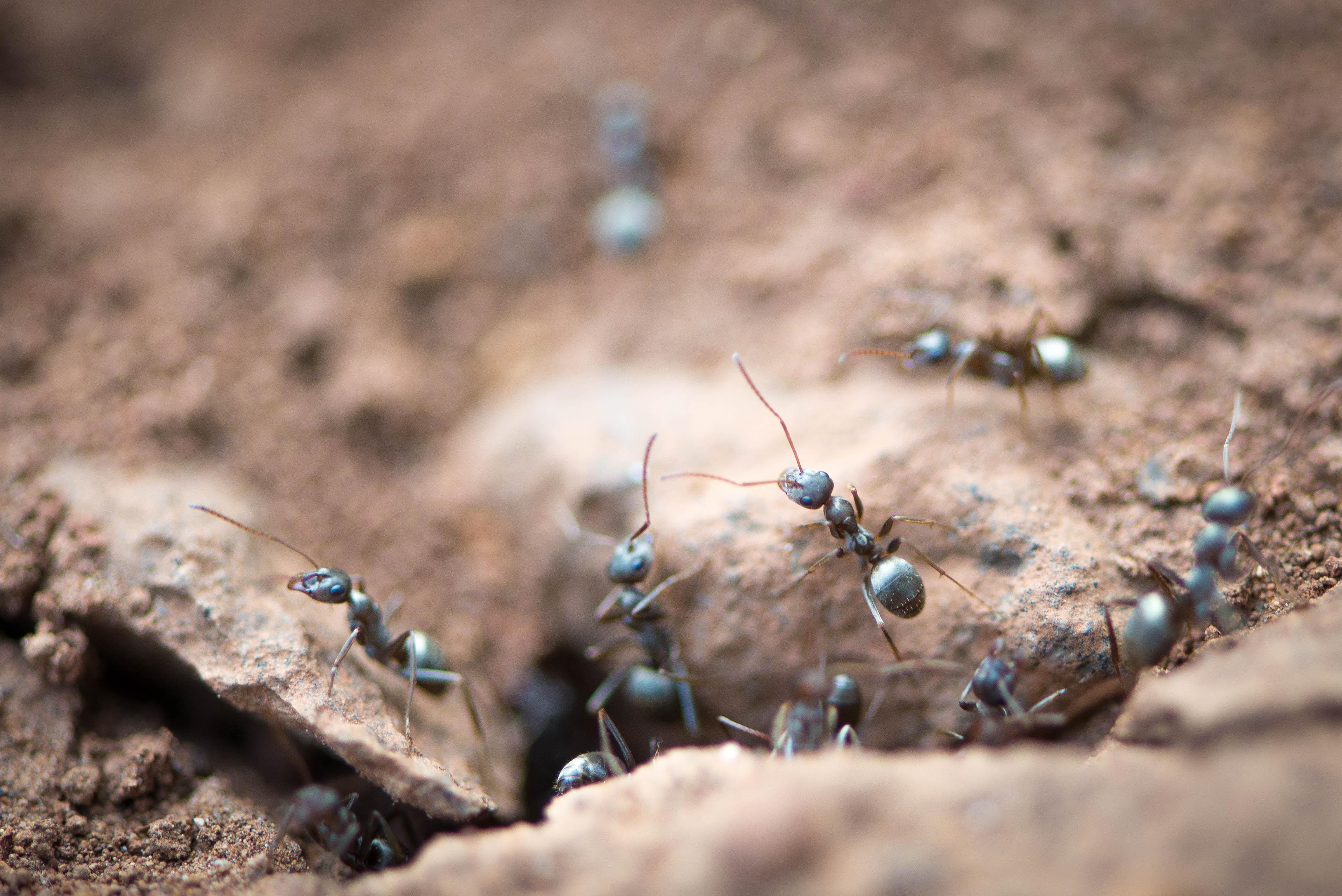


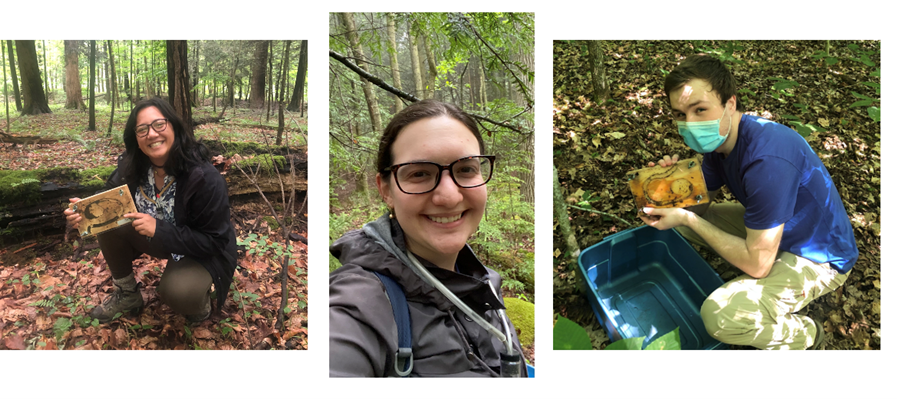

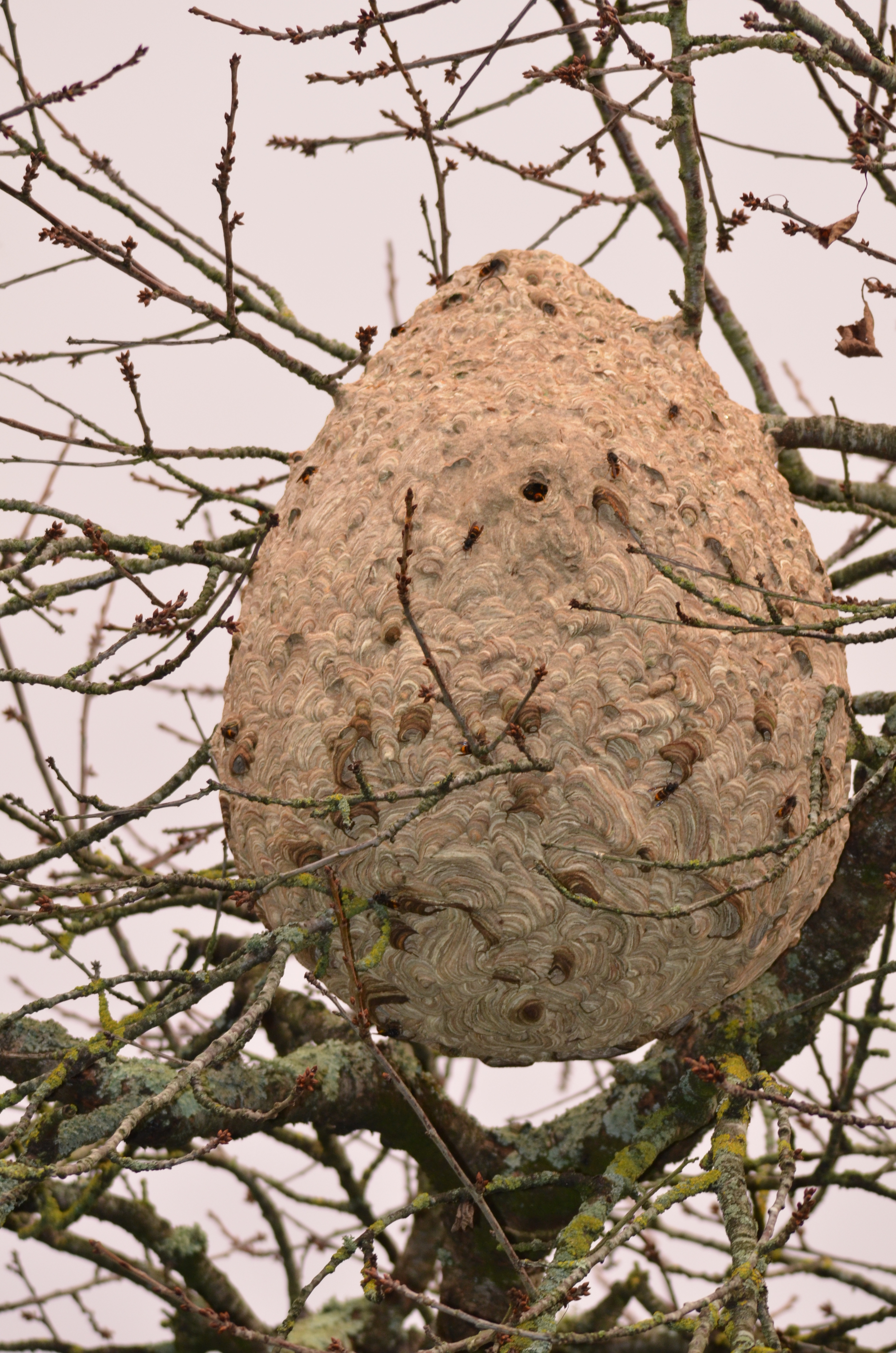
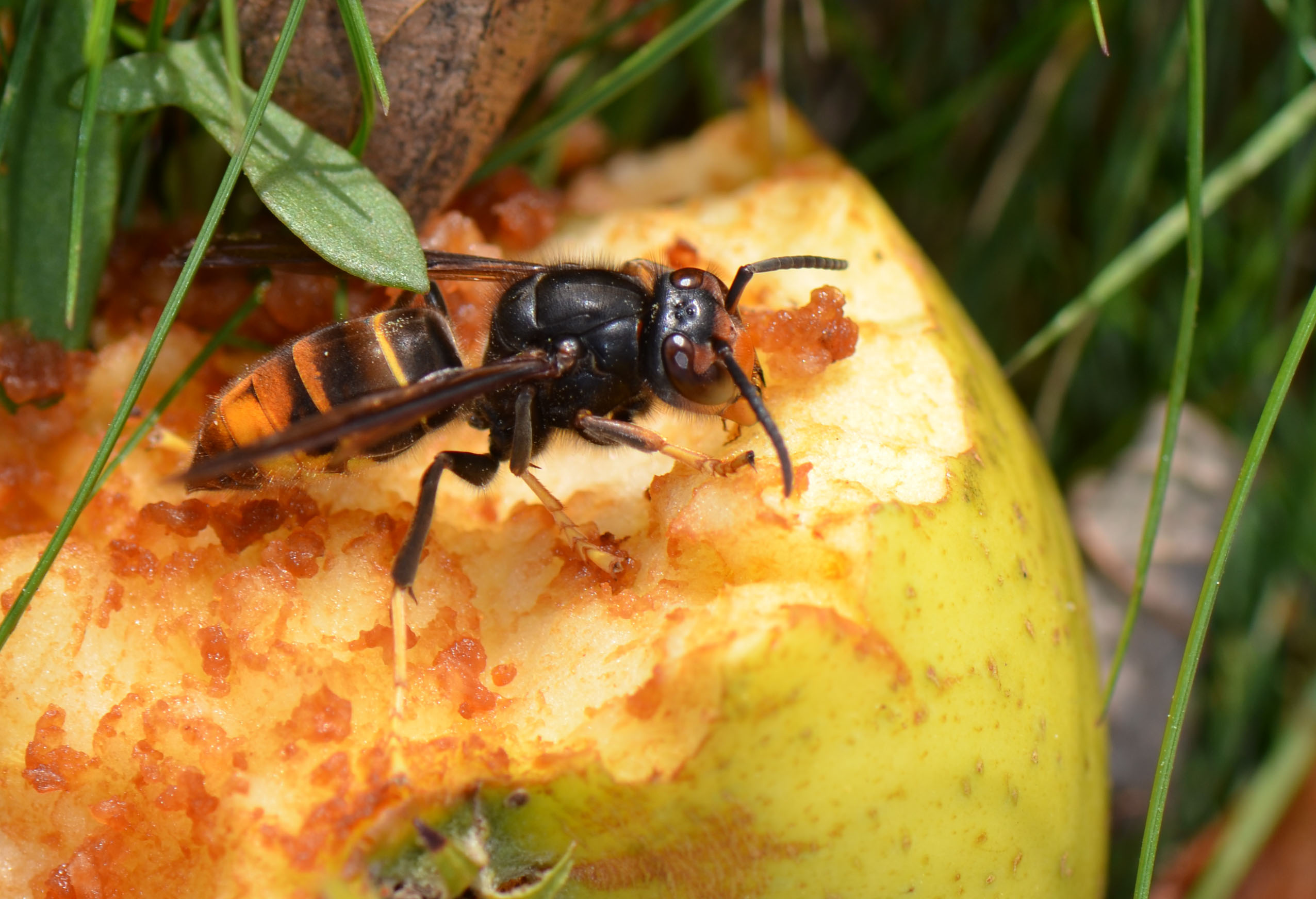

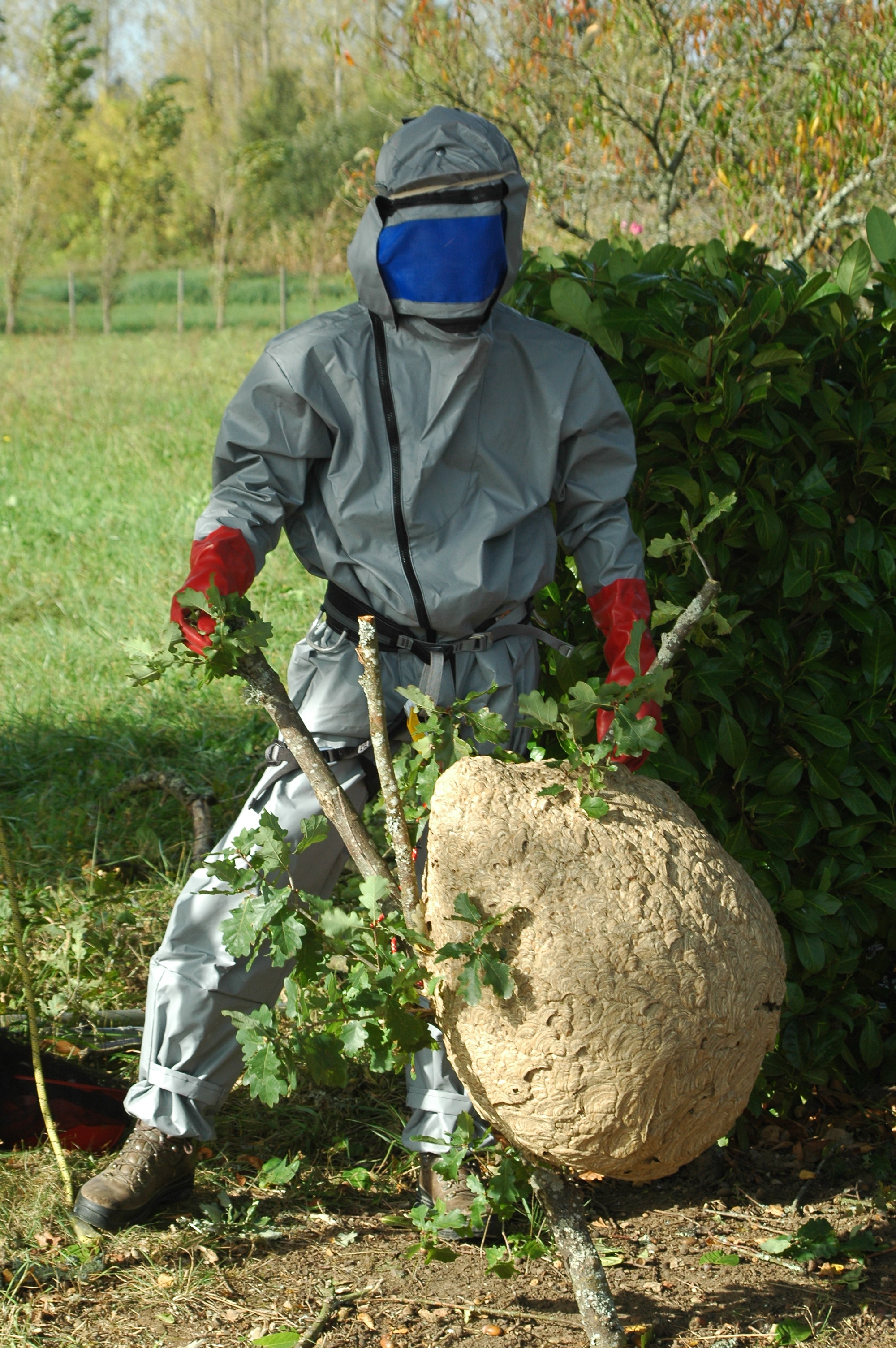
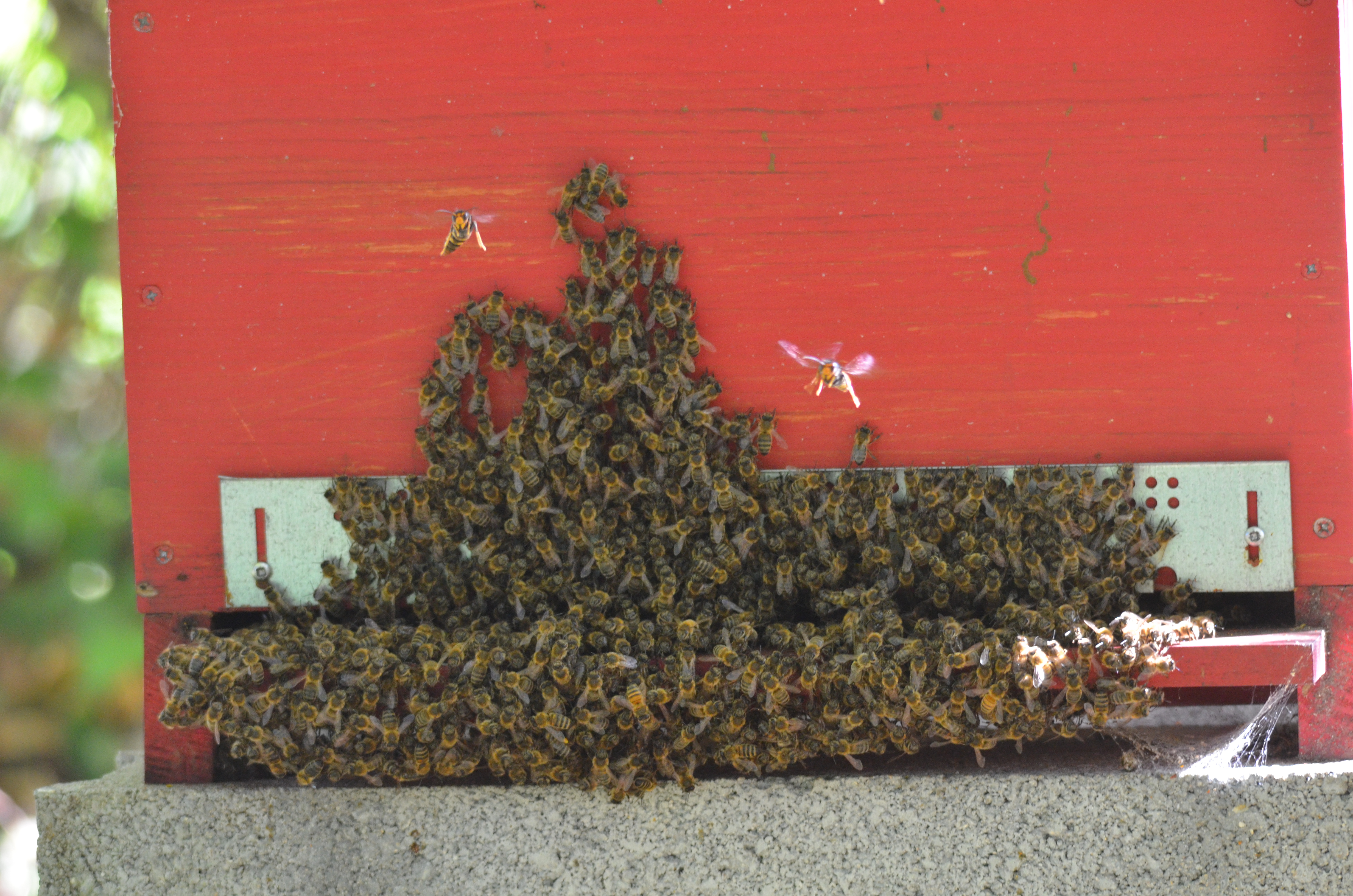
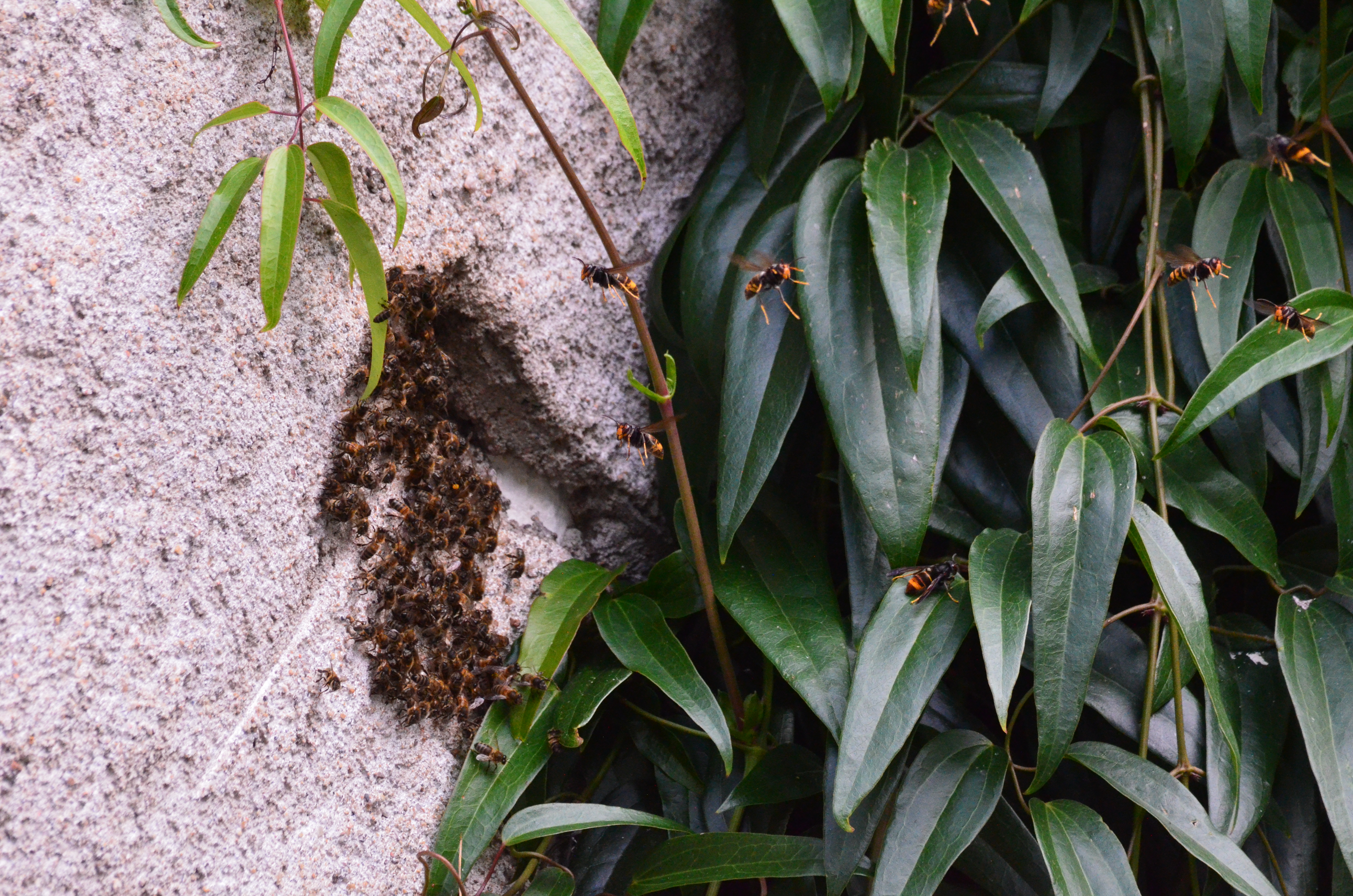

 insectessociaux