In this blog, Mariane Dias-Soares and Cléa Mariano explore the diverse organisms cohabiting ant nests in the Neotropics, from gastropods to myriapods. They explain how do these guests interact with ants, sharing resources and space within the nest environment. Discover more about these intriguing interactions in their latest work for Insectes Sociaux, here.
What attracts these other groups? What are these groups? Are there really gastropods inside ant nests? What are commensals? Do ants benefit from their presence? Why aren’t they expelled? These are some of the most frequent questions when the topic of conversation is our research and our article. Let’s now address each of these questions, the work done so far, and the next steps toward the discoveries that researching an ant nest provides us…
The ant nests provide a protected environment for the workers, the queen, and all of their immatures, as well as storing food and maintaining stable temperature and humidity. When studying these nests, the presence of other groups was observed, which, attracted by these resources, coexist with the ants. These groups may spend part of their life cycle inside the nests or even their entire existence.
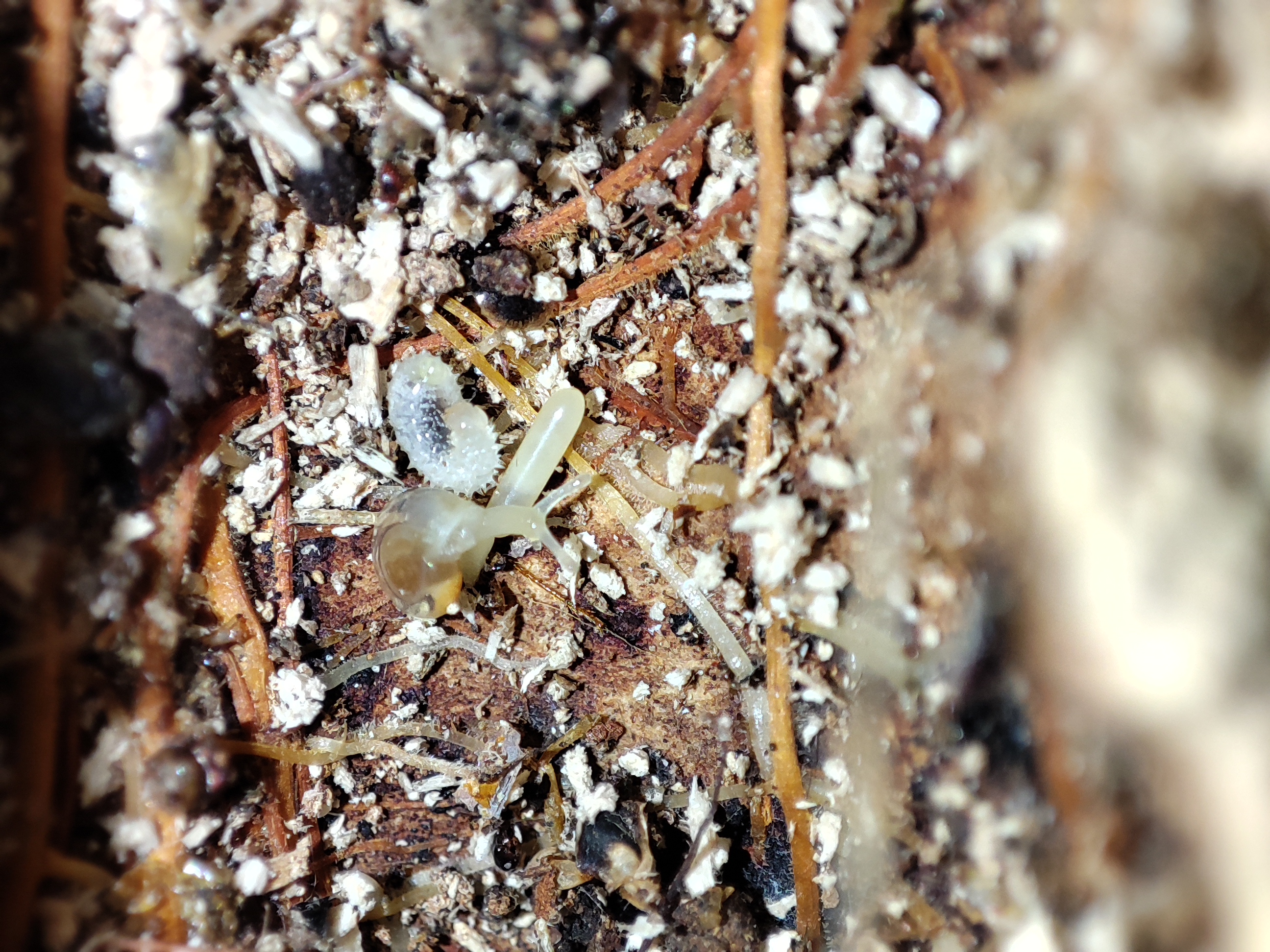
Gastropod near the immatures of N. verenae. Photo: Laís Bomfim
Our research aims to identify which groups are associated with different ant species in a Neotropical region. In my master’s studies, I focused on the species Neoponera verenae, an ant from the subfamily Ponerinae that nests in various substrates such as dry cocoa pods, soil, and decomposing logs. In our study, we found a variety of groups, including Myriapoda, Isopoda, Araneae, Lepidoptera, Pseudoscorpiones, Collembola, Acari, Coleoptera, Diptera, Dermaptera, and Gastropoda, among others. This highlights the great diversity of organisms that coexist within these ant nests.
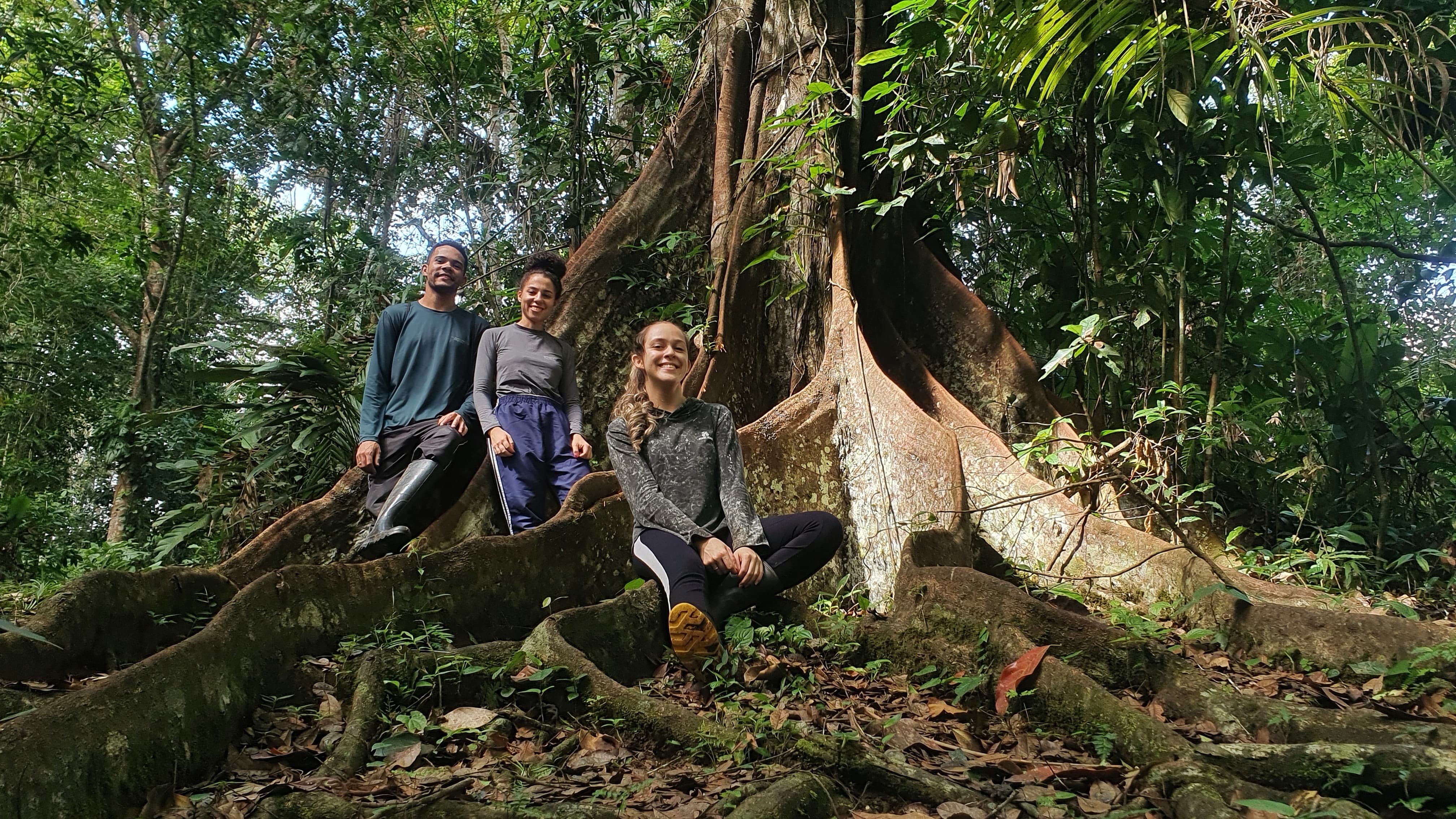
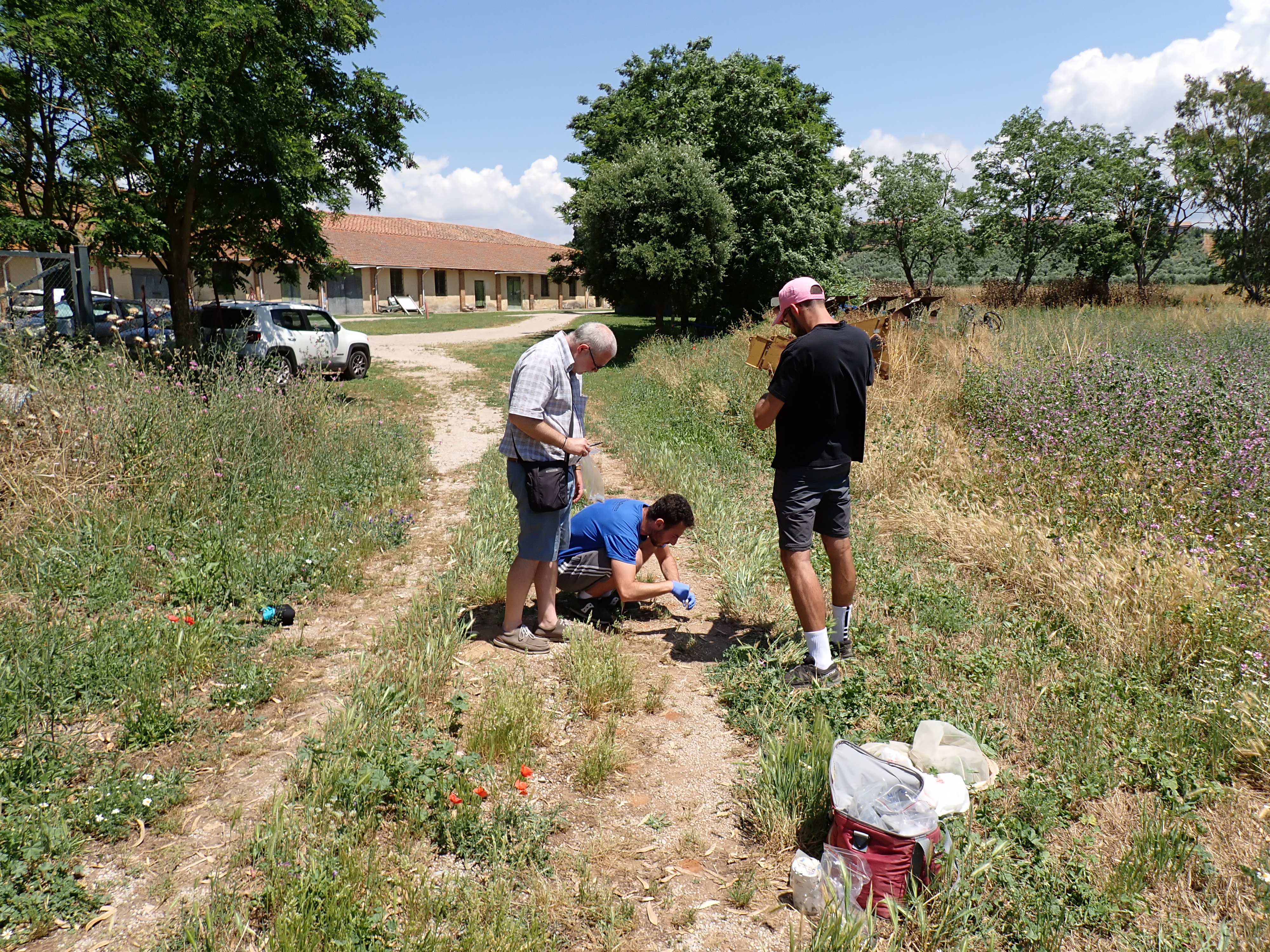
Caterpillar in a N. verenae nest near workers and immatures. Photo: Mariane Dias-Soares]Researchers during new field collections in the Neotropical Region of Brazil. Photo: Mariane Dias-Soares
Noticing the high number of groups within the ant nests sparked in us the need not only to identify which groups inhabit them but also to understand the interactions that occur in these environments. In our article, we studied the facultative commensalism of gastropods in N. verenae nests, presenting novel records and proposing hypotheses about this type of interaction.
There are different types of interactions between ants and gastropods. In the case of facultative commensalism, the gastropods coexist peacefully with the ants, benefiting from the protection provided by the colony, the available food, and the environmental stability, while also being found outside the nests. For the ants, however, we did not observe any apparent benefit or loss. Further research will delve deeper into these issues.
Gastropods recorded inside N. verenae ant nests. (yellow arrows indicate immatures, and orange arrows indicate snails). Photos from the article by Dias-Soares et al. (2024)
Through various observations and records made in the field and laboratory, we found the presence of several gastropod species inside the ant nests. Among the gastropods found, the family Achatinidae was the most abundant. These gastropods coexisted harmoniously with the workers and the young individuals in the nest (larvae, pupae, and eggs), moving freely without being disturbed by the ants. We also observed that the gastropods produced a foam, which generated a pacifying effect that prevented their expulsion from the nests. This is one of the strategies used by these organisms to inhabit ant nests.
Our study presents novel records of the interaction between ants and gastropods, leading us to explore various unresolved questions. One of these questions is the degree of interaction between immature ants and gastropods, as we found individuals in the chambers that contained the immatures. Additionally, we are investigating the chemical nature of the mucus involved in these interactions and identifying the new species of gastropods found in the nests, in collaboration with Dr. Sthefane D’ávila. Ongoing studies focus on analyzing the chemical strategies used, the morphological adaptations and behaviors exhibited, and the existence of mimicry within these nests. There is still much to be discovered in the vast world that is an ant nest…
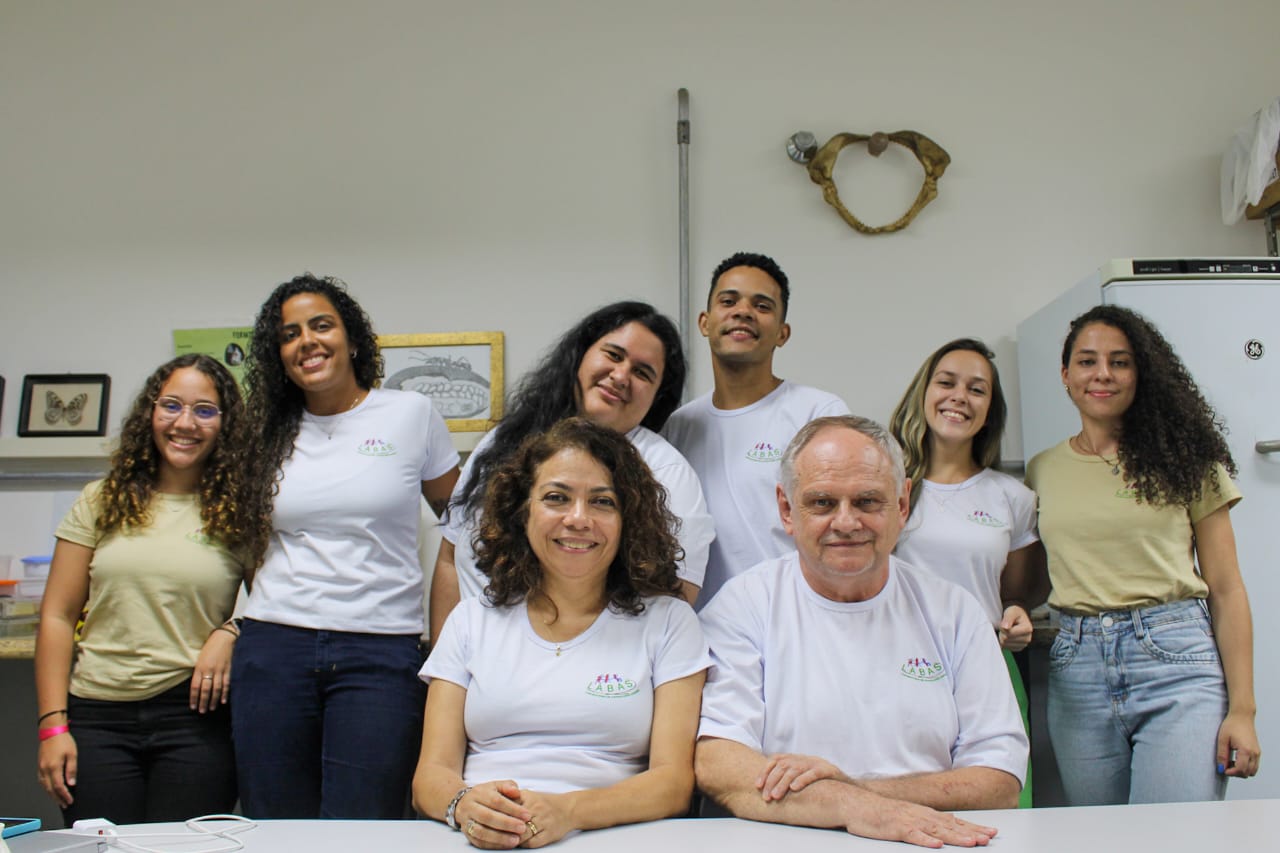
Some members of the research team currently conducting collections for the new phase of the Project. from left to right: Fred da Silva, Mariane Dias-Soares and Jossiane DiasPart of the research group led by Cléa Mariano and Jacques Delabie, focusing on studies of various ant species and other groups present in ant nests
Tommy is a researcher at the University of Regensburg, where he leads the ACElab since 2016. He study value perception and decision-making in invertebrates (mostly ants). His latest work in Insectes Sociaux can be found here.
IS: Who are you, and what do you do?
My name is Tomer (Tommy, please) Czaczkes, and I study the behaviour of mostly ants, sometimes bees, and very occasionally other arthropods. My current focus is on comparative psychology – understanding how animals think, learn, and make decisions. I’m trying to apply our hard-earned knowledge of behavioural ecology to controlling invasive ants. I also dabble in collective behaviour.
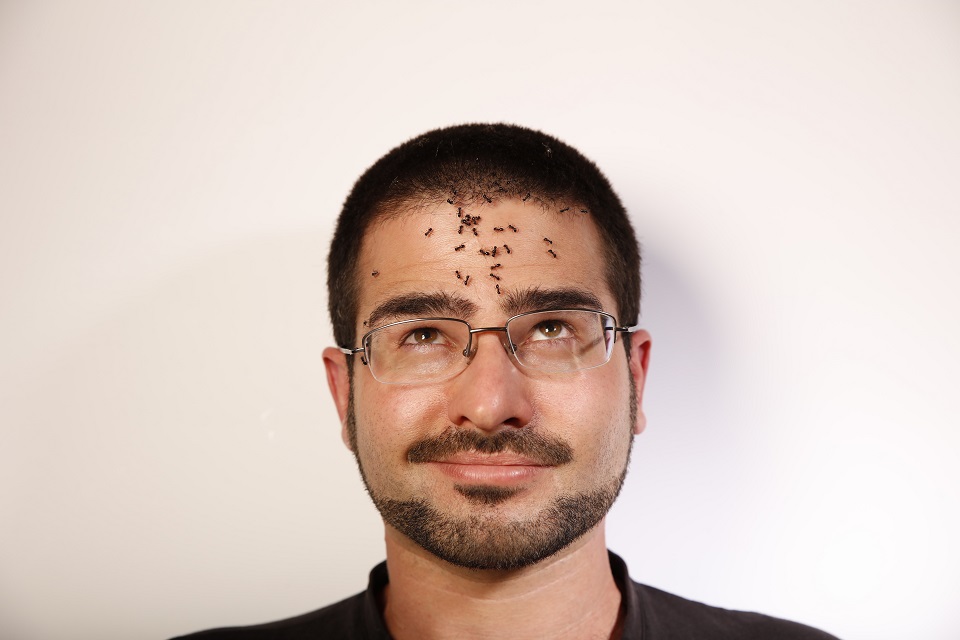
Tommy Czaczkes thinking about Lasius fuliginosus.
IS: How did you develop an interest in your research?
Ah, well. During my undergraduate the average grades for different modules were available, and I noted that while cell biology and microbiology had pretty low average grades, behaviour and ecology had quite high ones. I know which side of the bread is buttered, and, honestly, I never expected to stay in research. Then, during my undergraduate project, I realized that while the miserable vertebrate ecology people would have to trek for hours through the forest to sight their animal, I, as an experimental behavioural ecologist working on ants, could collect 50 datapoints in half a day, while drinking rum.
IS: What is your favorite social insect, and why?
Oooh, a tough question! I’m torn between two ant species: Lasius niger and Pheidole oxyops.L. niger is perhaps the most common ant in Europe, and as my PhD supervisor Francis Ratnieks always says “it’s the common animals that are most interesting. They’re clearly doing something right.”. L. niger are extremely smart, polite, helpful, and make excellent colleagues. P. oxyops, however, do wonderful cooperative transport – the collective carrying of loads. They have an amazing, explosive recruitment behaviour, and love cheese. They’re also extremely common, but alas, in Brazil and not in Germany, where I’m based.
Pheidole oxyops carrying a 10x10mm square of choose by the corners (published in Insectes Sociaux).
IS: What is the best moment/discovery in your research so far? What made it so memorable?
Seeing ants being visibly disappointed when they received food which was poorer than what they were expecting – poor things! It was clear from the moment I did the first pilot on that project that we would have a clear and strong effect. It was memorable because it was simply so easy to relate to: the disappointed ants would check the food, break away, try again to make sure, and circle around looking for the good stuff they were sure was there before. It was simply so cute and relatable.
IS: Do you teach or do outreach/science communication? How do you incorporate your research into these areas?
I enjoy going into schools and kindergartens, to talk to kids about ants and insects in general. It’s always fun to bring an ant colony or two, and show the “mama ant” and her babies. For the bigger kids, it’s fun to do a pheromone following assay – makes me feel like an ant whisperer, who can use my super science powers to talk to insects.
IS: What do you think are some of the important current questions in social insect research, and what is essential for future research?
This is showing my own biases here, but I think the question of insect sentience and intelligence is a huge question, and social insects are central to the experimental examination of these topics. We’ve had a slew of high impact work reporting all sorts of impressive cognitive abilities, with a big swing from behaviourism to cognition. I expect that very soon the swing will move the other way again, with people starting to push for simpler explanations, or attempting replication studies. Animal behaviour as a subject is overdue a big replication study, the likes of which shook up the worlds of experimental psychology and cancer research (amongst others) recently. I have attempted to replicate some of my own work, with some things replicating wonderfully, and others simply not there next time I looked. And yes, I publish the failed replications too.
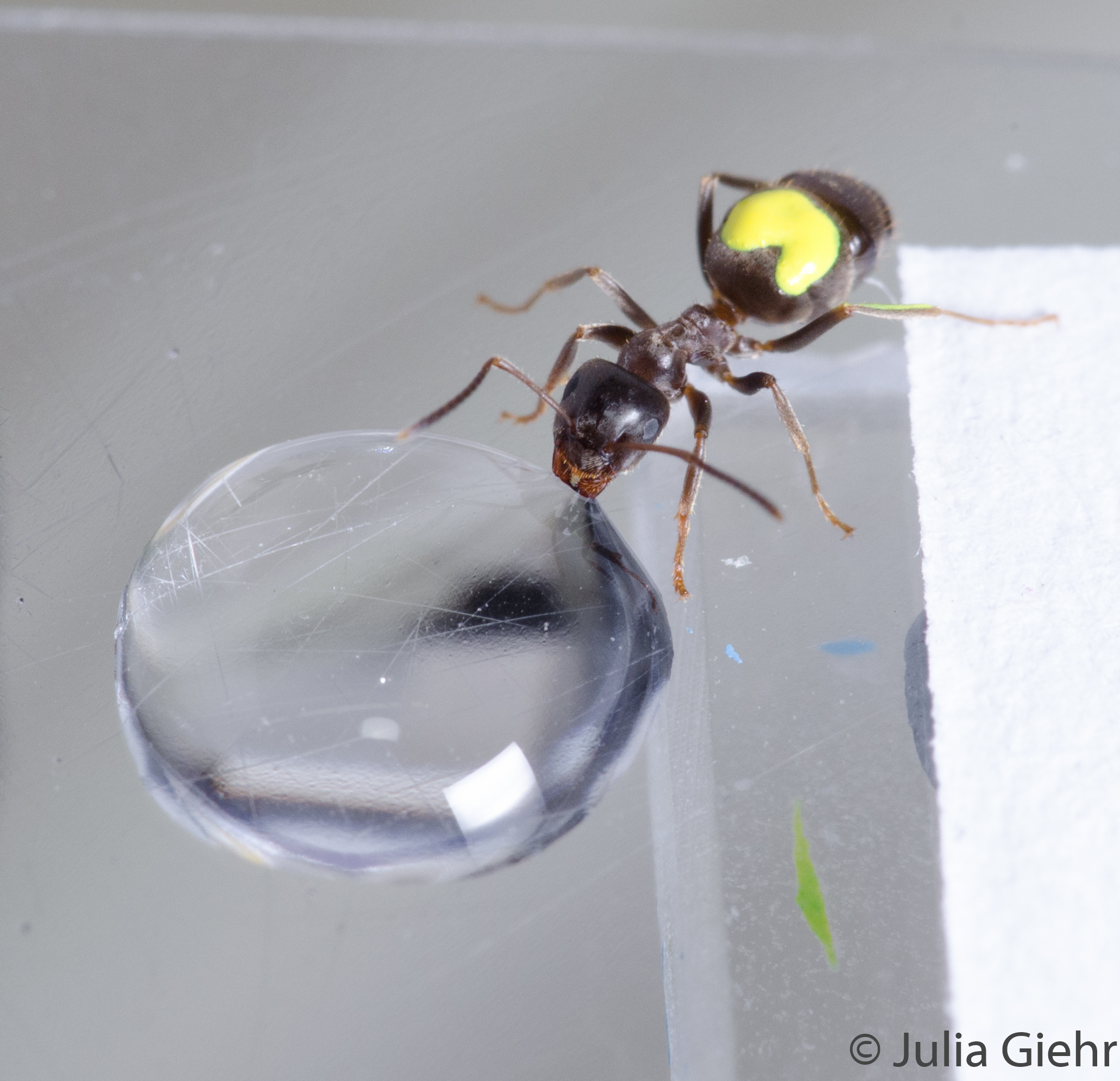
Lasius niger worker who is very satisfied with her drop of sucrose solution.
IS: Outside of science, what are your favorite activities, hobbies, or sports?
I really enjoy hiking in the mountains, when I can get out. When not, I’m a big fan of sci-fi books and computer games. My mind is still somewhat blown by my VR set.
IS: What is the last book you read? Would you recommend it? Why or why not?
I’m almost through “Delusions of Gender” by Cordelia Fine. The book speaks against the supposed ‘evidence’ for a simplistic biological basis for gender roles. Would I recommend it? It’s convincing and helpful, but sometimes feels like being bludgeoned with an endless series of (reasonable) criticisms of studies. It’s well researched and useful, but perhaps not the page turner it could have been.
IS: How do you keep going when things get tough?
Give up! No, really. On days where I can’t focus, I simply stop working. If an experiment runs into wall after wall, I’ll drop it. But for things like rejections, failures, etc – I take the long view, and remind myself that this is normal, and this too shall pass. Oh, and moaning. Moaning helps.
IS: If you were to go live on an uninhabited island and could only bring three things, what would you bring? Why?
Assuming my basic survival needs were met? My ebook stuffed with books (for entertainment), a solar charger to charge it, and a Swiss army knife to bootstrap other tools from. I think I’ve played too much Minecraft.
IS: Who do you think has had the most considerable influence on your science career?
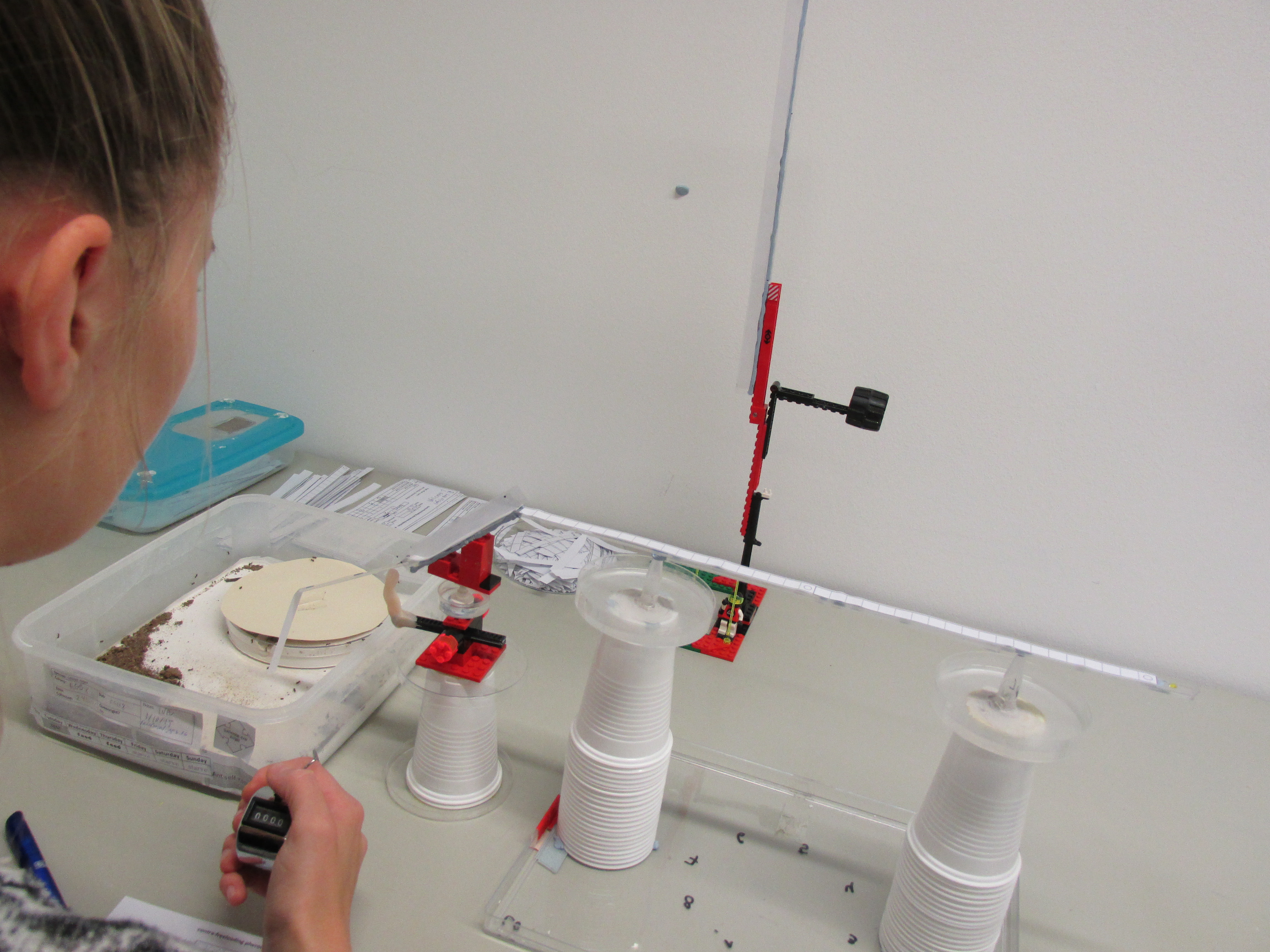
Certainly my Doctoral supervisor, Prof. Francis Ratnieks. He has an absolutely excellent eye for interesting biology. Moreover, I admire (and have tried to emulate) his quick, cheap, and cheerful approach to research projects – avoiding the huge, long term, ultra-high tech projects, and preferring short, fun, and simple projects which require only some ants, a few strips of paper, and some drops of sucrose. And a good idea, of course.
In this experiment, Tommy’s team was testing whether ants prefer food they have worked harder for (they do). A good example of their experimental designs. Note the Lego, paper runways, and complete lack of high tech gubbins.
IS: What advice would you give to someone hoping to be a social insect researcher in the future?
Read “The Ants” by Hölldobler and Wilson. Yes, it’s almost 35 years old, but it’s a wonderful primer to most of the major topics in social insect biology. I read it cover to cover to prepare for my PhD, and that knowledge has stood me in good stead since then.
IS: Has learning from a mistake ever led you to success?
Not nearly as much as I would have hoped. I seem doomed to making the same mistakes over and over again. However, at least by now I recognise them with absolute clarity in hindsight.
IS: What is your favorite place science has taken you?
The La Selva biological field station in Costa Rica, where I did my Bachelors project (on leaf cutter ants). Being surrounded by researchers for the first time, in a beautiful jungle, with amazing animals, was life changing. I also met my future wife there, so that was a nice bonus.
Andrea Ferrari is a PhD student (soon to be a PhD!) at the University of Milan. He studies the impact of urbanisation on wild bees’ morphology and physiology. His latest work in Insectes Sociaux can be found here.
IS: Who are you, and what do you do?
I’m currently a third-year PhD student at the Department of Environmental Science and Policy at the University of Milan (Italy). Our group “INSEvEc” focuses on the evolution and ecology of insects, especially Hymenoptera. My main interest is wild bees and in the last three years I have studied how anthropisation, especially urbanisation, affects wild bees from different biological aspects. For example, how certain body structures look like in urban or natural areas? (morphology) or how certain molecular processes are shaped by urbanisation? (physiology).
IS: How did you develop an interest in your research?
To be completely honest, I’m not the kind of person who has a lifelong relationship with insects. I should say that my passion for wild bees (for those not familiar with the term, basically all the bees except the honeybee Apis mellifera) broke out during my Master’s thesis. At that time, I was not working specifically on wild bees, but rather on plant-pollinator networks. Somehow, I started to be fascinated by them. Inspired by my supervisor, I started going out at weekends just to see what they were doing. I think it was day after day of observation that I realised I wanted to do research on these insects after my degree, and try to discover something new and useful.
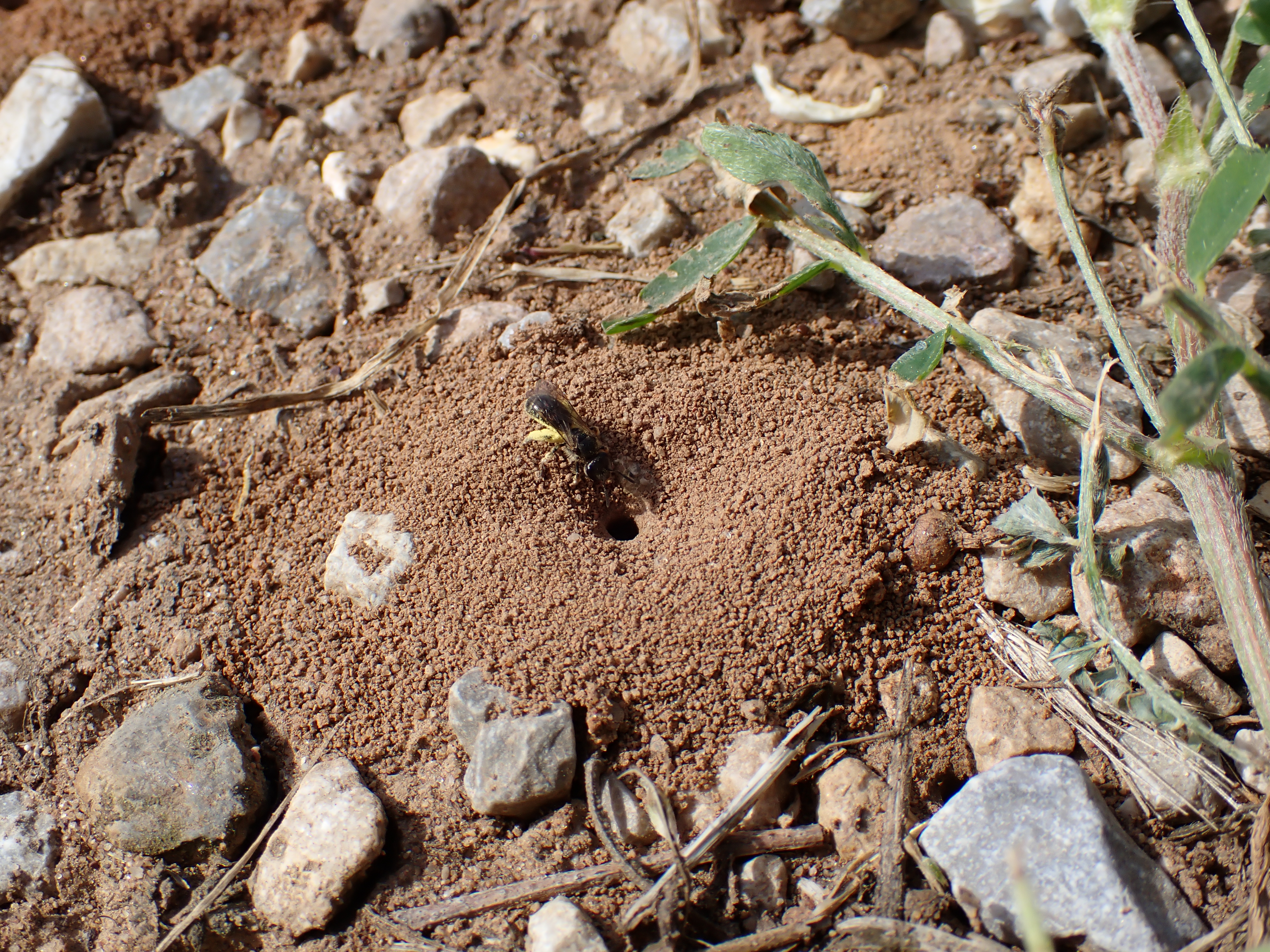
A female of Lasioglossum sp., a ground-nesting primitively eusocial species, entering its nest (Parco della Maremma, 2023)
IS: What is your favorite social insect, and why?
Definitely wild bees! I guess if I had to choose a favourite species it would probably be Halictus scabiosae, most of my PhD research is based on this species. Nevertheless, I really love these insects, but as with everything, saying why you love something is a real challenge! I guess there is no rational thought behind our tastes, sometimes you just like something for the way it is. However, now that I think about it, my passion for nature in general has probably helped. I really enjoy being outdoors, walking along a mountain trail or a country road in my spare time. So why not take the opportunity to study wild bees? They are so complex, come in so many different shapes and colours, I think I was captivated by them! I think you just have to go for it, if you love something then just go for it.
IS: What is the best moment/discovery in your research so far?
What made it so memorable? I am still “academically young”, so I have not had the opportunity to discover anything big. I would rather say that I really enjoy the feeling of doing something, even the smallest thing, that no one has ever thought of doing. Just to add that little brick to the wall of general knowledge, that brick with my name on it. Having said that, we have had the opportunity to discover some new morpho-physiological ways in which wild bees respond to urbanisation, so I guess that is what I am proud of at the moment.
A female of the ground-nesting primitively eusocial Halictus scabiosae feeding on an Asteraceae flower (Torino, 2024)
IS: Do you teach or do outreach/science communication? How do you incorporate your research into these areas?
As I said, I am still young to do proper teaching. However, I always try to tell people, especially students or young people, something about what I do or what may not be known to the general public, but I think deserves attention. I really stress the fact that wild bees, and wild insects in general, are among the animals most exposed to environmental change. I always try to transfer my energy and passion to my audience. I think that energy and spontaneity when talking about your research topic can really inspire people. It also helps that everyone knows bees (mostly honeybees), so I find it easy to talk about my research even outside the academic world.
IS: What do you think are some of the important current questions in social insect research, and what is essential for future research?
This is a question that probably goes beyond my current understanding of all the things that go on with social insects! From what I have seen in the last few years, I really think that most people automatically associate “social insects” with honeybees or ants. This is a shame, because I think there is still room for improvement in our understanding of how sociality has evolved in insects. How environmental changes are threatening social insects, and also discover new social insects! What I can say is that collaboration is going to be the keyword for future research. The sooner we understand that we are all on the same planet, the sooner we will start working together, breaking down gender/ethnic or whatever barriers you can think of. I really think that in the future research there is no space for “I”, but only for “We”. Social insect research, but I think all types of research, should really make an effort to reach as many people as possible, to communicate the findings, and to provide the next generations with new and useful information to make the world a better place.
IS: Outside of science, what are your favorite activities, hobbies, or sports?
Well, what I like most is having fun with my friends! Either going for a walk on a lazy weekend or partying at some cool places! I have been lucky enough to meet some really great people who make my life easier and happier. I also enjoy outdoor activities, be it hiking or biking, and I also really enjoy sports; I am a football fan and FC Inter is my favourite team. I also enjoy reading and playing chess.
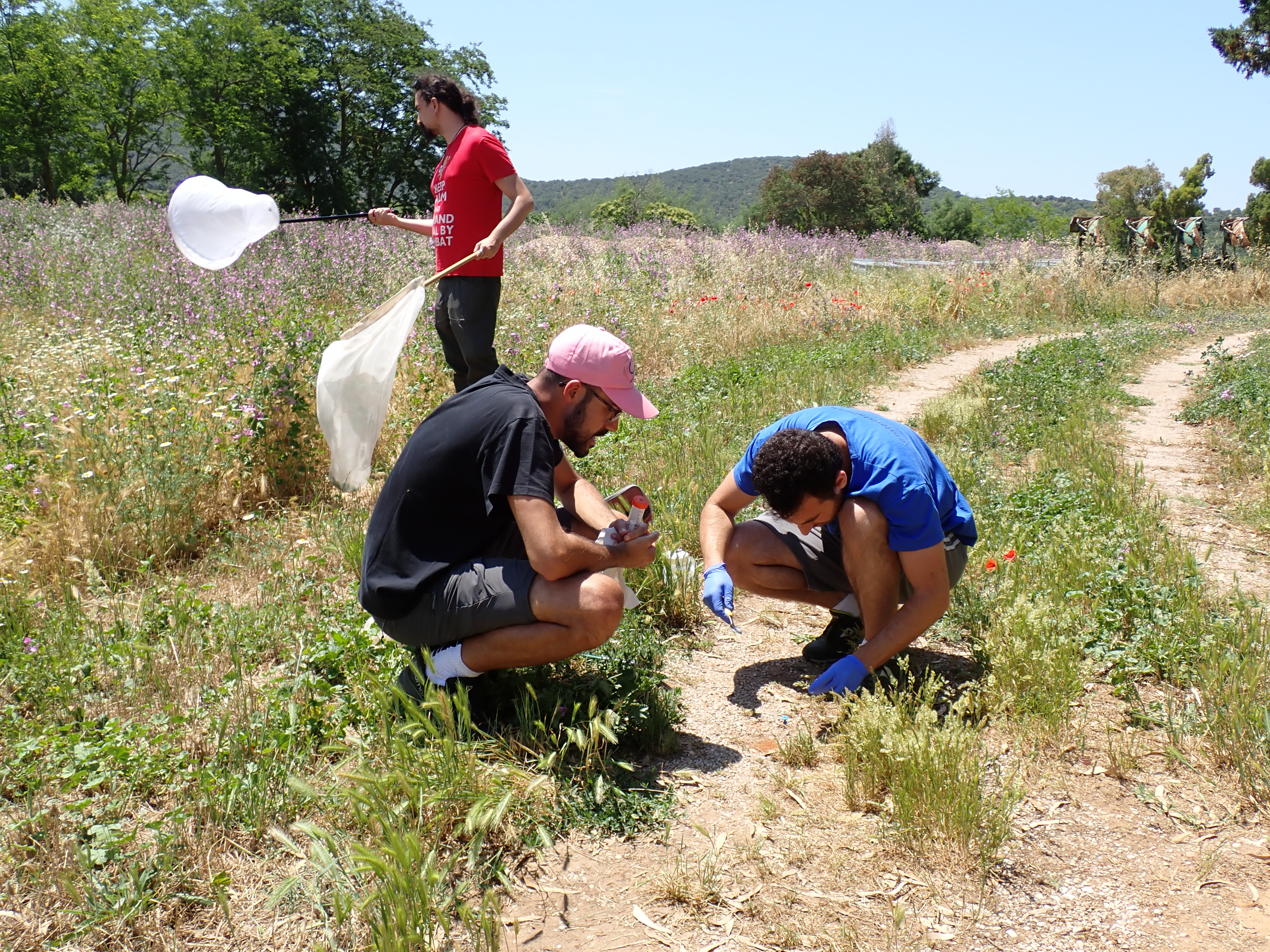
“INSEvEc” group sampling ground-nesting social bees in the Parco della Maremma (2023)
IS: What is the last book you read? Would you recommend it? Why or why not?
Well, for non-Italian readers this might be difficult to understand, but I read the latest comic by Zerocalcare, an author who recounts episodes from his life and his reflections through drawings, super recommended! I am currently reading “The Bee Sting” by Paul Murray, which has nothing to do with bees, but my parents bought it when they went to Edinburgh, so that is what I am reading now.
IS: How do you keep going when things get tough?
I recently had an unpleasant episode that prevented me from going abroad for a field study. Life is made up of choices, sometimes they lead to positive outcomes, sometimes not. I tell myself that as long as I try to be the best person I can be, I should have no regrets. I think it is important to realise that things are not always going to go our way, so when life gives you lemons, make lemonade! Try to make the best out of everything, and in the end, hard work will pay off!
IS: If you were to go live on an uninhabited island and could only bring three things, what would you bring? Why?
I hate these questions; I can never come up with anything that makes sense. Off the top of my head, I would say a Swiss Army knife as a tool, a camera to capture some moments and a satellite phone to call someone and get me home when I get bored!
IS: Who do you think has had the most considerable influence on your science career?
Certainly my current PhD supervisor Carlo. He is incredibly inspiring and always has a good balance between giving you instructions and letting you think with your head. I also have to mention Nicola, Paolo, and Andrea from my Master’s internship, who lit the spark in me to do research on wild bees.
“INSEvEc” group sampling ground-nesting social bees in the Parco della Maremma (2023)
IS: What advice would you give to someone hoping to be a social insect researcher in the future?
Just follow your dreams for as long as you can. Find an area of research that suits you best and be prepared to work really hard. Like I said, I really believe that hard work will pay off. The harder you work, the more grateful you will be in the end. And be passionate about what you are doing.
IS: Has learning from a mistake ever led you to success?
Can you even learn without making mistakes? I think science is about trying and failing, over and over again, until you get what you want. As humans, we make mistakes, and only those that do not work do not make mistakes. So yes, I always try to learn from my mistakes and try not to make the same mistake twice (but I still need to work on that).
IS: What is your favorite place science has taken you? I have not travelled that much so far, I have basically been around my city (Milan) and now I am doing my sampling activities in another big city in Northern Italy (Turin). I enjoyed working in the Parco della Maremma: beautiful places, bees and great food! If I may speak metaphorically, science has taken me to a place where I can really decide what I want to do and follow my dreams. It has brought me to a place where I have had (and hopefully will continue to have) the chance to meet extraordinary people who have really opened my mind.
Oscar Vaes is a biologist interested in data analysis and scientific communication. He has just completed his PhD in Belgium. His latest work on “inactive” ants in colonies can be found here.
IS: Who are you, and what do you do?
I’m a Belgian biologist and recently finished my PhD about activity levels in the red ant Myrmica rubra, at the Université Libre de Bruxelles. At present, I’m trying to put my knowledge of data analysis to good use, an aspect of research that I really enjoy and in which I’m trying to improve.
IS: How did you develop an interest in your research?
Simply by working on them. Basically, I’m curious to understand how things around me work, hence my interest in biology. This, combined with my attraction to animals, meant that I was predisposed to take an interest in social insects. However, it was really when I was looking for a research topic for my master thesis that I developed an interest in ants.
IS: What is your favorite social insect, and why?
So far, I’ve only worked on one biological model, Myrmica rubra, and although it doesn’t treat me in the best way during my experimental manipulations or field harvests, I still have to choose it. Being only at the beginning of my research career, I feel I’ve only glimpsed the tip of the iceberg, so I’m sure this favorite animal will evolve over time. Yet, I think it will always be a species of ant. I believe that they occupy a special place in the collective unconscious and fascinate people. I never tire of seeing the reaction people have when we tell them we’re studying the behavior of ant colonies. It is always a fun icebreaker.
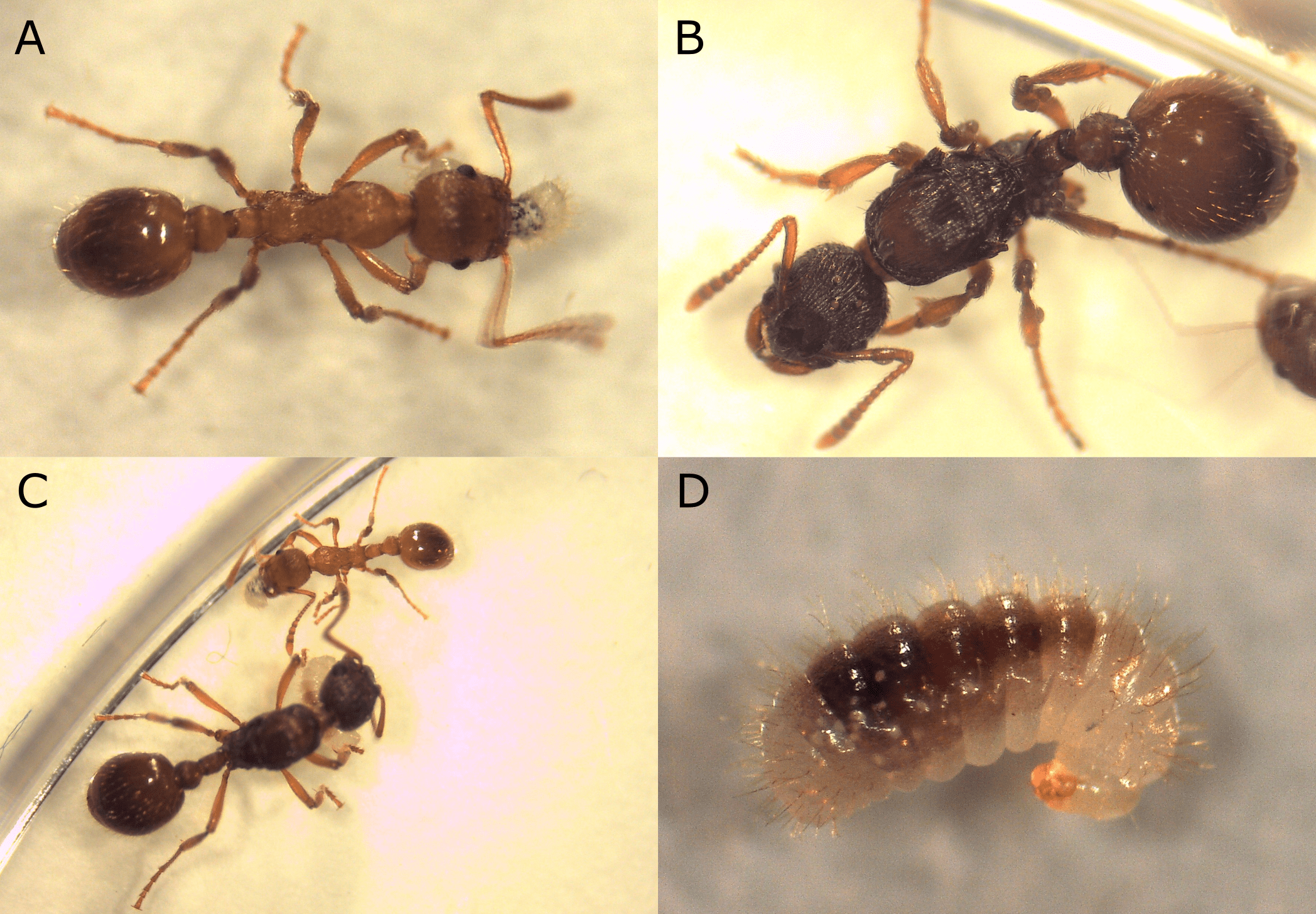
Queen, worker and larva of Myrmica rubra. A) Young worker carrying a larva. B) Queen without wings. C) Young worker (top) with light cuticular pigmentation and queen (bottom) standing over a larva. D) Larva (2nd instar).
IS: What is the best moment/discovery in your research so far? What made it so memorable?
My best moments are usually when I get to share with researchers from other laboratories, at conferences. These moments are always very enriching, and have the instant effect of taking us out of the tunnel vision we might have when working for months on our subject in an office.
In terms of discoveries, I based much of my PhD subject on the hypothesis that there was probably a large proportion of inactive individuals in colonies of the ant I worked with. Having confirmation that around 30% of our species’ colonies form a distinct group of nurses, foragers, and domestics, and that we could cross-reference their characteristics with those of other species, was one of those really exciting moments when the prospects for future experiments develop and become clearer.
IS: Do you teach or do outreach/science communication? How do you incorporate your research into these areas?
Passing on knowledge is something I really enjoy doing. I’ve always been attracted to teaching, without actually doing it professionally. As a result, I try to value the moments when I can explain my research and simplify it. I find that being able to explain complex phenomena in a simple way is a great asset, but it also reflects the fact that we ourselves have understood things in depth. So practicing simplifying/explaining research is also a way of assessing one’s own level of knowledge.
IS: What do you think are some of the important current questions in social insect research, and what is essential for future research?
There’s no particular research topic that stands out for me, and this is no doubt linked to the fact that I don’t yet have a global vision of the study of social insects. However, the development of computer tools has made it much easier to acquire certain types of data by automating their collection and processing in much greater quantities than was possible in the past. I think we need to keep a critical eye on the effect these tools have on the observer, his or her ability to interpret results or even spot phenomena. I have several examples in mind of times when I’ve spent weeks turning over data presented in spreadsheets in search of answers to questions we were asking ourselves, only to have the answer right under my nose all along on the videos of my colonies. Although computer tools are a great help most of the time, they tend to distort our vision of results. There’s nothing like the eye of the experimenter to give you a first-hand view of the phenomena you’re about to dissect!
IS: Outside of science, what are your favorite activities, hobbies, or sports?
I’d say bicycles are one of my main interests. Basically, it’s always been my means of transport in Brussels, but as I was working with it, I became interested in the mechanical side of things. This basically means I have several unfinished project bikes laying in a corner of my garage. Recently, I’ve been enjoying discovering the Belgian countryside by bike, and I have to say that it’s a fantastic tool for that. I also enjoy discovering new sports and eSports disciplines. I love the feeling of beginning to understand the reasoning behind the actions of professional athletes or players, of developing a form of expertise in a new discipline. Since it’s also more fun to share interests with others, I often get sucked into people’s passions.
IS: What is the last book you read? Would you recommend it? Why or why not?
It’s not related to my research topic, but the last book I read was written by Victoria Defraigne, and is an explanatory book on transidentity. Knowing it was written by a student at my university was the trigger to finally learn about a subject I knew was full of stereotypes and misinformation in my mind. I think that for the moment, this book only exists in French, but I urge people to get informed about a subject still full of misunderstandings.
IS: How do you keep going when things get tough?
To be honest, I think I’m lucky in that I never really have a hard time. I’m very privileged in life, with family and friends all around me, which makes it easy for me to put things into perspective when they don’t go as planned. So far, the difficult periods have all been relatively limited in time, with a clearer horizon in sight each time. So, I find it easier to accept the situation and tell myself that it’s only temporary, as all the previous tough times have been.
IS: If you were to go live on an uninhabited island and could only bring three things, what would you bring? Why?
I always have my pocket magnifier in my backpack, and I use it more often than you’d think. I’d have a hard time parting with it, so I’m going to choose this as my first item. I hope, of course, that by “uninhabited” we’re talking about humans and not local wildlife. In two, I’d say coffee beans, so as to quickly have a plantation to support myself. I wouldn’t accomplish much on a desert island without my morning coffees. As I have no idea about the third, I think I’d let friends choose for me, so I’d have a surprise on arrival, good or bad.
IS: Who do you think has had the most considerable influence on your science career?
I think my PhD promoter, Claire Detrain, takes first place hands down. Then I’d say it’s the rest of the team in her lab. When it came time for me to find a subject for my master thesis in the various laboratories at my university, I gave as much importance to the atmosphere and ambience within the team, as to the research subject. Today, I’m very happy to have followed my intuition, and as a bonus, I’ve taken an interest in our six-legged friends.
IS: What advice would you give to someone hoping to be a social insect researcher in the future?
Not to work on Myrmica rubra! On a more serious note, I don’t think there are any tips specific to the study of social insects. The only mistake I see being made frequently is that of systematically trying to draw parallels between our behavior and that of social insects, but it’s mainly made by a non-scientific audience. I imagine that anyone interested in social insects quickly realizes that a large part of their charm lies in the fact that their group is structured in such a way as to modify the implications that collective responses have on individuals and the group. Over the last few years, I’ve supervised a number of students who have all shown themselves to be very curious and eager for results when working on ants, without having any prior interest in these insects. So, I think we’re lucky to be working with animals that naturally arouse people’s interest and curiosity, which can only be a good thing.
Myrmica rubra workers with the colored tags we use during experiments.
IS: Has learning from a mistake ever led you to success?
Of course it did. One example I really like is when we first started doing individual marking of ants, and we were looking for the best way to do it. We struggled quite a bit with methods we used to perform in our lab, and finally decided to reach out to another researcher who seemed to have great results with a different technique, but whom we had never spoken to. Not only was he willing to give us a detailed explanation of his techniques, but we were able to implement many tips that completely changed our way of tagging. We have been training young researchers to tag ants with great success and will probably be using these tips for many years to come.
In a broader sense, I think that making mistakes reinforces our ability to question ourselves, something that is key when doing science. I find that conducting research helps us accept mistakes and learn from them. Moreover, I believe this translates into being more open-minded in life, deconstructing deep-rooted misconceptions, and being more apt to listen to others.
IS: What is your favorite place science has taken you?
I have a very ‘first degree’ answer to this question. I mentioned earlier my fondness for conferences, and I was lucky enough to attend IUSSI San Diego in 2022. So, I’d say it was one of the highlights of my thesis, where I was able to meet many people whose research inspired me, but also to discover the research subjects of laboratories from all over the world. I really enjoyed communicating my results to an international audience of social insect experts, whose feedback inevitably led to enriching and constructive discussions.
Ben Hoffmann is a researcher based in Australia, focusing on invasive species management. His recent work on invasive red fire ants can be found here.
IS: Who are you, and what do you do?
BH: I am a mid-career researcher based in Darwin, northern Australia, and these days I am predominantly focused on sciences that improve invasive species management, especially achieving ant eradications. That can be as broad as demonstrating the utility of advanced drones, to studying the basic biology of species to determine key aspects that need to form the basis of work protocols.
A recent photo of Ben taken in Hawaii.
IS: How did you develop an interest in your research?
BH: I was always interested in nature, but in 1990 I did one week of school work experience with Alan Andersen at CSIRO, and ants then became my life passion. I basically never stopped coming to the laboratory with ants that I collected, and then I ended up doing both my undergraduate and postgraduate studies at CSIRO, and ultimately created a job for myself as well. The ants in northern Australia were so incredibly unknown back then, and it was so easy to just go out and find new species, even from my own backyard.
IS: What is your favorite social insect, and why?
BH: Certainly ants over other social insects, but I don’t think I have a favourite ant. I can spend all day just looking at the huge diversity of ants under a microscope, let alone appreciating their incredibly varied biologies and ecologies.
IS: What is the best moment/discovery in your research so far? What made it so memorable?
BH: Oh, there are so many. The joy of having a paper accepted for publication never ceases. But possibly a “best” moment has occurred multiple times when I have successfully achieved an eradication when others have said that it isn’t possible. I do enjoy proving that things are possible.
IS: Do you teach or do outreach/science communication? How do you incorporate your research into these areas?
BH: A little bit. There is always a school group that wants a presentation about ants or being a scientist, or a community group that is interested in knowing what science is being conducted anywhere. Probably my biggest interaction is communicating with the public when invasive species eradication work is conducted on private lands.
IS: What do you think are some of the important current questions in social insect research, and what is essential for future research?
BH: I suspect that I am not following the literature or science focus of most social insect research, only what I learn is important for my work. More often than not these days, it is just basic biology that I am chasing in the literature, and for most species there is practically nothing. I am actually looking forward to retirement so that I can stop chasing grants focused on somebody else’s priorities, and just conduct studies of basic biology. The work would not be interesting to most, but it can be very useful when it is needed.
IS: Outside of science, what are your favorite activities, hobbies, or sports?
BH: As a kid I loved bird watching, and in the past few years I have regained this passion, probably because of the incredible eBird database. My spare time and trips anywhere in the world now involve a lot of bird watching.
Ben and Magen Pettit (his technician) birdwatching in Brazil after the 2018 IUSSI conference.
IS: What is the last book you read? Would you recommend it? Why or why not?
BH: Around the world in 80 birds. It is simply a book about a selection of the world’s bird species and interesting details about them. There is a great opportunity here for somebody to do exactly the same for ants. Nice and easy to read, no plot to remember as I find ten minutes here and there to read a few more pages, and good for increasing knowledge.
IS: How do you keep going when things get tough?
BH: These days I exercise a lot, typically an hour fast walking in the morning, sometimes jogging, and often an hour of swimming in the afternoon. Exercise does a lot to release tension and give thinking time. As much as possible I enjoy the outdoors, and when the weather is good I go camping a lot (even if times aren’t tough). I also discuss any issues with people who might like to listen or even give advice. Among all of that I keep myself charged and enthusiastic as much as possible to find solutions to the many (and seemingly increasing) problems that I face.
IS: Who do you think has had the most considerable influence on your science career?
BH: Easily Alan Andersen. He is an incredible ecologist, regardless of whether the topics is ants or not, he is an incredibly likable person, he is a great science leader, a prolific publisher, etc etc etc. Even in his retirement he is publishing more papers than me which shows me I still have room for improvement.
Photo taken back in 1999, of Ben (middle), Alan Andersen (right), and Jerome Orgeas (left) visiting from France.
IS: What advice would you give to someone hoping to be a social insect researcher in the future?
BH: Go for it! There is plenty of scope and need for such research, regardless of whether the insects are the research focus or just the model taxon being used to test something else.
IS: Has learning from a mistake ever led you to success?
BH: Plenty of times. In fact, it could be argued that most of my career has been based on learning from mistakes. Most of my focus has been how to eradicate species from a landscape, but without causing harm to the landscape, and it is easier said than done. Certainly more failures than successes, but the failures just get you to change what is done until success is achieved. You can read about plenty of my failures in my publications, and I have always found it important to publish my failures so that other people can potentially avoid doing exactly the same and achieve the exact same failed outcome.
IS: What is your favorite place science has taken you?
BH: I love working in NE Arnhem Land, which is stunningly beautiful Aboriginal lands in northern Australia, but then again Lord Howe Island and Norfolk Island are also jewels of the world that I have always loved traveling to. Likewise, I have had the pleasure of travelling to over 40 countries and enjoy a vast array of beautiful places. Don’t think I could settle on a “favourite”.
Camping on a beach in Arnhem Land, Australia with Mogens and Dorthe Nielsen from Denmark in 2005.
Riley works in the Department of Entomology at Purdue University and is interested in honey bee health. Her recent research published in Insectes Sociaux can be viewed here.
IS: Who are you, and what do you do?
I am a PhD student researcher in the Department of Entomology at Purdue University. I work in the Harpur Lab investigating honey bee health with a focus on honey bee drones. The Harpur lab strives to bridge the gaps in our knowledge about genomics, the evolution of eusocial species, and their adaptive traits. My specific research interests include mutation and molecular mechanisms of repair.
A frame of drone bees with nurse bees tending to the newly emerging adults.
IS: How did you develop an interest in your research?
I have always had a fascination with honey bees and medicine. When I was in high school my dad brought home a nuc of bees and invited me to join in the hobby with him. Spending summers doing mite washes, observing colony behaviors, and of course harvesting honey sparked my fascination with social insects. I ended up joining a bee lab during my undergraduate at Washington State University and developed further research interests in honey bee health. Now during my MS and PhD at Purdue University I am able to foster my interests in mutation using the unique haplodiploid honey bee.
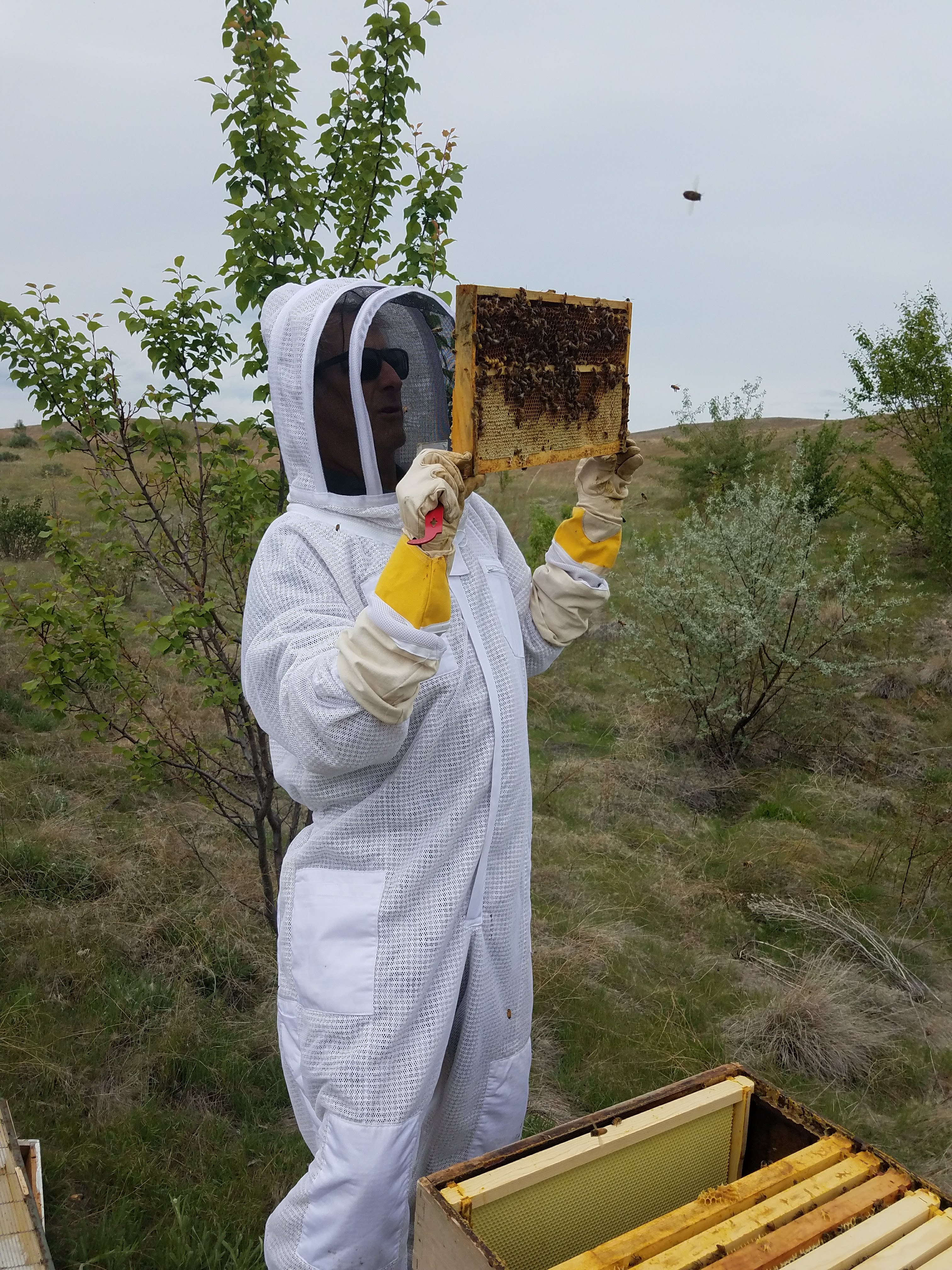
Riley’s dad checking hobby beehives in 2018.
IS: What is your favorite social insect, and why?
Honey bees from day one have captured my full attention. There are so many unique behaviors in these eusocial insects that make them a fascinating study subject. While my research interests lie more on the pathways within the insect itself, the colony structure of honey bees make them highly complex.
IS: What is the best moment/discovery in your research so far? What made it so memorable?
This past summer I worked with a mutant honey bee colony, where drones in the colony had either white or dark eyes. We ran a series of experiments to learn more about the sight deterioration in the white-eyed males. While we presumed that the white eye drones would go blind at some point, it was really exciting to perform some simple tests on this. I spent hours outside a colony observing drones leaving and returning to the colony. This was memorable partly due to the sheer amount of time I spent observing the mutants’ behaviors, but it was also fun to observe bee behaviors more generally.
IS: Do you teach or do outreach/science communication? How do you incorporate your research into these areas?
The Harpur lab works to spend a lot of time doing various outreach activities. I really enjoy connecting with the local community to talk about honey bees and pollinators more generally. I’ve done outreach with the local library as well as with scout troops in the area. My favorite moment is always when young children overcome their fear of an insect. It is a fun puzzle to teach children about honey bee genetics, and we all look forward to helping children ‘build-a-bee’ as a simple way to learn about the inner workings of a colony.
Honey bees swarming to find a new location to establish a colony. Honey bees were collected from the fruit tree and put in a new hive.
IS: What do you think are some of the important current questions in social insect research, and what’s essential for future research?
Insects play an integral role in human lives. They provide a powerful model for medical research, pollination to our agricultural systems, vital roles in our ecosystems, and so much more. I think we still lack fundamental knowledge on many social insect systems and discoveries within these systems will be key to innovative studies. Conducting comprehensive studies on the genotypes and associated phenotypes is crucial as it lays the essential groundwork for future practical research endeavors.
IS: Outside of science, what are your favorite activities, hobbies, or sports?
I am an avid reader of fiction. When I’m not pouring over journal articles, you’ll find my nose in a book. Reading is a really nice way to escape and embrace your creative side. I enjoy hiking and kayaking. Spending summers on Idaho’s whitewater was the perfect way to cool off after beekeeping.
IS: What is the last book you read? Would you recommend it? Why or why not?
The book I am currently reading for my insect genomics course is “A Primer of Population Genetics and Genomics” by Daniel L Hartl. This book has helped further my understanding of population genetics for someone whose background is more molecular biology. For my personal enjoyment, I recently read “Six of Crows” by Leigh Bardugo. I am a huge fan of books that describe things outside of our reality. While this book is more realistic than some, I really enjoyed how well-developed the character’s backstories were. There is a real art to developing a story where the reader can get inside the character’s head and understand the forces that drive them.
IS: How do you keep going when things get tough?
I am fortunate to have a supportive family and partner, as well as friends and colleagues. The going may get tough in the winter time for someone researching bees, but holding out till the next summer is well worth the wait.
Riley’s co-workers and her harvesting honey and collecting drones in 2023.
IS: If you were to go live on an uninhabited island and could only bring three things, what would you bring? Why?
I would bring a really large book, some sunscreen, and some semipermeable membranes to filter seawater. I am well known as the coworker who advises sunscreen even when wearing a bee suit as well as the one who carries around a comically large water bottle.
IS: Who do you think has had the most considerable influence on your science career?
This is a hard question to answer. My first research experience as an undergraduate was not very rewarding. I switched my path to work in an entomology lab and was met with immense support from my co-advisors Dr. Nicholas Naeger and Dr. Jennifer Han. I found a renewed passion for research and was able to grow my interest in honey bees with an independent project under their advisory. I attribute my current career trajectory to the experiences created by these mentors. I would also name my current advisor Dr. Brock Harpur for his enthusiasm in studying social insects as well as his continued support for all of the students in his lab. He has helped me to refine my skills in designing robust experiments as well as writing grants.
IS: What advice would you give to someone hoping to be a social insect researcher in the future?
My advice would be to pursue your passion and not stress over the small things. Working with social insects can be labor intensive as well as unreliable. I cannot count the number of rainy days in the summer that have added new challenges to working with honey bees. I think learning to adapt to these new challenges and to frame your mindset as each stress being a little ‘puzzle’ will help in the long term.
IS: Has learning from a mistake ever led you to success?
Absolutely. I have made many mistakes in my short career, but those are the moments that allow me to remember and adapt. When something works the very first time I do it, it’s often forgettable. If something went wrong, I was bound to learn from that experience as well as gain new skills along the way.
IS: What is your favorite place science has taken you?
I haven’t had too much need for travel in my career at this point, but my favorite place thus far is probably traveling to the Plant and Animal Genome conference in San Diego. There I was not only able to attend a wonderful conference and do a bit of sightseeing, but I was also able to connect with my advisor’s colleagues. I always look forward to making connections with people who share the same interests in insects!








 insectessociaux