Stefano is a biologist specializing in animal behavior and currently works as a research fellow in behavioral ecology at the University of Florence. In this interview, he recalls moment he realized that even ants show individual personalities. His lastest research in Insectes Sociaux can be read here.
IS: Who are you, and what do you do?
I’m Stefano Cavallo, a passionate biologist specialized in animal behaviour. I’m living in Pisa and currently work at the University of Florence as a research fellow in behavioural ecology. My interests range from communication and cognitive aspects of animal behaviour in invertebrates and beyond. At the moment, my project focuses on exploring phenotypic plasticity—particularly behavioural plasticity—in marine decapods.
IS: How did you develop an interest in your research?
Since I was a child, I’ve always been passionate about animals. Although I grew up in a city, I had the chance to keep and observe a variety of species—fish, amphibians, reptiles, birds, mammals, and of course, insects. Among them, social insects, and especially ants, have always fascinated me. Their remarkable social organization combined with apparent simplicity sparked both curiosity and deep biological admiration in me. As my studies in biology progressed, I developed a strong interest in behavioral biology. What I find most stimulating is the possibility of identifying similar behavioral patterns in evolutionarily distant species, both human and non-human.
IS: What is your favorite social insect, and why?
It’s hard to choose just one. I’m fascinated by social insects for very different reasons: for instance, the interspecific relationships of Atta ants, the communicative flight and cognitive abilities of Apis mellifera, and the complex social structure of Polistes dominula all capture my interest. What I find most stimulating is not a single species, but rather those organisms capable of challenging the “dogmas” of biology. For example, the recent discovery by Juvé et al. (2025) on Messor ibericus which destroy species definitions.
IS: What is the best moment/discovery in your research so far? What made it so memorable?
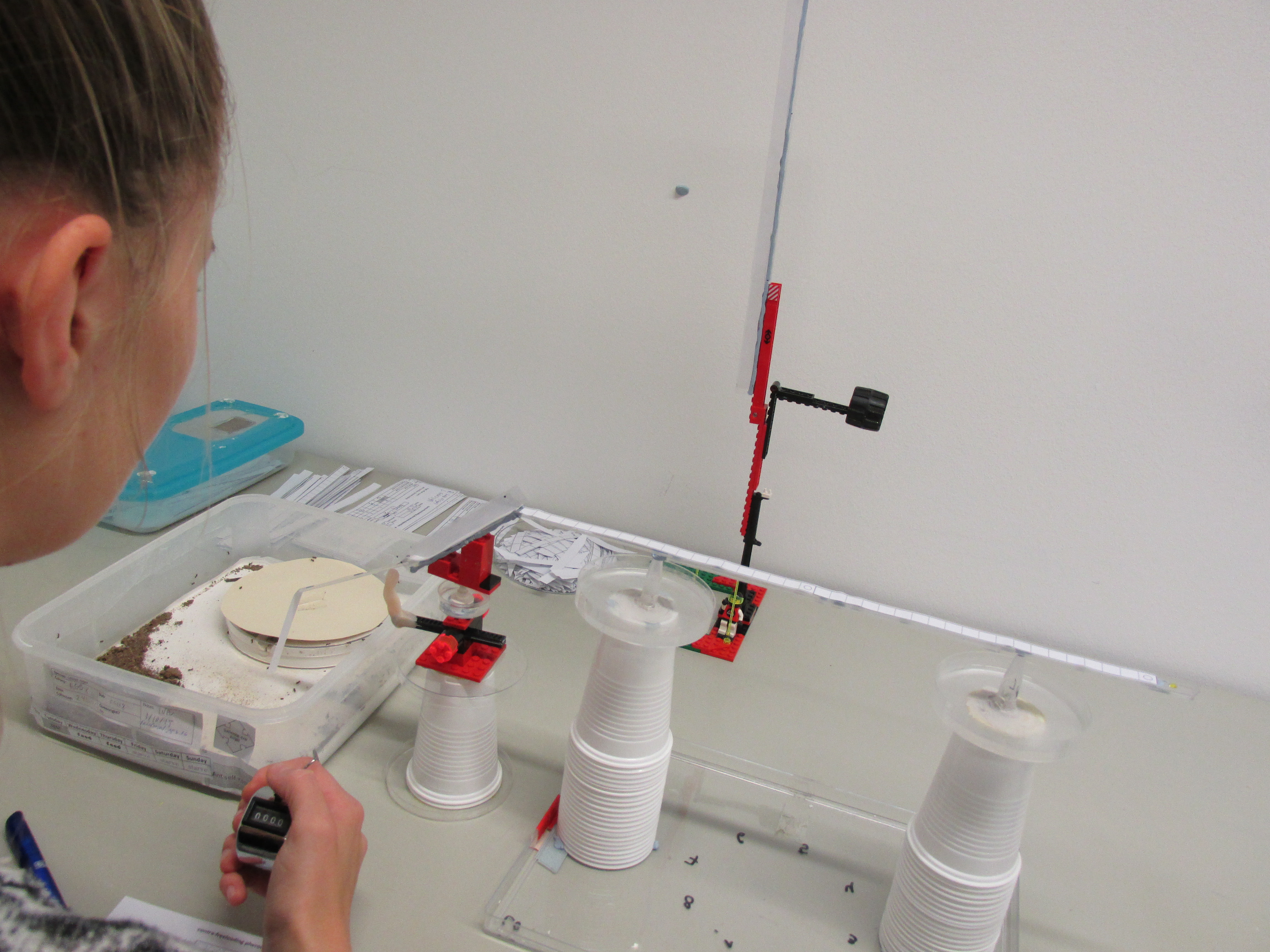
One of the best moments in my research was when I first realized that even ants—creatures we often think of as identical and mechanical—show individual personalities. That realization was unforgettable: it felt like discovering a hidden layer of complexity within a familiar world. From that moment on, I stopped seeing colonies as uniform units and started seeing them as societies of individuals.

IS: Do you teach or do outreach/science communication? How do you incorporate your research into these areas?
No, at the moment I don’t deal with these aspects but in the future I hope it can become part of my job as a scientist. I think it is important to disseminate scientific advances to a wide audience and shorten the distances between laboratories, research and the general public.
IS: What do you think are some of the important current questions in social insect research, and what is essential for future research?
As we know, the environment today is subject to strong anthropogenic pressures and global warming is shaping habitats very quickly. The effects on social insects are still poorly understood. I believe it is essential to focus on these aspects and understand how changing conditions act on the biology and behavior of social insects.
IS: Outside of science, what are your favorite activities, hobbies, or sports?
I love being in nature, trekking in the mountains, climbing, swimming and snorkelling
IS: What is the last book you read? Would you recommend it? Why or why not?
The last book I read was Entangled Life: How Fungi Make Our Worlds, Change Our Minds and Shape Our Futures by Merlin Sheldrake. I would definitely recommend it—it’s a fascinating and beautifully written synthesis of what we know about fungi. These organisms are extraordinary in the way they challenge traditional paradigms of biology and reveal how deeply interconnected life really is.
IS: How do you keep going when things get tough?
I practice tai-chi and mindfulness techniques to stay in the present moment and focus on beautiful things.
IS: If you were to go live on an uninhabited island and could only bring three things, what would you bring? Why?
I would bring a knife, a tinderbox and a book on edible plants. These three things would help me get food, be able to cook and warm up and not die of intoxication haha!
IS: Who do you think has had the most considerable influence on your science career?
I believe that the most important role was played by two high school teachers. My chemistry professor and biology professor taught me scientific rigor and wonder at the living world
IS: What advice would you give to someone hoping to be a social insect researcher in the future?
If I had to advise someone to hop to be a social insect researcher, I would tell them to follow the thirst for knowledge and not stop at appearances. I would ask him to always look with a critical eye at those who claim to have absolute certainties in biology.
IS: Has learning from a mistake ever led you to success?
I couldn’t point to a specific mistake, but I believe that in private life and at work we often learn by falling and making mistakes. Trying by trial and error: this is generally just how we manage to grow.
IS: What is your favorite place science has taken you?
My favourite place where science took me is Paris, in the experimental and comparative ethology laboratory of the Sorbonne University in northern Paris. I was lucky enough to work in the group led by Professor Patrizia d’Ettore who with dedicated passion dedicates herself to research in the myrmecological field.

 insectessociaux