Viruses of eusocial insects: high and underestimated diversity

By Anna Zueva

In this blog, Anna Zueva, researcher at the A.N. Severtsov Institute of Ecology and Evolution (Moscow), reveals the hidden world of viruses in eusocial insects. Read her latest article in Insectes Sociaux here.

Eusocial insects are a kind of human society in miniature. Each part of the community has its own functions and features. The system of social insects’ family works as a coherent and well-coordinated mechanism, and the life of each individual strongly depends on the life of the whole complex.

The functioning of even a fine-tuned system can be disrupted. For example, in the history of mankind there are known episodes when whole civilizations suffered from local epidemics and even pandemics caused by microscopic entities – viruses. But is that the case for social insects?

Our work started from our interest in viruses of invertebrates. Tropics are especially promising for us, as this region is known for its great biodiversity and has lots of still unknown biological species, including of course microorganisms and viruses.

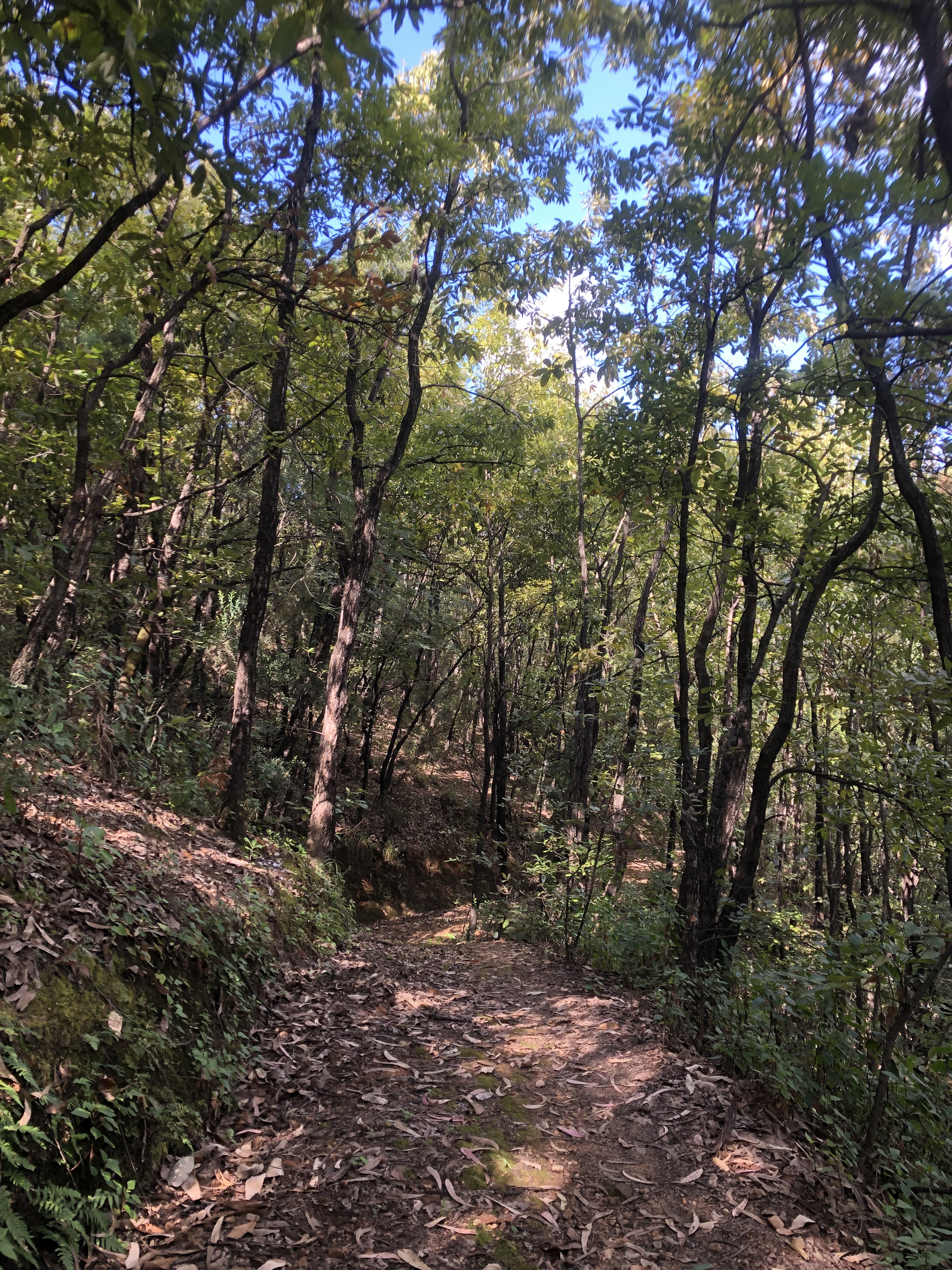
We started our investigation with the research on viruses of termites of Cát Tiên National Park – a part of the Đồng Nai Biosphere Reserve (Fig. 1). We are grateful to the South branch of the Joint Russian-Vietnamese Tropical Research and Technological Center for invaluable help in our studies.

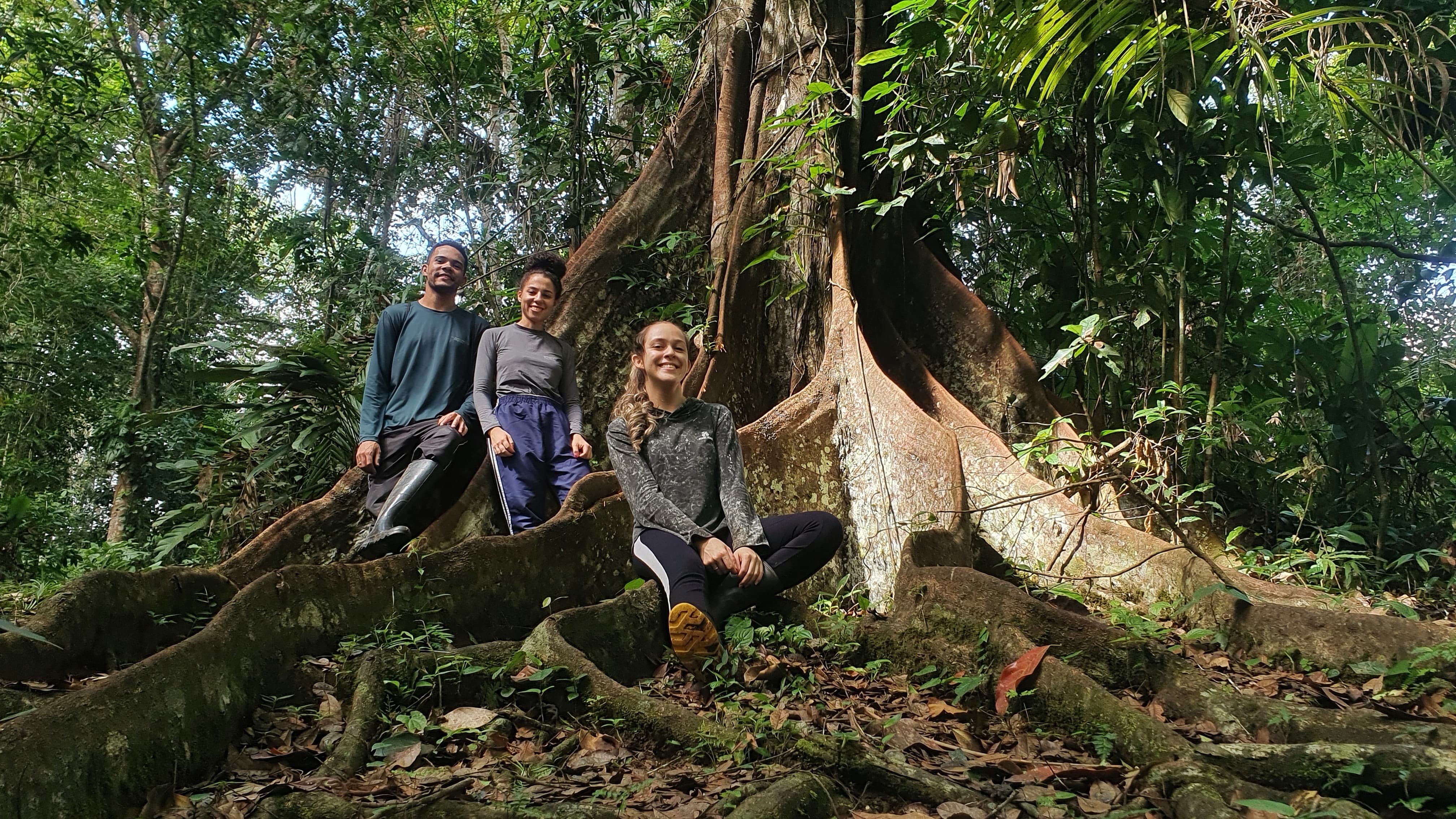
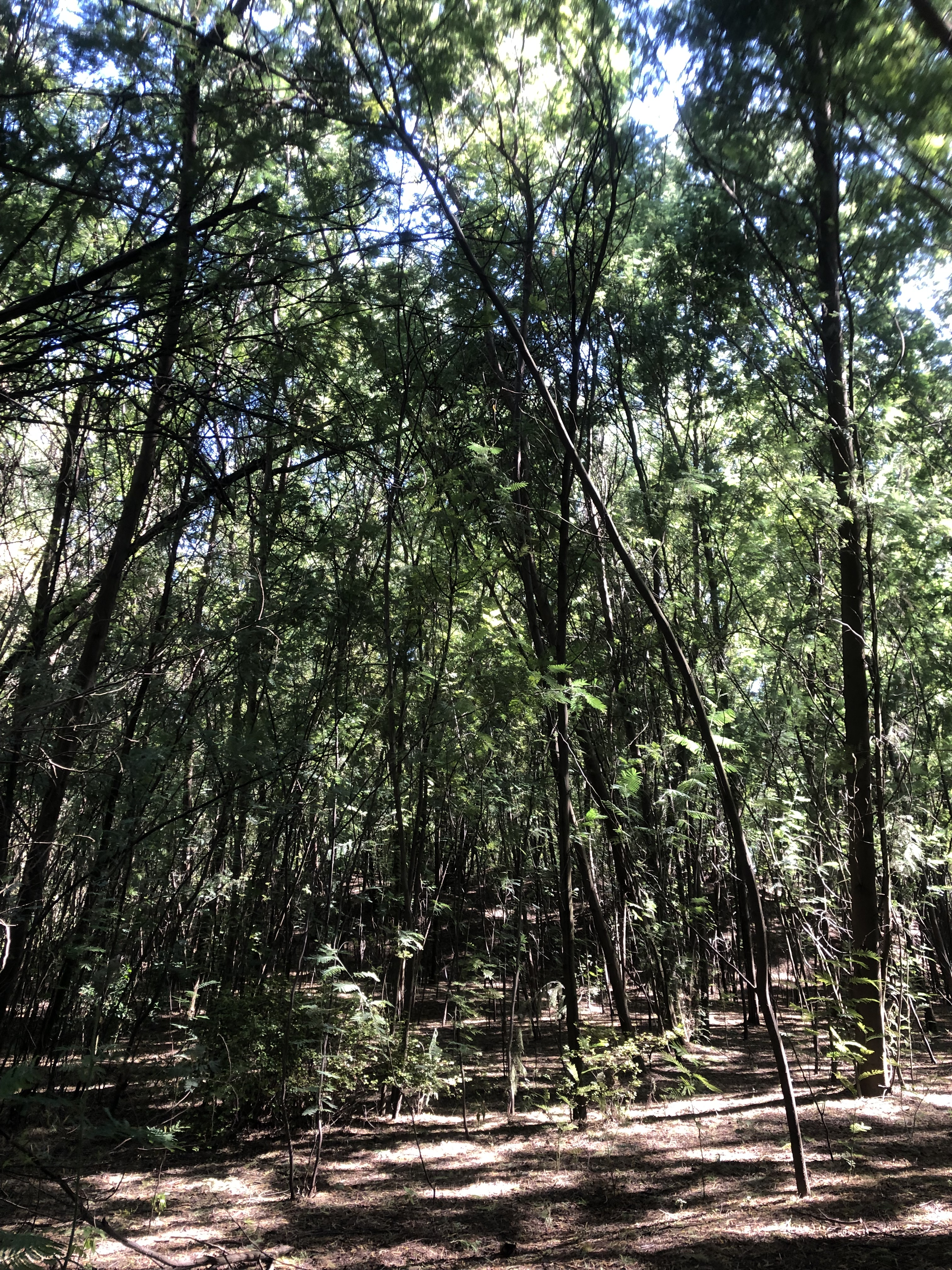
Figure 1. A gap in the tropical monsoon forest of Cát Tiên National Park (Vietnam). ©Anna Zueva

We took samples of termites of three different species feeding on different substrates – lichens and fungi – as we expected that food resource can affect the composition of viruses associated with insects (Fig. 2, 3).

Figure 2. One of the studied species of termites, Hospitalitermes bicolor (Haviland) feeding on lichens. ©Alexei Tiunov
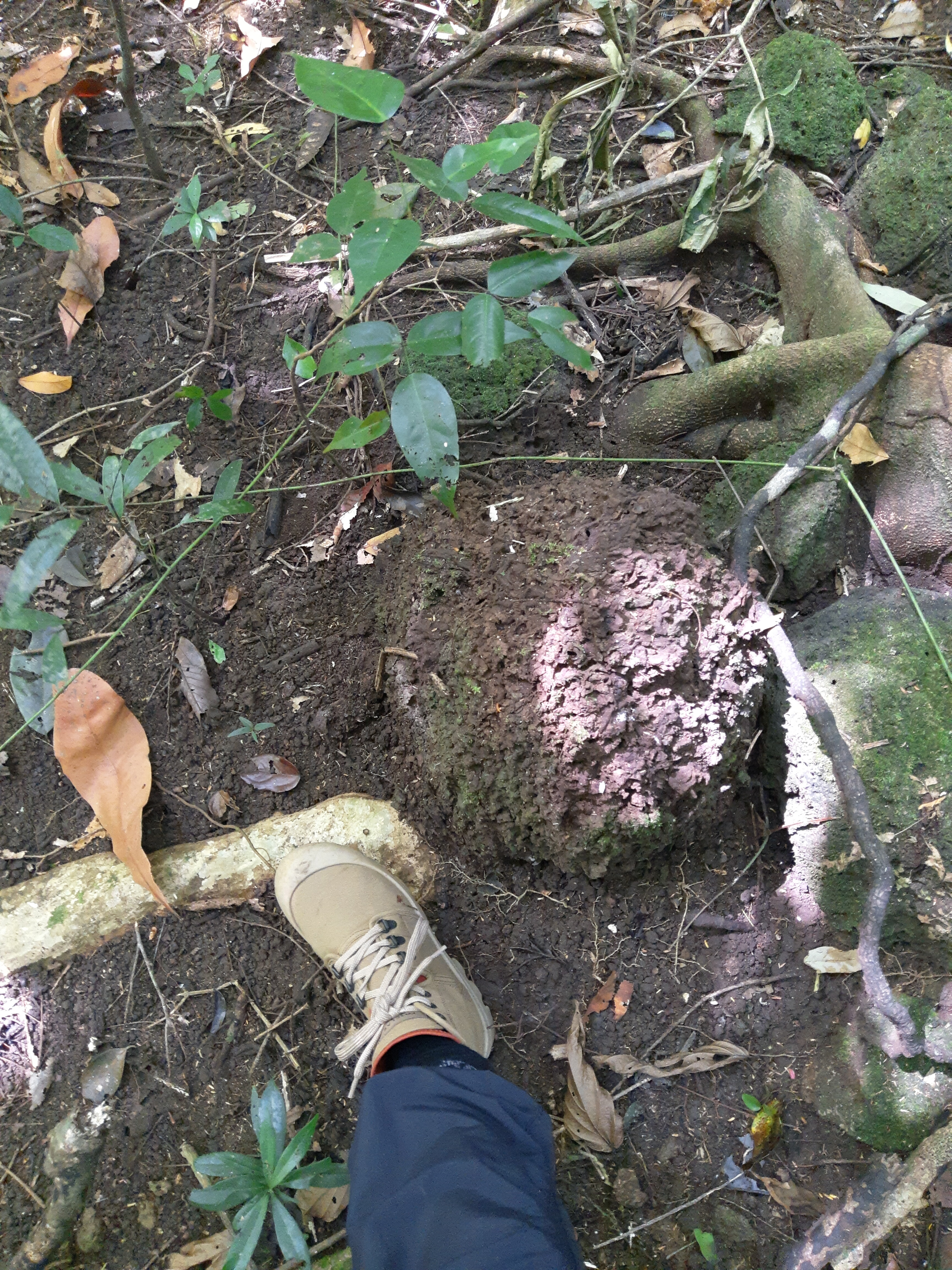
Figure 3. A small termitarium. ©Andrey Zuev

Thought we did not observed any visible symptoms of infection, we detected four new viruses related to viruses previously discovered in termites. We also found the evidence of presence of virus probably belonging to termites’ food substrate (Litov et al. 2022), which partly support our suggestion about the effect of feeding type on the insect virome.

Potentially, eusocial insects can be a model for studying the spread of viruses via social interactions. In the recently published review (Zueva et al 2024), we aimed to actualize the information on the diversity of viruses associated with termites and ants, which are among the most functionally important soil invertebrates. In our review we analyzed 93 articles dedicated to viral findings in both groups of insects. To date, viruses were detected in 54 ant species and in 28 species of termites. We have pointed out 270 viruses and viral genetic variants detected in soil-dwelling social insects, and less than one third of them were associated with termites (Fig. 4). It is obvious that the virome of termites is still mostly undescribed. In addition, both for ants and termites, the information on symptoms or on replication of viruses in their insect hosts remains strongly limited. More studies of the virome of soil-dwelling eusocial organisms with more attention to viral replication and infection symptoms are needed (Zueva et al. 2024).
The most amazing is, that despite the presence of numerous potentially harmful viruses and intense interactions between individuals within a colony, evidences of massive viral epidemics in termites are virtually unknown. We found the information only about one possible virus-caused termite family extinction (Chouvenc et al. 2013). This is especially surprising since termites are important pests of human structures and agriculture, and the search for viruses that infect them has been ongoing for a long time.

Figure 4. Visualization of the presence of viruses in ants and termites (based on Zueva et al. 2024).

There are numerous other unsolved questions on the virome of social insects. How many more viruses of eusocial insects we still don’t know about? Are they able to cause acute dangerous infections or are they just present in the insect tissues and do not manifest themselves until the immune system of host is critically compromised?

We are planning to continue our work in tropics, both on social insects and beyond them. We are sure that this region is a great source of new virological investigations, both on social and solitary invertebrates. By the way, a recent research of our team revealed at least eight new viruses in millipedes collected in the Cat Tien National Park (Litov et al. 2024).

References:

Chouvenc T, Mullins AJ, Efstathion CA, Su NY (2013) Virus-like symptoms in a termite (Isoptera: Kalotermitidae) field colony. Florida Entomologist 96(4):1612–1614. https://doi.org/10.1653/024.096.0450

Litov A.G., Semenyuk I.I., Belova O.A., Polienko A.E., Thinh N.V., Karganova G.G., Tiunov A.V. (2024) Extensive diversity of viruses in millipedes collected in the Dong Nai Biosphere Reserve (Vietnam). Viruses, 16: 1486. https://doi.org/10.3390/v16091486.

Litov AG, Zueva AI, Tiunov AV, Van Thinh N, Belyaeva NV, Karganova GG (2022) Virome of Three Termite Species from Southern Vietnam. Viruses 14(5):860. https://doi.org/10.3390/v14050860

Zueva AI, Zuev AG, Litov AG, Karganova GG, Tiunov AV (2024). Viruses of ants and termites: a review. Insectes Sociaux, 1-12. https://doi.org/10.1007/s00040-024-01008-8

Interview with a social insect scientist: Tom Ratz

Tom Ratz is a researcher at the University of Zurich, studying social interactions in arthropods like Drosophila and beetles. One of his most surprising discoveries came during his PhD while observing burying beetle mothers. Check out his latest work in Insectes Sociaux here!

IS: Who are you, and what do you do?

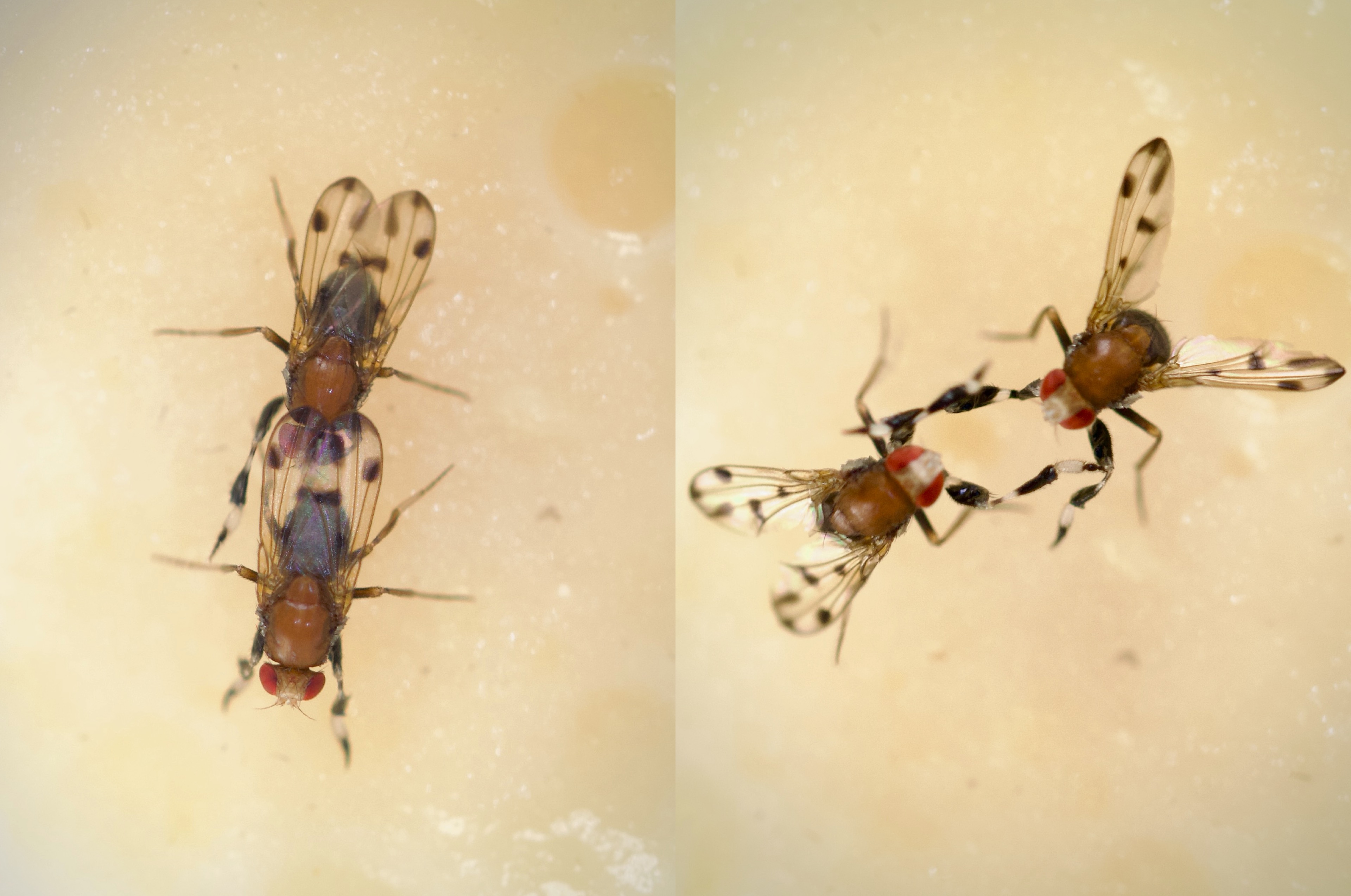
I am an SNSF Ambizione Fellow based at the Department of Evolutionary biology and Environmental Studies, University of Zurich, Switzerland. My research broadly explores social interactions in arthropods and their role in evolution. My current focus is on agonistic interactions in the highly aggressive species of fruit fly Drosophila prolongata. My group uses a combination of behavioural experiments, quantitative genetic tools, and experimental evolution to test how the competitive environment shapes the evolution of social and non-social traits. 

IS: How did you develop an interest in your research?

My fascination with the insect world began early, around the age of eight, when I started collecting beetles in the backyard of my house. I was captivated by the hidden, bustling world of insects happening all around us, often unnoticed. I wanted to pursue a career in entomology and enrolled in a biology degree. During my studies, I found myself particularly drawn to ethology and behavioural ecology. Applying these fields to insects felt like an exciting way to maintain a connection to entomology while exploring broader scientific questions about behaviour and ecology.

Aggressive encounter between two male Drosophila prolongata. In the first image (left), one male chases the other, leading to an escalation into a fight involving leg fencing (right).

IS: What is your favorite social insect, and why?

Burying beetles are my favourite social insects. I studied them during my PhD and still find their social behaviour incredibly enigmatic–most of which takes place on or inside the decaying carcass of a vertebrate! In a sense, what is a crypt to some is a cradle for burying beetles. Aside from their important ecological role as efficient buriers of small rodent and bird corpses, the complexity of their social interactions within family is, to me, unparalleled in the arthropod world. These behaviours include larvae begging for food and parents regurgitating a “soup” of pre-digested carcass flesh to feed them. Conveniently, burying beetles are mostly undisturbed by experimental conditions, making their behaviour relatively easy to observe and study in the lab.

IS: What is the best moment/discovery in your research so far? What made it so memorable?

A memorable discovery was analysing the data of my first PhD experiment and finding that they absolutely defied our initial predictions. Contrary to expectations, burying beetle mothers didn’t reduce care when experimentally handicapped by a led weight attached to them –instead, they provided more care. At first, this result was puzzling to me, but it became a revelation about the importance of understanding a species’ natural history. It makes sense for a parent to increase investment towards the current brood when prospects for future reproduction are low, which is the case with handicapping, even if the cost of care is higher. This insight highlighted a crucial lesson: while theoretical predictions are valuable, they must be contextualised within the specific biology of the study system.

IS: Do you teach or do outreach/science communication? How do you incorporate your research into these areas?

In both teaching and science communication I try to incorporate my own research as case studies to illustrate key concepts and bring scientific research to life. I find that people are more engaged when they can interact directly with the researchers behind the studies.

Lab stock and experimental populations of the fruit fly Drosophila prolongata

IS: What do you think are some of the important current questions in social insect research, and what is essential for future research?

In my opinion, some critical questions in the field include clarifying the role of social behaviour in shaping population dynamics and evolutionary responses. It is increasingly clear that social interactions within a group can drastically influence the population growth, survival, and how animals respond and adapt to environmental changes. However, what remains less understood is when and to what extend behavioural dynamics taking place among interacting individuals can impact group fitness and drive long-term phenotypic evolution.

IS: Outside of science, what are your favorite activities, hobbies, or sports?

One of my top hobbies is spending time outdoors. I’ve been fortunate to live near beautiful natural landscapes and mountains, which has allowed me to enjoy hiking throughout the year. It’s a great way to clear the mind and recharge. I’m also a regular at the bouldering gym. And of course, entomology remains an important hobby of mine.

IS: What is the last book you read? Would you recommend it? Why or why not?

The book “In search of us: adventures in anthropology” by Lucy Moore, and I highly recommend it. It’s a fascinating account of the origins of anthropology, told through the stories of people who helped found the discipline. It’s rich in field work and historical anecdotes. The author does a nice job of highlighting the complexities of the influential figures in the field–acknowledging both their biases as Westerners and their progressive ideas ahead of their time.

Burying beetles parents feeding their larvae.

IS: How do you keep going when things get tough?

Talking things through with colleagues, friend, or family often helps. While it may not directly solve the problem, verbalising it can normalise the issue and make it feel less dramatic (which it often is). Sometimes, simply going for a walk works wonders–a change of scenery can help put things into perspective.

IS: If you were to go live on an uninhabited island and could only bring three things, what would you bring? Why?

If it can count as one item, I’d bring my partner with me. She’s incredibly resourceful and crafty, and would surely be a great survival companion (as she is in life!). I’d make sure she brings her Swiss army knife, so that’s item number two covered. And obviously a tube to collect beetles as my third item.

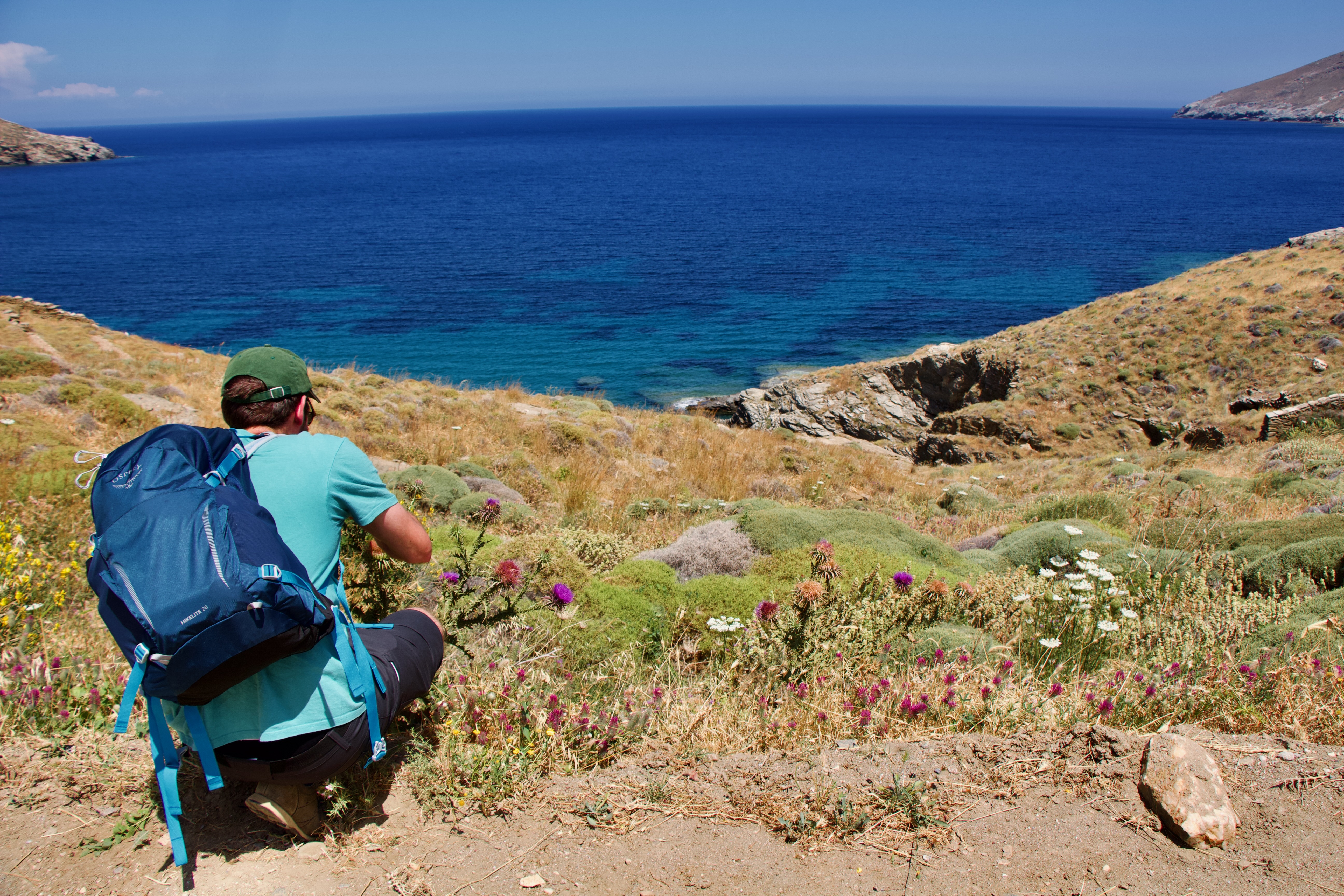
Tom, collecting beetles in Greece

IS: Who do you think has had the most considerable influence on your science career?

My PhD supervisor, Per Smiseth, has been a major influence on my scientific career. He’s a mentor with exceptional work ethics. Another key figure was Sylvain Pincebourde, who took me as an intern in his lab when I just a first-year undergraduate. That was my very first  real research experience, and was incredibly formative. I also owe a great deal to many other mentors and colleagues who have had an important role in shaping my interest and career in Science, including Joël Meunier, Pierre-Olivier Montiglio, Niels Dingemanse, Cristina Tuni, Stefan Lüpold, and Wolf Blanckenhorn.

IS: What advice would you give to someone hoping to be a social insect researcher in the future?

A general piece of advice, not just for someone interested in social insects, is to focus on work you’re passionate about and truly enjoy. With genuine interest and motivation, nearly everything seems to become achievable.

IS: Has learning from a mistake ever led you to success?

Yes! And, sadly, the most painful mistakes are often the ones that teach us the most.

IS: What is your favorite place science has taken you?

The tropical forests of Panama are a favourite of mine. I also have a soft spot for Mediterranean ecosystems. Despite their dryness, I’m always surprised by their abundance and diversity of plants and animals.

Interview with a social insect scientist: Florina Anthony

Florina Anthony is a researcher and lecturer at Universiti Malaysia Sabah. Her interest in social insects grew from her fieldwork on tropical mountain ecosystems, where she also enjoys hiking, camping, and exploring biodiversity. Check out her latest work in Insectes Sociaux here!

IS: Who are you, and what do you do?

My name is Florina Anthony, and I work as a researcher/lecturer at the Institute for Tropical Biology and Conservation, Universiti Malaysia Sabah. I am a field biologist interested in the ecology, molecular biology, and systematics of plants and other organisms. My main interest is ferns in tropical mountains, but I am still interested in various organisms, including social insects.

Favorite Florina’s places are in the forests of tropical mountains. This photo was taken during a field trip to Mount Tambuyukon, the fourth-highest mountain in Borneo. Mount Kinabalu is in the background. (Photo credit: Hoo Pui Kiat)

IS: How did you develop an interest in your research?

I am an outdoor person who truly loves the forest and enjoys hiking, camping, and other forest-based activities. I chose to major in Conservation Biology during my bachelor’s degree because of my interest, hoping I could at least protect the forest in my hometown. To protect the forest, I need to know all the species that should be protected due to their important role in forest ecosystems. Knowing more about the biodiversity around me made me curious about everything, including the interactions of species with other organisms and abiotic factors. I am also curious about their distribution range and the factors that influence their diversity. This curiosity has driven the focus of my current research.

IS: What is your favorite social insect, and why?

My favorite social insect is the bee, including honeybees. I learned a lot about bees and their importance to our ecosystem from my co-author (Dr. Yek Sze Huei). I had the opportunity to help her with her research on bees in the field, and this influenced my fondness for bees.

IS: What is the best moment/discovery in your research so far? What made it so memorable?

The influence of temperature on bees’ survival. As a plant scientist, I never expected that climate would affect insect survival.

IS: Do you teach or do outreach/science communication? How do you incorporate your research into these areas?

Sometimes, I am invited to give talks to the public and school children to share my research activities. I incorporate my research by sharing fun facts about the organisms I work with. This attracts their interest and makes them curious to learn more.

IS: What do you think are some of the important current questions in social insect research, and what is essential for future research?

Some important current questions in social insect research are related to the impact of environmental change. How are social insect populations responding to environmental changes like habitat loss, climate change, and pesticide exposure? What are the consequences of these changes for ecosystem services provided by social insects, such as pollination and pest control? For future research, it is essential to conduct long-term studies to track changes in social insect populations and communities over time and understand the long-term impacts of environmental change.

IS: Outside of science, what are your favorite activities, hobbies, or sports?

I love outdoor and adventurous activities like hiking, rafting, and camping. I also enjoy drawing and playing traditional musical instruments such as the bamboo flute and Sompoton.

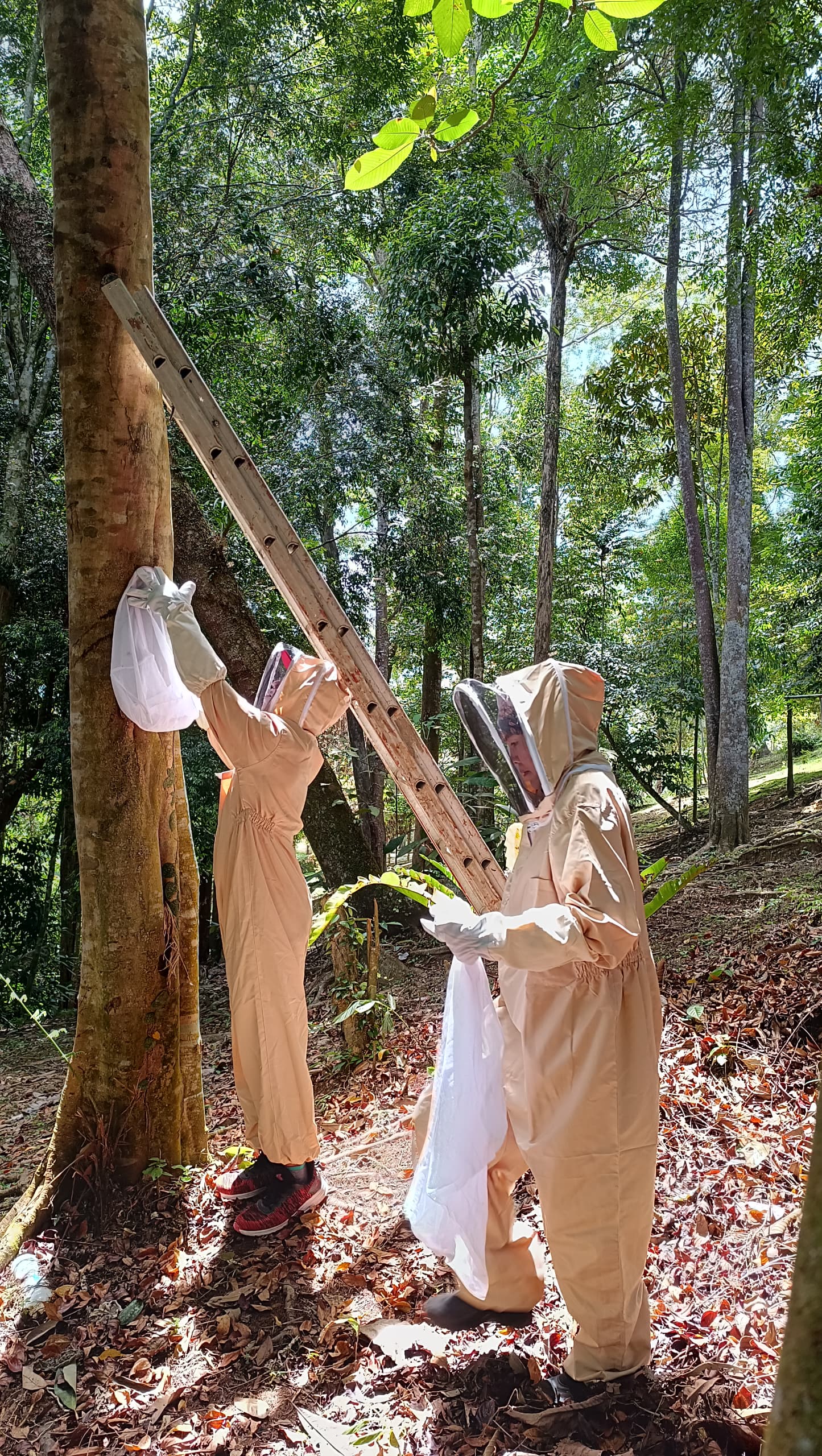
Florina became involved with social insect research by volunteering to help her co-author (Dr. Yek Sze Huei) in the field. This photo was taken during a field trip to collect social insect specimens for research purposes.

IS: What is the last book you read? Would you recommend it? Why or why not?

It is not the last book I read, but this book influenced me a lot. The book’s title is “Exploration of Mount Kinabalu,” by John Whitehead a naturalist who came to North Borneo in 1884. He made the first collection of specimens in Borneo, and many new species were described based on his collection. His writing style inspires me to write about my fieldwork and encourages me to write anything that comes from my heart.

IS: How do you keep going when things get tough?

I will face it and process all the emotions involved. I will slowly recover and go through it.

IS: If you were to go live on an uninhabited island and could only bring three things, what would you bring? Why?

I will bring matches, a machete, and a survival skills book. Based on my experiences, it is always easier to start a life with matches and a machete. A survival skills book is a bonus; it will make it easier to adapt to a new life on the island. Once I adapt to life on the island, I will have much time to observe all the organisms and feed my curiosity about the ecosystem around me with research projects on everything, gradually increasing my quality of life on the uninhabited island.

IS: Who do you think has had the most considerable influence on your science career?

I have been influenced by books I read about previous scientific discoveries and was later influenced by my former Ph.D. supervisor and senior colleagues. My former Ph.D. supervisor stated that science is about something we are curious about, and we want to find the answer logically and be proven scientifically.

IS: What advice would you give to someone hoping to be a social insect researcher in the future?

 I don’t have enough experience as a social insect scientist to give credibility to my advice to fellow young researchers. This is the first paper I have written about social insects, but I believe there is still a lot we can learn and discover from social insect behavior.

IS: Has learning from a mistake ever led you to success?

Yes, it happens all the time. It is difficult the first time, but trying a second time is much better because we already learn from our previous mistakes. So, don’t be afraid to make mistakes and never give up.

IS: What is your favorite place science has taken you?

I am a field person, and my favorite places are in the forest, especially on tropical mountains, where I am stress-free, and I feed my passion for the things I am interested in. I love to be in the forest and get to know everything around me.

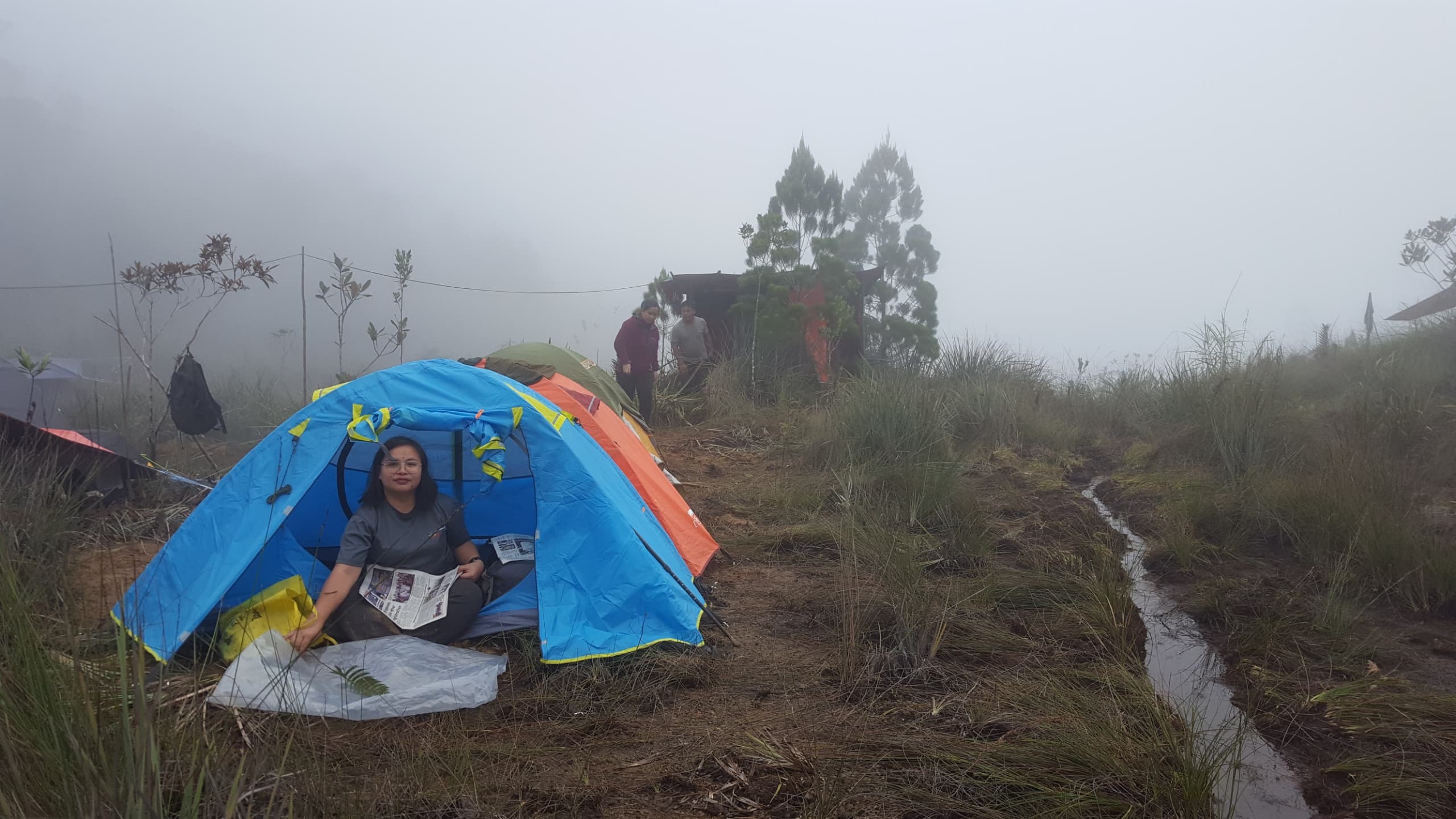
One of her favorite outdoor activities is camping. The photo shows their campsite during scientific expedition at Marai-Parai, Mount Kinabalu. (Photo credit: Ng Ting Hui)

Ants and their commensals: The intriguing presence of other groups in ant nests

By Mariane Dias-Soares and Cléa S. F. Mariano

In this blog, Mariane Dias-Soares and Cléa Mariano explore the diverse organisms cohabiting ant nests in the Neotropics, from gastropods to myriapods. They explain how do these guests interact with ants, sharing resources and space within the nest environment. Discover more about these intriguing interactions in their latest work for Insectes Sociaux, here.

What attracts these other groups? What are these groups? Are there really gastropods inside ant nests? What are commensals? Do ants benefit from their presence? Why aren’t they expelled? These are some of the most frequent questions when the topic of conversation is our research and our article. Let’s now address each of these questions, the work done so far, and the next steps toward the discoveries that researching an ant nest provides us…

The ant nests provide a protected environment for the workers, the queen, and all of their immatures, as well as storing food and maintaining stable temperature and humidity. When studying these nests, the presence of other groups was observed, which, attracted by these resources, coexist with the ants. These groups may spend part of their life cycle inside the nests or even their entire existence.

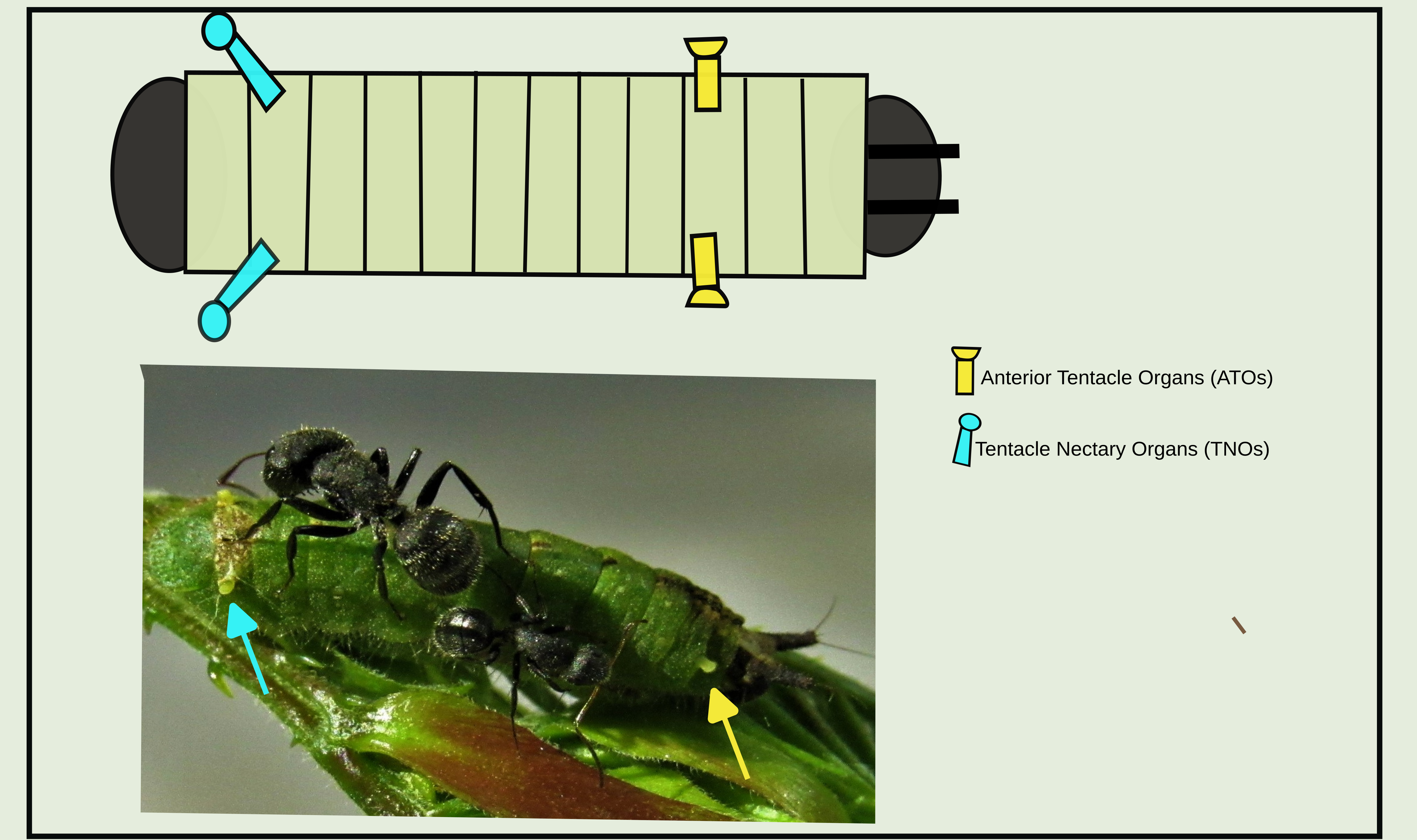
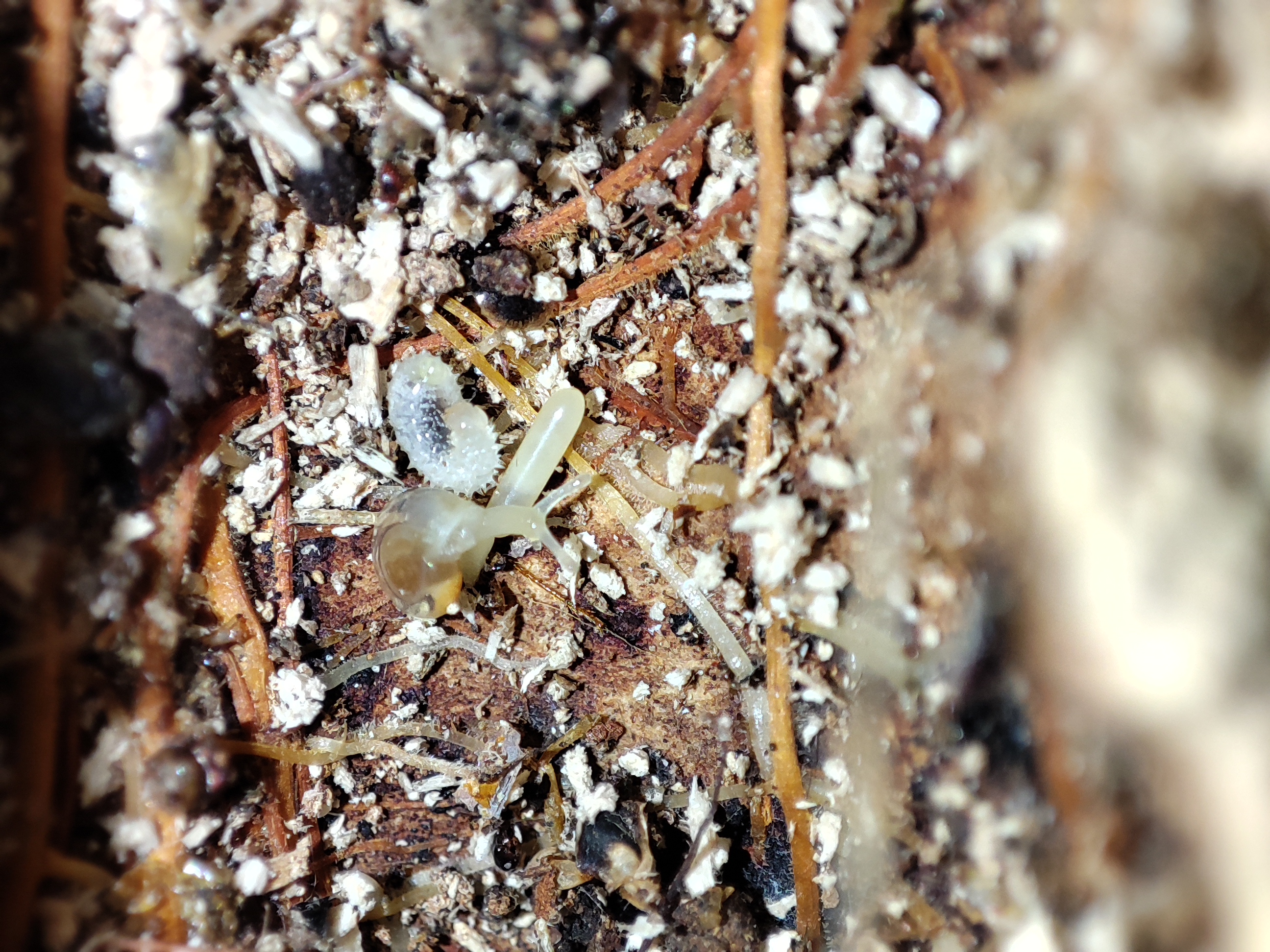
Gastropod near the immatures of N. verenae. Photo: Laís Bomfim

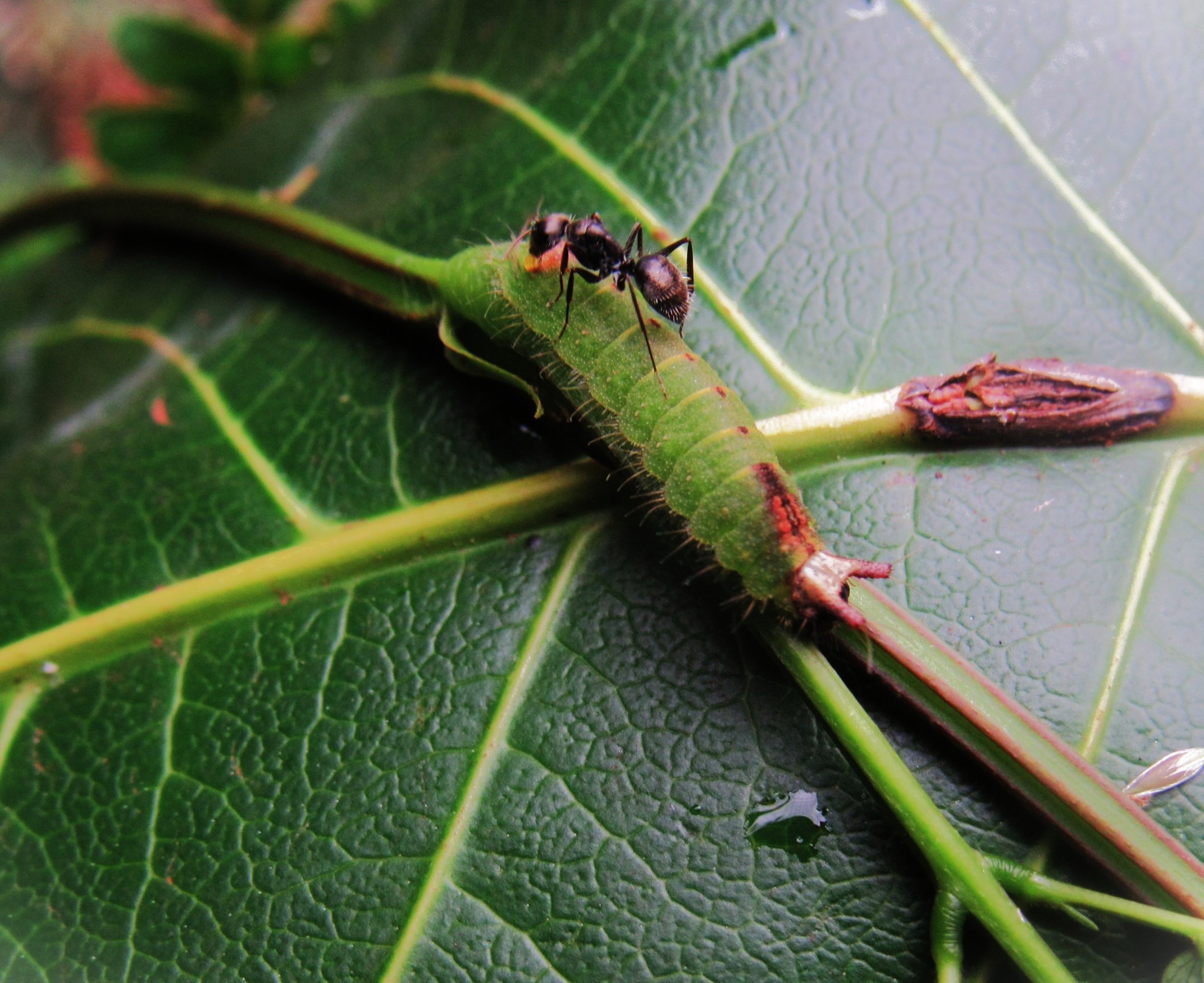
Our research aims to identify which groups are associated with different ant species in a Neotropical region. In my master’s studies, I focused on the species Neoponera verenae, an ant from the subfamily Ponerinae that nests in various substrates such as dry cocoa pods, soil, and decomposing logs. In our study, we found a variety of groups, including Myriapoda, Isopoda, Araneae, Lepidoptera, Pseudoscorpiones, Collembola, Acari, Coleoptera, Diptera, Dermaptera, and Gastropoda, among others. This highlights the great diversity of organisms that coexist within these ant nests.

Caterpillar in a N. verenae nest near workers and immatures. Photo: Mariane Dias-Soares]
Researchers during new field collections in the Neotropical Region of Brazil. Photo: Mariane Dias-Soares

Noticing the high number of groups within the ant nests sparked in us the need not only to identify which groups inhabit them but also to understand the interactions that occur in these environments. In our article, we studied the facultative commensalism of gastropods in N. verenae nests, presenting novel records and proposing hypotheses about this type of interaction.

There are different types of interactions between ants and gastropods. In the case of facultative commensalism, the gastropods coexist peacefully with the ants, benefiting from the protection provided by the colony, the available food, and the environmental stability, while also being found outside the nests. For the ants, however, we did not observe any apparent benefit or loss. Further research will delve deeper into these issues.

Gastropods recorded inside N. verenae ant nests. (yellow arrows indicate immatures, and orange arrows indicate snails). Photos from the article by Dias-Soares et al. (2024)

Through various observations and records made in the field and laboratory, we found the presence of several gastropod species inside the ant nests. Among the gastropods found, the family Achatinidae was the most abundant. These gastropods coexisted harmoniously with the workers and the young individuals in the nest (larvae, pupae, and eggs), moving freely without being disturbed by the ants. We also observed that the gastropods produced a foam, which generated a pacifying effect that prevented their expulsion from the nests. This is one of the strategies used by these organisms to inhabit ant nests.

Our study presents novel records of the interaction between ants and gastropods, leading us to explore various unresolved questions. One of these questions is the degree of interaction between immature ants and gastropods, as we found individuals in the chambers that contained the immatures. Additionally, we are investigating the chemical nature of the mucus involved in these interactions and identifying the new species of gastropods found in the nests, in collaboration with Dr. Sthefane D’ávila. Ongoing studies focus on analyzing the chemical strategies used, the morphological adaptations and behaviors exhibited, and the existence of mimicry within these nests. There is still much to be discovered in the vast world that is an ant nest…

Some members of the research team currently conducting collections for the new phase of the Project. from left to right: Fred da Silva, Mariane Dias-Soares and Jossiane Dias
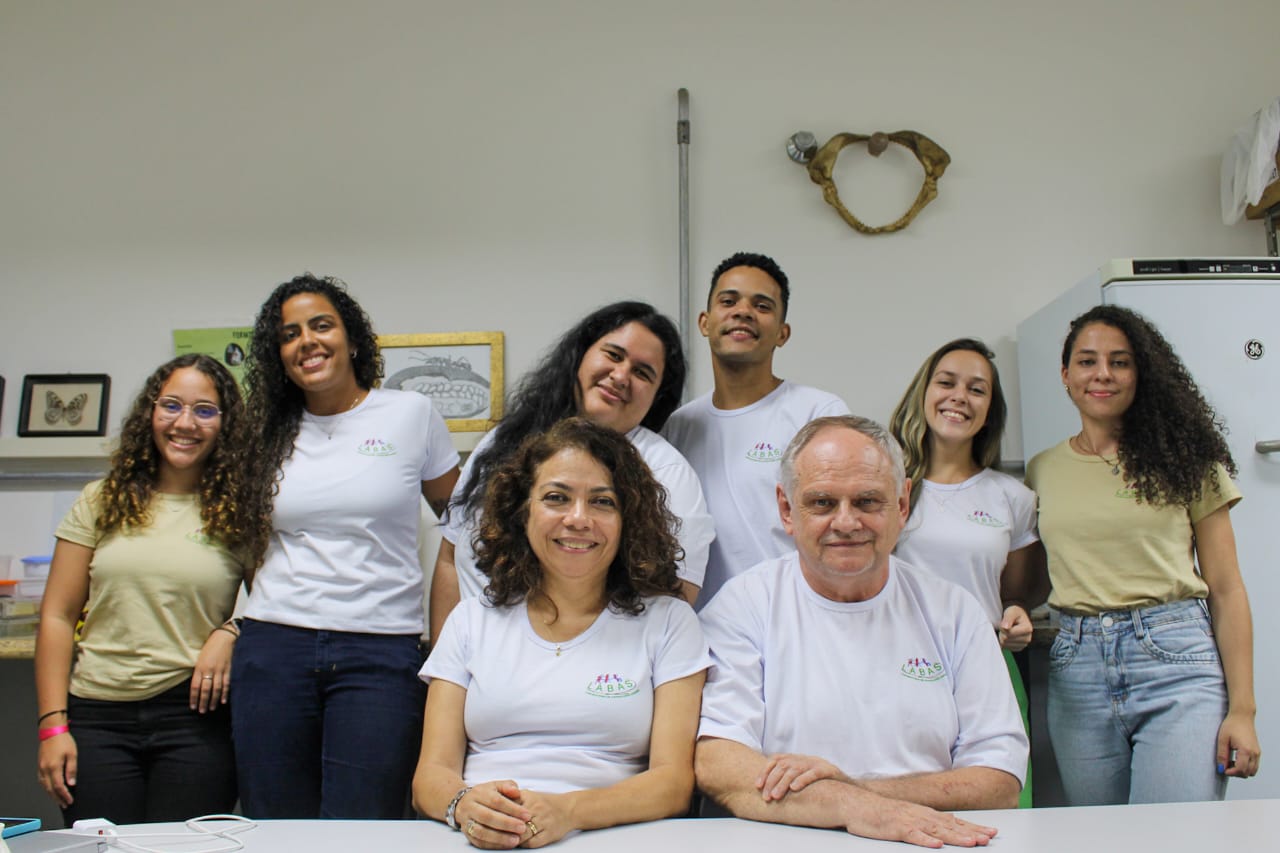
Part of the research group led by Cléa Mariano and Jacques Delabie, focusing on studies of various ant species and other groups present in ant nests

Interview with a social insect scientist: Tomer Czaczkes

Tommy is a researcher at the University of Regensburg, where he leads the ACElab since 2016. He study value perception and decision-making in invertebrates (mostly ants). His latest work in Insectes Sociaux can be found here.

IS: Who are you, and what do you do?

My name is Tomer (Tommy, please) Czaczkes, and I study the behaviour of mostly ants, sometimes bees, and very occasionally other arthropods. My current focus is on comparative psychology – understanding how animals think, learn, and make decisions. I’m trying to apply our hard-earned knowledge of behavioural ecology to controlling invasive ants. I also dabble in collective behaviour.

Tommy Czaczkes thinking about Lasius fuliginosus.

IS: How did you develop an interest in your research?

Ah, well. During my undergraduate the average grades for different modules were available, and I noted that while cell biology and microbiology had pretty low average grades, behaviour and ecology had quite high ones. I know which side of the bread is buttered, and, honestly, I never expected to stay in research. Then, during my undergraduate project, I realized that while the miserable vertebrate ecology people would have to trek for hours through the forest to sight their animal, I, as an experimental behavioural ecologist working on ants, could collect 50 datapoints in half a day, while drinking rum.

IS: What is your favorite social insect, and why?

Oooh, a tough question! I’m torn between two ant species: Lasius niger and Pheidole oxyops. L. niger is perhaps the most common ant in Europe, and as my PhD supervisor Francis Ratnieks always says “it’s the common animals that are most interesting. They’re clearly doing something right.”. L. niger are extremely smart, polite, helpful, and make excellent colleagues. P. oxyops, however, do wonderful cooperative transport – the collective carrying of loads. They have an amazing, explosive recruitment behaviour, and love cheese. They’re also extremely common, but alas, in Brazil and not in Germany, where I’m based.

Pheidole oxyops carrying a 10x10mm square of choose by the corners (published in Insectes Sociaux).

IS: What is the best moment/discovery in your research so far? What made it so memorable?

Seeing ants being visibly disappointed when they received food which was poorer than what they were expecting – poor things! It was clear from the moment I did the first pilot on that project that we would have a clear and strong effect. It was memorable because it was simply so easy to relate to: the disappointed ants would check the food, break away, try again to make sure, and circle around looking for the good stuff they were sure was there before. It was simply so cute and relatable.

IS: Do you teach or do outreach/science communication? How do you incorporate your research into these areas?

I enjoy going into schools and kindergartens, to talk to kids about ants and insects in general. It’s always fun to bring an ant colony or two, and show the “mama ant” and her babies. For the bigger kids, it’s fun to do a pheromone following assay – makes me feel like an ant whisperer, who can use my super science powers to talk to insects.

IS: What do you think are some of the important current questions in social insect research, and what is essential for future research?

This is showing my own biases here, but I think the question of insect sentience and intelligence is a huge question, and social insects are central to the experimental examination of these topics. We’ve had a slew of high impact work reporting all sorts of impressive cognitive abilities, with a big swing from behaviourism to cognition. I expect that very soon the swing will move the other way again, with people starting to push for simpler explanations, or attempting replication studies. Animal behaviour as a subject is overdue a big replication study, the likes of which shook up the worlds of experimental psychology and cancer research (amongst others) recently. I have attempted to replicate some of my own work, with some things replicating wonderfully, and others simply not there next time I looked. And yes, I publish the failed replications too.

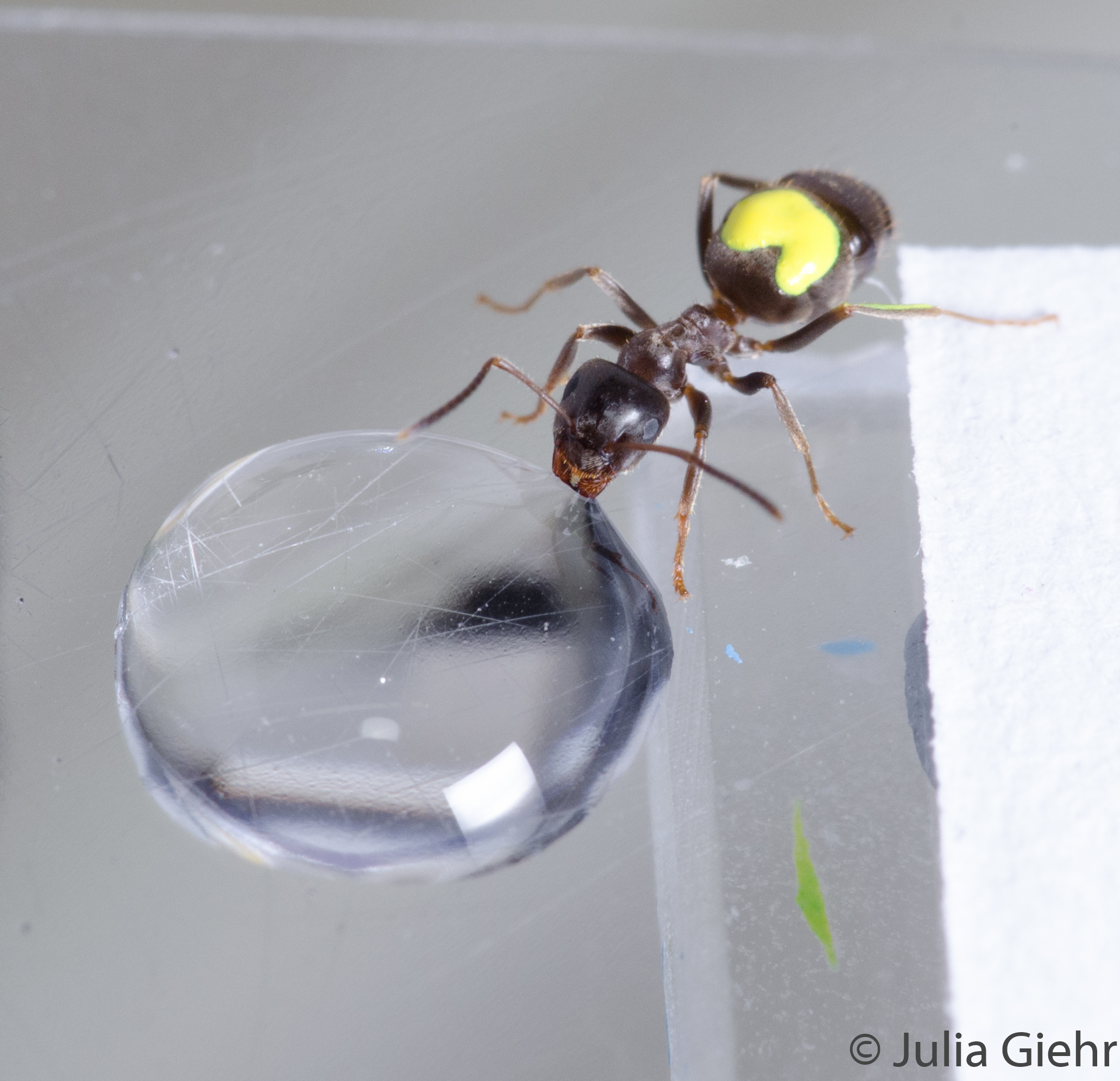
Lasius niger worker who is very satisfied with her drop of sucrose solution.

IS: Outside of science, what are your favorite activities, hobbies, or sports?

I really enjoy hiking in the mountains, when I can get out. When not, I’m a big fan of sci-fi books and computer games. My mind is still somewhat blown by my VR set.

IS: What is the last book you read? Would you recommend it? Why or why not?

I’m almost through “Delusions of Gender” by Cordelia Fine. The book speaks against the supposed ‘evidence’ for a simplistic biological basis for gender roles. Would I recommend it? It’s convincing and helpful, but sometimes feels like being bludgeoned with an endless series of (reasonable) criticisms of studies. It’s well researched and useful, but perhaps not the page turner it could have been.

IS: How do you keep going when things get tough?

Give up! No, really. On days where I can’t focus, I simply stop working. If an experiment runs into wall after wall, I’ll drop it. But for things like rejections, failures, etc – I take the long view, and remind myself that this is normal, and this too shall pass. Oh, and moaning. Moaning helps.

IS: If you were to go live on an uninhabited island and could only bring three things, what would you bring? Why?

Assuming my basic survival needs were met? My ebook stuffed with books (for entertainment), a solar charger to charge it, and a Swiss army knife to bootstrap other tools from. I think I’ve played too much Minecraft.

IS: Who do you think has had the most considerable influence on your science career?

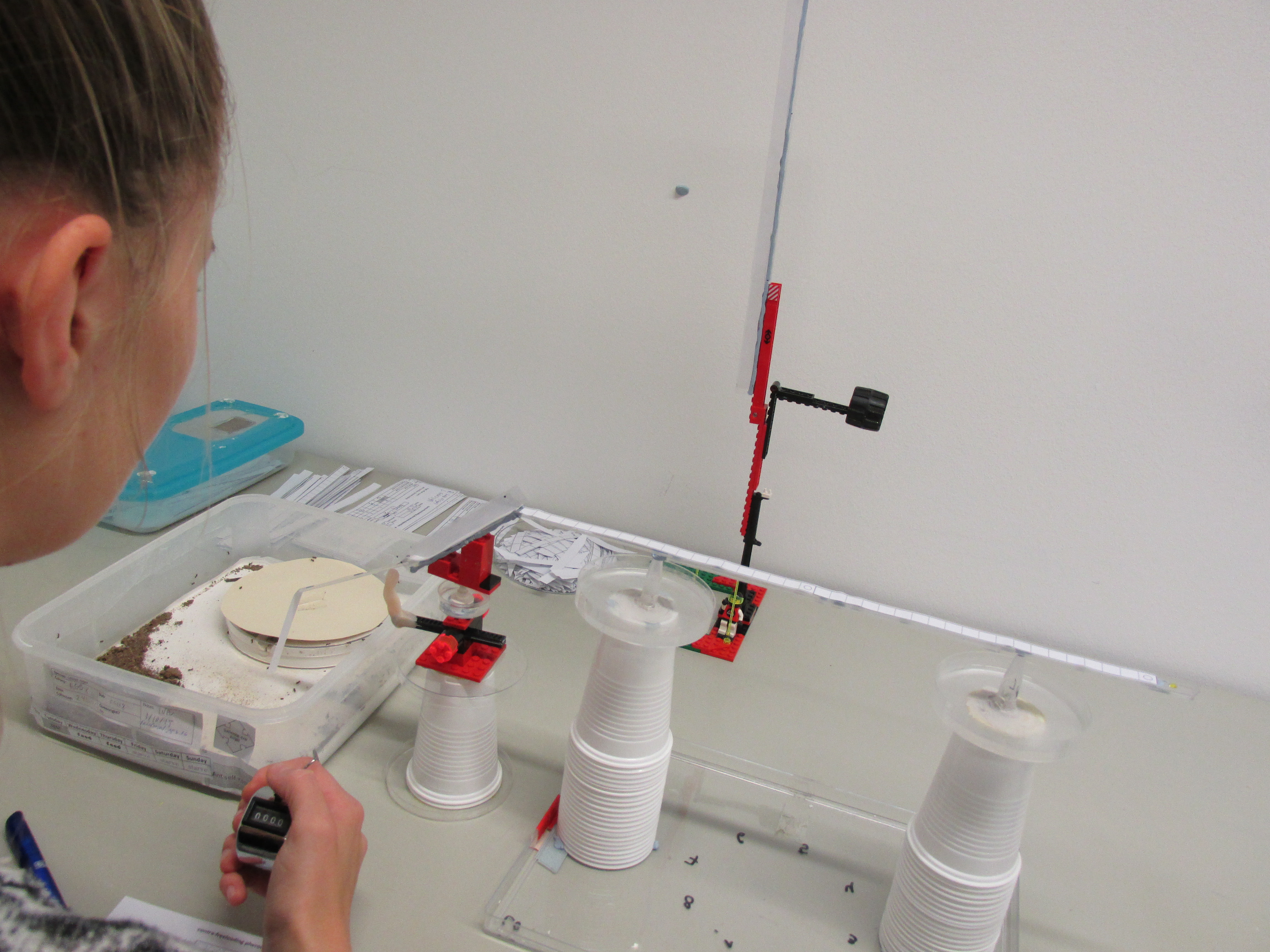
Certainly my Doctoral supervisor, Prof. Francis Ratnieks. He has an absolutely excellent eye for interesting biology. Moreover, I admire (and have tried to emulate) his quick, cheap, and cheerful approach to research projects – avoiding the huge, long term, ultra-high tech projects, and preferring short, fun, and simple projects which require only some ants, a few strips of paper, and some drops of sucrose. And a good idea, of course.

In this experiment, Tommy’s team was testing whether ants prefer food they have worked harder for (they do). A good example of their experimental designs. Note the Lego, paper runways, and complete lack of high tech gubbins.

IS: What advice would you give to someone hoping to be a social insect researcher in the future?

Read “The Ants” by Hölldobler and Wilson. Yes, it’s almost 35 years old, but it’s a wonderful primer to most of the major topics in social insect biology. I read it cover to cover to prepare for my PhD, and that knowledge has stood me in good stead since then.

IS: Has learning from a mistake ever led you to success?

Not nearly as much as I would have hoped. I seem doomed to making the same mistakes over and over again. However, at least by now I recognise them with absolute clarity in hindsight.

IS: What is your favorite place science has taken you?

The La Selva biological field station in Costa Rica, where I did my Bachelors project (on leaf cutter ants). Being surrounded by researchers for the first time, in a beautiful jungle, with amazing animals, was life changing. I also met my future wife there, so that was a nice bonus.

Interview with a social insect scientist: Maria Eduarda Lima Vieira

Maria is a Brazilian PhD student at the Universidade de São Paulo, currently in her final year. Her research focuses on the foraging strategies of ants. Alongside her work, she is also deeply interested in data analysis and scientific communication. Her latest work in Insectes Sociaux can be found here.

IS: Who are you and what do you do?

I’m a Brazilian PhD student studying ants’ behavioural characteristics at the Universidade de São Paulo. I’m specifically using solitary foraging ants to understand how internal, social, and environmental factors impact foraging execution and performance.

IS: How did you develop an interest in your research?

My interest emerged quite early, while I was in the first year of my biological sciences degree. During the entomology course, I was especially interested in the Hymenoptera group, but knowing their names and morphological characteristics did not seem enough for me. Shortly afterwards, I met Professor Arrilton and joined his laboratory, where I was able to access the ethological approach to ants’ biology. Since then, I have been working on and maintaining my passion for this topic.

IS: What is your favorite social insect, and why?

I have to choose the ants of the genus Dinoponera, and if I had to be more specific, the giant ant Dinoponera quadriceps. This is because it’s the first ant I’ve worked on, and it’s certainly an ant that causes a ‘wow factor’. I find them very pretty, and the ecological role they play is even more beautiful. Unfortunately, factors in their biology make them sensitive to anthropogenic activity, and I fear that future generations will not be able to experience the same enchantment to see one of these ants alive.

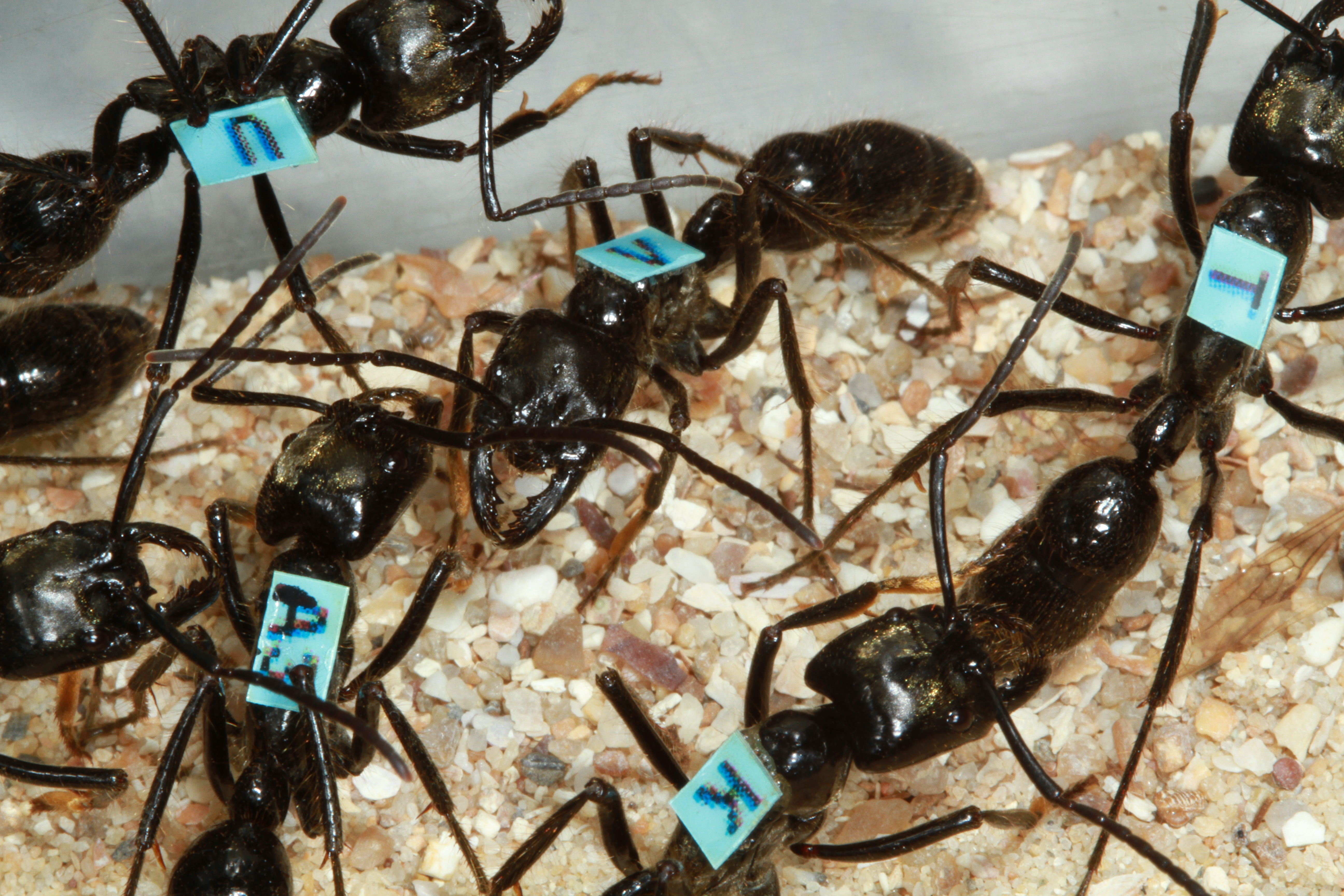
Dinoponera lucida workers with plastic tags for identification in the laboratory.

IS: What is the best moment/discovery in your research so far? What made it so memorable?

I always have my best time doing fieldwork with my lab colleagues or when I have the opportunity to speak about ants to the public. It’s a pleasure to attend scientific events, but also to visit schools and make science communication live to a younger audience. My most memorable discovery so far was the fact that D. quadriceps foragers don’t aggressively compete with their neighbours. I read some anecdotes about these ants being very territorial and aggressive, but over many months of observation during my master’s, I realised that they are ‘gentle giants’ and that this type of interaction was quite rare.

IS: Do you teach or do outreach/science communication? How do you incorporate your research into these areas?

I always tried to dedicate myself as much as possible to science communication. Passing on my knowledge has been one of my career goals. Since in Brazil we researchers are formed in public institutions, I think we must increase our contact with society. I’ve spoken to public school students about the importance of ants, and today I lead a podcast (unfortunately only available in Portuguese for now) called ‘Atiçando o formigueiro’. The podcast is an initiative that aims to inform people about the biology and importance of our country’s native ants and social insects. In addition, we also seek to increase the visibility of Brazilian myrmecologists working in different fields. In the next few years, increasing my teaching experience will be one of my priorities, and I hope to have the opportunity to work professionally in this area.

IS: What do you think are some of the important current questions in social insect research, and what is essential for future research?

Considering the climate crisis scenario in which we live, I believe that the least we researchers can do is to look into the current and imminent effects that irreversible climate change is having on social insects and, indirectly, on the rest of the planet. It is not possible to defend the preservation of species and habitats without first providing reliable data on what is happening and what will happen in the coming years to the insects we know.

IS: Outside of science, what are your favorite activities, hobbies, or sports?

My favourite hobby is playing video games, especially RPGs or simulation games on my PC, or board games. I also like going to the cinema and watching reality TV shows of dubious taste. Of course, I spend a good part of my day listening to podcasts from genres ranging from talk shows to true crime. I also walk and look after my dog, Nala. I don’t like playing or watching sports at all and I feel completely oblivious to the subject.

IS: What is the last book you read? Would you recommend it? Why or why not?

The last book I read was actually a comic book called Ordinary Victories by Manu Larcenet. Manu Larcenet is a well-known French cartoonist. I would recommend Ordinary Victories and his other works.

IS: How do you keep going when things get tough?

Unfortunately, this type of situation is not rare in academia. When this happens, I try to focus on other things (such as my family or hobbies) to then return with a clear mind. I always seek the support of the people around me and try to be kind to myself, set reasonable goals, and work within specific deadlines and expectations. For me, being open about going through a difficult time also helped make communication with my peers more accurate and honest.

IS: If you were to go live on an uninhabited island and could only bring three things, what would you bring? Why?

I’d bring a blanket, food supplies, and my dog. A blanket because I’m always cold, even when it is 25 ºC. Food supplies because even if the island contains animals to catch or fruit to collect, I’m not sure I have the ability to find them and survive on my own. Of course, I would bring my dog because I need some social interaction and a friend.

IS: Who do you think has had the most considerable influence on your science career?

It’s difficult to answer because I’ve always been surrounded by incredible people who taught me everything I know and believed in me at all times. I’d say Arrilton Araújo, Dina Azevedo and, of course, my PhD mentor Nicolas Châline. Arrilton and Dina, because they gave me a very solid foundation for being a social insect scientist, encouraged me to create interest and dedication to all stages of the research and always treat people with kindness. Nicolas for all his brilliant ideas and motivation to pursue and execute them even if the plan does not go as expected, thinking beyond and making hypotheses about everything around us. They are all great ethologists who are a reference for all the work I do and continue to be my greatest sources of inspiration.

Fieldwork team collecting Dinoponera colonies during the COVID-19 pandemic at Floresta Nacional de Nísia Floresta (Rio Grande do Norte/Brazil). Left to right: Joaquim Neto, Gabriel Lima Vieira, Dina Azevedo, Maria Eduarda Lima Vieira, Francisco (field assistant) and Francisco (field assistant).

IS: What advice would you give to someone hoping to be a social insect researcher in the future?

I’d say: Do it! It’s a brilliant area with many collaborative researchers and, most importantly, many interesting questions to be answered. I would recommend getting to know your insect, observing it ad libitum, spending some time getting familiar with it, and then starting to think about questions, especially more complex ones. I would recommend trying to find these missing pieces in the puzzle before trying to create a big picture to avoid broad generalizations and frustration.

IS: Has learning from a mistake ever led you to success?

It always does. I believe we learn a lot from our mistakes, and experimentation is all about trying and failing multiple times. Failing allows us to remain humble and realize that there is no such thing as perfection. It allows us to seek different opinions and guidance and also not give up. In this sense, my advice is to plan a pilot testing period and allow yourself to make mistakes. Also, expect that mistakes and simply unpredictable things can and will happen along the way.

IS: What is your favorite place science has taken you?

Science allowed me to live in Paris for 6 months and completely change my research environment to another country (and continent!) where I was able to learn a lot about research, but also about the local culture.

Maria Eduarda presenting part of her PhD results in the 53ème Colloque de la Société Française pour l’Etude du Comportement Animal at Albi, France.

Some random observations on the gypsy ants

By Ran Dai

In this blog, Ran Dai, an environmental consultant and researcher, shares fascinating observations of gypsy ants in the forests near Kunming, China. From the interactions between different ant species to the behaviors of Aphaenogaster colonies, Ran provides an intimate look into the lives of these insects. Discover more about the adaptive strategies and behaviors of these ants in her latest work for Insectes Sociaux, here.

In early mornings, the forests on the outskirt of Kunming, mid-sized city surrounded by hills and small mountains in southwest China, are often soaked following an overnight shower. The ants were up, with only a few workers hauling their cold feet along the forest floor, trying to find food for the nests below. Their bodies are built for agile movements across a complicated world of forest understorey. The ant nests are sometimes big judged by the size of the mound, which might exceed two meters for the largest gypsy ants in the area, Aphaenogaster schurri. There are three Aphaenogaster species: A. schurri, A. japonica (slightly smaller than, and coexist with A. schurri), and A. famelica. The latter is also the smallest among all, building more closely located nests down an artificial plantation of Acacia dealbata, introduced plant that has become locally successful possibly due to its symbiotic relationship with A. famelica, which consumes the elaiosome and helps disperse the seeds.

Acacia dealbata seed pods infested with fungi if not interacted with Aphaenogaster famelica
Aphaenogaster famelica workers inserting a dyed tuna bait into nest opening

The sun came in, and the rest of the forest woke up. The ants are now found in great numbers, actively pulling their prey – a dead caterpillar, a fat earthworm, some seeds, etc. – back into the nests. This was done through a small nest opening located on the soil surface. During the rainy days, a piece of curled leaf was sometimes found covering the opening hole, like an umbrella, and absent when the day was clear. The ants frequently exploited the environment near the nest openings, making it easy to observe their behaviors there. Later on, a question occurred to me, after seeing several Aphaenogaster nest openings with busy workers foraging nearby, that what would happen if I put foods between two nest openings?

Aphaenogaster famelica workers aggregating at and pulling tuna baits in a preliminary experiment

After some observations on intra-specific and neighborhood competition in the gypsy ants, I found the ant workers simply increased movement speeds foraging under the pressure of competition. I put a Petri-dish to cover one of the ant nest openings in the neighborhood, and calculated the time spent on food discovery, removal and retrieval. I also assigned two different food items: one light and one heavy, in a food patch put at various distances. When an ant nest opening was blocked, ants from the rival nest opening appeared sluggish with an increased time spent on food removal and retrieval. Now that the neighbors are being suppressed by some strange human being using glassware to do stuff, what’s the hurry? There was also no apparent selectivity shown over the light/heavy foods. Therefore, to “grab and run” was the rule in the neighborhood relationships.

Aphaenogaster schurri queen accompanying workers which carried a tuna bait near the nest

Life wasn’t all about work, though. Once, two Aphaenogaster workers found their way on the writing board I was holding. That must feel strange, that the world around suddenly became plain and white, which somehow became an opportunity for temporary escapement from the busy work scene down there. What the ants did was to sit down and groom self, rubbing head and neck with their long legs. They must have enjoyed the moment. When bathed under the afternoon sunlight, their heads were up with mandibles wide open. I’ve never seen a happy ant so closely.

Aphaenogaster schurri workers pulling a dead caterpillar with green guts
The forest at study site CCS

Another time, I was honored to meet the queen which accompanied a group of workers pulling a tuna bait (used for the field experiment) back to their nest. The female had a distinct body structure with strong shoulders once boring a pair of wings bringing her here to establish the colony. She waggled along the team, occasionally making an eager grab at the food being carried, like someone who couldn’t wait for the dinner to begin a few hours later. Her colony was yet small, however was located near a much larger neighboring colony. Though the gypsy ants here seldom show real aggressions to each other, indirect competition through reducing common food sources can be lethal to the subdominant colonies. Life is challenging also because of other ant species living in the area, such as the big-headed ants (Pheidole spp.), which came in large numbers and give painful bites, and the arrow ants (Ectomomyrmex astutus), which steal without notice. In some rare cases, the yellow-footed hornet (Vespa velutina) took baits into the sky, and no one could do anything about it…

The forest at study site MS

Interview with a Social Insect Scientist: Lachlan Jones

Lachlan Jones is an ecologist and entomologist working in England. He investigates bumblebee disease spread and the potential for natural chemicals in heather nectar to protect bees. His latest work in Insectes Sociaux can be found here.

IS: Who are you, and what do you do?

I’m an ecologist/entomologist from Australia, though currently working in England. At the moment my work is about bumblebee disease spread and the potential for natural chemicals found in heather nectar to act a preventative medicine protecting bees from infection by the gut parasite Crithidia bombi. My work has been varied and has previously involved polyethism in stingless bees in Australia, influence of climate on body size of solitary bees in the Rocky Mountains, USA, ecology and behaviour of host plant recognition in generalist pest moths, parental care and group size in jewel bugs, responses of thrips to weather conditions and the use of aquatic weevils as bio-control agents.

IS: How did you develop an interest in your research?

I was always fascinated by science and geography growing up, and had parents who took me on plenty of walks in national parks and various other outdoor activities. I also had several great teachers in high school who further contributed toward my enthusiasm for science. I didn’t fully decide until towards the end of my undergraduate studies that ecology, rather than chemistry or genetics say, was definitely the path for me, but I certainly think I made the right decision. I got into social insects specifically when finishing my PhD when I got involved in a side project about stingless bees with James Hereward, a postdoc in the Walter Lab where I did my PhD. This project eventually led to the paper that I’ve just published in Insectes Sociaux. I think the fact that I was willing to study stingless bees purely as a volunteer also helped when applying for a Fulbright to study bees and climate change in the US, which in turn led me to my current position studying bumblebee health.

IS: What is your favorite social insect, and why?

I think if I’m to pick one it would have to be Tetragonula carbonaria. These are one of the most familiar species of native bees in and around my home city of Brisbane, build their brood comb within the nest in a beautiful spiral structure, and (along with their congener T. hockingsi) perform a wide variety of interesting nest-maintenance behaviours I had the chance to study in one of the most fun projects I’ve worked on.

The brood comb and surrounding food pots of a Tetragonula carbonaria colony in a wooden nest box. 

IS: What is the best moment/discovery in your research so far?

What made it so memorable? It was probably the time, about six weeks into my Honours, when there was a heavy downpour one morning like I’d been waiting for. I seized my insect traps and metal poles, ran out to the Malvaviscus bush I’d been using as a field site and threw the traps up. When I looked at the traps later, I counted more thrips on the traps than I’d captured on some previous sunny days. It showed immediately that thrips do indeed fly when it’s raining, even in a heavy downpour, which was certainly not what I or my supervisor had been expecting!

IS: Do you teach or do outreach/science communication?

How do you incorprate your research into these areas? I don’t currently teach, although I have previously given tutorials. As for outreach, I ran a couple of sessions on bees and pollination at a children’s nature camp last year which was fun. And, quite by accident, when collecting bumblebee queens in Windsor Great Park earlier this year to establish experimental colonies, I ended up having a lot of conversations with interested passers-by about bumblebee disease, threats and what I was trying to do about it.

IS: What do you think are some of the important current questions in social insect research, and what is essential for future research?

One significant and central question is how and why social insects evolved such a life cycle. While progress has been made, this question is complex to answer and is multifaceted, encompassing what selection pressures, novel adaptations and pre-adaptations led firstly to primitively social constructs like those commonly found among sweat bees (Halictidae) today, and then from there onto the fully eusocial colonies seen among honeybees, stingless bees, ants and termites. A related question is what leads social behavior to be lost, such as in the orchid bees.

Coming from the perspective of stingless bees, another important question is communication of foraging information within the colony. Experimental studies using placement of artificial feeders have shown that a stingless bee forager is capable of communicating to recruit other foragers to a nectar source, but how they do this, and whether it bears any similarities to the waggle dance of honey bees, is unknown.

A lot of great work is also being done on answering some fascinating questions relating to social immunity. Large insect colonies densely packed with genetically identical individuals provide ripe ground for rapid disease spread, and there are numerous surprisingly ‘clever’ strategies insects have evolved to isolate infected individuals and minimize contact between workers in different parts of the colony. While further innovations in genetics/genomics and neuroscience will likely make strides towards understanding many fundamental questions in social insect biology, I also think it is important to remember the value of patient observation and well-designed behavioral experiments that have allowed us to have such a detailed understanding of communication in honeybee colonies.

Newly marked stingless bees in a pooter vial ready for release into the colony.

IS: Outside of science, what are your favorite activities, hobbies, or sports?

Reading novels, particularly fantasy, historical fiction and crime/legal thrillers; hiking (or bushwalking as we call it Down Under) and playing guitar are my biggest hobbies.

IS: What is the last book you read? Would you recommend it? Why or why not?

It was a novel called The Glovemaker’s Daughter – set in 17th century Yorkshire and the American colonies and about Quakers. I thought it was an interesting story that told me a lot I didn’t know about that period, a good read if you like history.

IS: How do you keep going when things get tough?

I try to remind myself that I am indeed lucky to be able to follow my interests and discover new things about the natural world as a job, and that my most successful projects had quite a few frustrating failures at the beginning.

IS: If you were to go live on an uninhabited island and could only bring three things, what would you bring? Why?

Probably a book on the local flora and fauna, both so I could make natural history observations to pass the time, but also have an idea of what might be edible; materials to make a fire, and a dinghy, both for exploring around the island’s perimeter and so I could escape if life there got too tough.

IS: Who do you think has had the most considerable influence on your science career?

I think that would have to be Professor Gimme Walter, who I initially had as a lecturer and later was my Honours and then PhD supervisor. I think he struck a good balance between guiding me in the right direction while still giving me freedom to try things, and I have many fond memories of afternoon lab discussions on his back deck about all sorts of broad concepts and ideas in ecology and evolution and the assumptions behind them.

IS: What advice would you give to someone hoping to be a social insect researcher in the future?

I think I would simply say to go ahead with what questions interest you the most, though also remind them that recent discoveries have revealed social insects are scattered widely across the insect orders, with species of beetles, true bugs, thrips, cockroaches and shrimp now been shown to have social colonies, and that galling species in particular can have quite complex levels of sociality. So there is a lot of untapped potential for work beyond the organisms we usually think of as social insects such as ants, termites, bees and wasps.

IS: Has learning from a mistake ever led you to success?

About eight months into my PhD I decided I no longer wanted to continue with the initial plan looking at chemical ecology of host plant attraction, and instead focus on behaviour. While my supervisor was fine with me making the switch, and gave me the freedom to come up with my own ideas about what to do instead, I initially made the mistake of latching on to several unrelated experimental ideas I thought were interesting without thinking about what broader question the thesis as a whole should answer. At my PhD confirmation meeting, I was not initially confirmed as a PhD candidate but instead given 3 months to plan out what a cohesive thesis plan should look like. While it was tough going back to square one a year into my PhD, it meant I had a year of experience working, reading about and thinking about my study species to draw on when thinking about what the most important questions were that I wanted to answer. And consequently, the ideas I came back with and developed into a thesis were I think much better ideas than I could have come up with at the beginning.

IS: What is your favorite place science has taken you?

That would be the Rocky Mountain Biological Laboratory. An amazing place, it’s a research station at 3000m elevation in a stunning part of the Colorado Rocky Mountains. I had the good fortune of being able to work there last summer as a Fulbright scholar in Rebecca Irwin’s lab (North Carolina State University), and the field work in picturesque wildflower meadows surrounded by snow-capped mountains, weekend hikes with the numerous friends I made there and the incredible range of social activities at the station made it a truly unforgettable experience. The xperience I gained netting and identifying bumblebees as well as performing pollination experiments on wildflowers probably gave me the necessary experience to land my current postdoc at Royal Holloway University.

Lachlan at the top of Avery Peak near the Rocky Mountain Biological Laboratory. 

Interview with a Social Insect Scientist: Andrea Ferrari

Andrea Ferrari is a PhD student (soon to be a PhD!) at the University of Milan. He studies the impact of urbanisation on wild bees’ morphology and physiology.  His latest work in Insectes Sociaux can be found here.

IS: Who are you, and what do you do?

I’m currently a third-year PhD student at the Department of Environmental Science and Policy at the University of Milan (Italy). Our group “INSEvEc” focuses on the evolution and ecology of insects, especially Hymenoptera. My main interest is wild bees and in the last three years I have studied how anthropisation, especially urbanisation, affects wild bees from different biological aspects. For example, how certain body structures look like in urban or natural areas? (morphology) or how certain molecular processes are shaped by urbanisation? (physiology).

IS: How did you develop an interest in your research?

To be completely honest, I’m not the kind of person who has a lifelong relationship with insects. I should say that my passion for wild bees (for those not familiar with the term, basically all the bees except the honeybee Apis mellifera) broke out during my Master’s thesis. At that time, I was not working specifically on wild bees, but rather on plant-pollinator networks. Somehow, I started to be fascinated by them. Inspired by my supervisor, I started going out at weekends just to see what they were doing. I think it was day after day of observation that I realised I wanted to do research on these insects after my degree, and try to discover something new and useful.

A female of Lasioglossum sp., a ground-nesting primitively eusocial species, entering its nest (Parco della Maremma, 2023)

IS: What is your favorite social insect, and why?

Definitely wild bees! I guess if I had to choose a favourite species it would probably be Halictus scabiosae, most of my PhD research is based on this species. Nevertheless, I really love these insects, but as with everything, saying why you love something is a real challenge! I guess there is no rational thought behind our tastes, sometimes you just like something for the way it is. However, now that I think about it, my passion for nature in general has probably helped. I really enjoy being outdoors, walking along a mountain trail or a country road in my spare time. So why not take the opportunity to study wild bees? They are so complex, come in so many different shapes and colours, I think I was captivated by them! I think you just have to go for it, if you love something then just go for it.

IS: What is the best moment/discovery in your research so far?

What made it so memorable? I am still “academically young”, so I have not had the opportunity to discover anything big. I would rather say that I really enjoy the feeling of doing something, even the smallest thing, that no one has ever thought of doing. Just to add that little brick to the wall of general knowledge, that brick with my name on it. Having said that, we have had the opportunity to discover some new morpho-physiological ways in which wild bees respond to urbanisation, so I guess that is what I am proud of at the moment.

A female of the ground-nesting primitively eusocial Halictus scabiosae feeding on an Asteraceae flower (Torino, 2024)

IS: Do you teach or do outreach/science communication? How do you incorporate your research into these areas?

As I said, I am still young to do proper teaching. However, I always try to tell people, especially students or young people, something about what I do or what may not be known to the general public, but I think deserves attention. I really stress the fact that wild bees, and wild insects in general, are among the animals most exposed to environmental change. I always try to transfer my energy and passion to my audience. I think that energy and spontaneity when talking about your research topic can really inspire people. It also helps that everyone knows bees (mostly honeybees), so I find it easy to talk about my research even outside the academic world.

IS: What do you think are some of the important current questions in social insect research, and what is essential for future research?

This is a question that probably goes beyond my current understanding of all the things that go on with social insects! From what I have seen in the last few years, I really think that most people automatically associate “social insects” with honeybees or ants. This is a shame, because I think there is still room for improvement in our understanding of how sociality has evolved in insects. How environmental changes are threatening social insects, and also discover new social insects! What I can say is that collaboration is going to be the keyword for future research. The sooner we understand that we are all on the same planet, the sooner we will start working together, breaking down gender/ethnic or whatever barriers you can think of. I really think that in the future research there is no space for “I”, but only for “We”. Social insect research, but I think all types of research, should really make an effort to reach as many people as possible, to communicate the findings, and to provide the next generations with new and useful information to make the world a better place.

IS: Outside of science, what are your favorite activities, hobbies, or sports?

Well, what I like most is having fun with my friends! Either going for a walk on a lazy weekend or partying at some cool places! I have been lucky enough to meet some really great people who make my life easier and happier. I also enjoy outdoor activities, be it hiking or biking, and I also really enjoy sports; I am a football fan and FC Inter is my favourite team. I also enjoy reading and playing chess.

“INSEvEc” group sampling ground-nesting social bees in the Parco della Maremma (2023)

IS: What is the last book you read? Would you recommend it? Why or why not?

Well, for non-Italian readers this might be difficult to understand, but I read the latest comic by Zerocalcare, an author who recounts episodes from his life and his reflections through drawings, super recommended! I am currently reading “The Bee Sting” by Paul Murray, which has nothing to do with bees, but my parents bought it when they went to Edinburgh, so that is what I am reading now.

IS: How do you keep going when things get tough?

I recently had an unpleasant episode that prevented me from going abroad for a field study. Life is made up of choices, sometimes they lead to positive outcomes, sometimes not. I tell myself that as long as I try to be the best person I can be, I should have no regrets. I think it is important to realise that things are not always going to go our way, so when life gives you lemons, make lemonade! Try to make the best out of everything, and in the end, hard work will pay off!

IS: If you were to go live on an uninhabited island and could only bring three things, what would you bring? Why?

I hate these questions; I can never come up with anything that makes sense. Off the top of my head, I would say a Swiss Army knife as a tool, a camera to capture some moments and a satellite phone to call someone and get me home when I get bored!

IS: Who do you think has had the most considerable influence on your science career?

Certainly my current PhD supervisor Carlo. He is incredibly inspiring and always has a good balance between giving you instructions and letting you think with your head. I also have to mention Nicola, Paolo, and Andrea from my Master’s internship, who lit the spark in me to do research on wild bees.

“INSEvEc” group sampling ground-nesting social bees in the Parco della Maremma (2023)

IS: What advice would you give to someone hoping to be a social insect researcher in the future?

Just follow your dreams for as long as you can. Find an area of research that suits you best and be prepared to work really hard. Like I said, I really believe that hard work will pay off. The harder you work, the more grateful you will be in the end. And be passionate about what you are doing.

IS: Has learning from a mistake ever led you to success?

Can you even learn without making mistakes? I think science is about trying and failing, over and over again, until you get what you want. As humans, we make mistakes, and only those that do not work do not make mistakes. So yes, I always try to learn from my mistakes and try not to make the same mistake twice (but I still need to work on that).

IS: What is your favorite place science has taken you? I have not travelled that much so far, I have basically been around my city (Milan) and now I am doing my sampling activities in another big city in Northern Italy (Turin). I enjoyed working in the Parco della Maremma: beautiful places, bees and great food! If I may speak metaphorically, science has taken me to a place where I can really decide what I want to do and follow my dreams. It has brought me to a place where I have had (and hopefully will continue to have) the chance to meet extraordinary people who have really opened my mind.

Networks and ants: how do ants maintain connections?

By Balint Kovács

In this blog, Balint Kovács, who is an assistant Research Fellow at the HUN-REN-PE Evolutionary Ecology Research Group, explains how social networks in ant colonies are structured and influenced by different castes. His latest work in Social Insects can be read here.

How do the animals maintain connections? What do these connections look like? What shapes them? These are the basic questions posed by a generalist network scientist. When we talk about social animals, sooner or later, we arrive at the ant colonies. Ants are famously and extremely social, and many tales and stories highlight their industriousness and diligence. But what are the real facts? How can we describe these communities scientifically? My passion for social animals led me to investigate this question during my research work and PhD studies. I researched multiple animal species in the context of social networks, and of course, ants had to be one of them. Let’s see what we found in our observations.

In human societies, different jobs and workplaces create different microcultures and behavior patterns. But what about ants? Do different work tasks (castes) create different roles for individuals? If we look closely at these castes, what will we find?

Our research used a previously published paper (Mersch et al., 2013) about carpenter ants (Camponotus fellah). In this research, three main castes were defined:

Nurses: individuals who spend most of their time near the core of the nest. These workers guard and take care of the eggs.

Foragers: these individuals are responsible for gathering food. Most of the time, they search for resources for the colony.

Cleaners: their responsibility is to clean the nest and maintain tunnels. So, we have castes and queens. Now, we need to examine their connections. Mersch et al. tagged and tracked all individuals for approximately a month in six colonies of these ants to detect interactions among individuals. More specifically, they observed when two individuals touched each other with their antennas. We used these interactions to create networks. In these networks, or graphs, the nodes were the individuals, and the edges represented the interactions. So, we have nodes (ant individuals) and edges (interactions between them). With this information for each day, we can model networks for each day as well. A whole network for six colonies in one day looks like this:

Too many edges, too many nodes. Quite chaotic. Our idea was to model networks only for castes.

Nurses:

Foragers:

Cleaners:

Okay. Now we had networks for each colony, each day, and each caste. Almost done. But we had another idea as well: What about the queens? What if the individuals’ networks looked different when they interacted directly with the queen? To investigate this question, we modeled another two types of networks: Queen-related and No Queen-related networks. To distinguish these additional “castes” of individuals, we called the subnetworks.

Queen-related:

No Queen-related:

Now we had all that we wanted: interactions, castes, and subnetworks. The last step was to compare these networks to each other to see the basic differences between networks and, therefore, the differences in behavior among these worker groups.

But how is this possible? Visually, we can see some differences, but we need to prove it. In network studies, we use network indices to describe network properties. Every index tells something about the group we modeled. Multiple indices are available in the literature; here we used three basic indices: Network Centralization Index (NCI), Clustering Coefficient (CC), Average Path Length (APL), and Small-World Index (SW). NCI gives the hierarchical properties of a group, CC is an indicator of the rates of cliques within the group, APL calculates the average “step” (network edges) between all individuals, and SW represents how many “neighbors” are required to reach everyone within the group. In other words, NCI represents the hierarchy rate, CC shows how easily information can flow through the group, APL calculates the “speed” of this information flow within the group, and SW shows how “closed” the group is.

We used a statistical method (Linear Mixed Models, LMM) to compare these indices between castes and subnetworks. The results showed that Cleaners are less hierarchical (low NCI), with fewer cliques (low CC) than Foragers and Nurses, with slower information flow (high APL).

The presence of the queen surprisingly influenced only the information flow. Those individuals who were connected with the queen established “faster” networks than individuals with no queen connections.

In summary, our results revealed new information about castes and individuals through their networks. It seems like the tasks of nursing and foraging require a more centralized, denser, and faster information flow than the cleaning task. Moreover, the presence of the queen makes information flow faster within the group. So, the role of the queen seems essential not only for producing offspring but also for “controlling” the castes as well.

Cited article:

Mersch, Danielle P., Alessandro Crespi, and Laurent Keller. “Tracking individuals shows spatial fidelity is a key regulator of ant social organization.” Science 340.6136 (2013): 1090-1093.