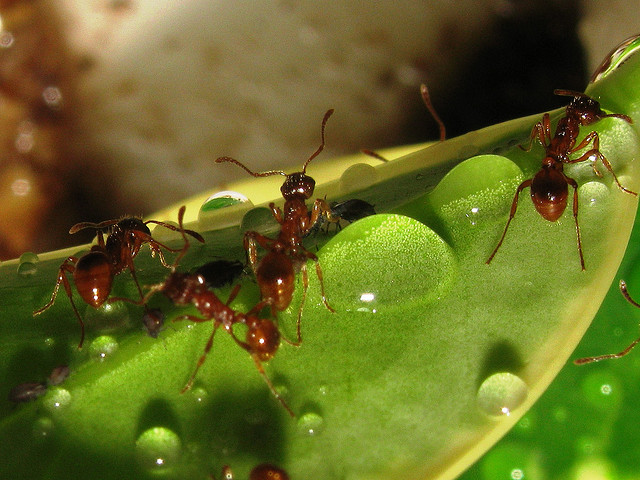
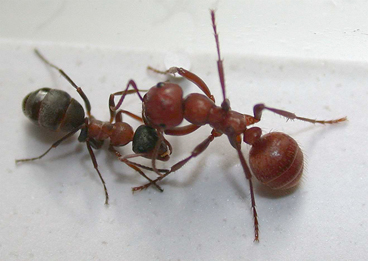
The nastiest ants dance the tango at home and abroad

A blog post highlighting the article written by Calcaterra, Cabrera and Briano in Insectes Sociaux

Written by Luis Calcaterra

The world’s worst invasive ants originated in the same place as the tango- the River Plate basin in Argentina. Step by step, naturally, helped by humans and/or global warming, these ants then proceeded to move from their native range in all directions over the last 150 years. Finally conquering the world, they have changed human life on Earth irreversibly. But why are invasive ants, as the tango, more notorious abroad than in their homeland?

Of the approximately 14,000 ant species on earth, only a handful are invasive and threatening to the planet. Like tango dancers, these species gained fame abroad, but not for positive reasons. These ants cause billions of dollars in losses by affecting agriculture, human health and wildlife, replacing and reducing native species, and even pushing some species to the edge of extinction.

Main source of global invaders

Like the tango dancers, these versatile ants have evolutionary adaptions to move freely around the world to establish and dominate successfully in new places, with devastating consequences. Most of their invasions originated in the basin of the River Plate, as in the case of the invasive red and black fire ant (Solenopsis invicta and S. richteri), the Argentine ant (Linepithema humile), the little fire ant (Wasmannia auropunctata), and the South American big-headed ant Pheidole obscurithorax, whose source populations have been recently discovered in Argentina.

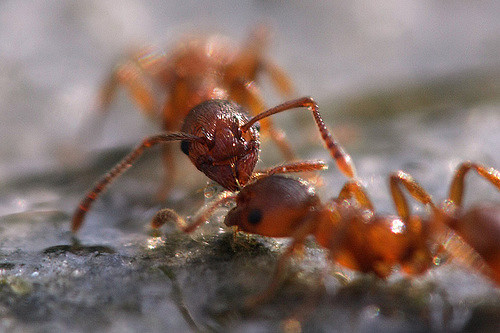
But are these evil invaders as dominant and problematic in their homeland as they are in the invaded regions? Little is known about the performance of invasive ants in their native land or how they interact with other native ants. Previously, we thought that invaders were not dominant in their homeland, but studies conducted during the last decade revealed that some of them can be just as ecologically dominant in their home as in their introduced range. Such is the case of the aggressive red fire ant (Calcaterra et al. 2008), now spread in North America, Australia, China, Hong Kong, Taiwan, the Philippines and some Pacific and Caribbean islands (Ascunce et al. 2011).

Local coexistence of several highly invasive ants

In our study, we investigated how different invasive ants fare against other native ant species as part of an effort to learn more about the behavior of invaders in their homeland. We studied interactions between several of the most highly invasive ants and other native aboveground foraging ants that locally co-occur in four habitats of a protected area (Otamendi Natural Reserve) next to the city of Buenos Aires. We used a combination of pitfall traps and baits to study day-to-day activity in ant communities to determine ant abundance at the sites, and this showed the ability each species had to discover and dominate food resources.

Of the 49 ant species that locally coexisted in the reserve, five were well-known global invaders: the black fire ant S. richteri, the Argentine ant L. humile, the little fire ant W. auropunctata, the tawny crazy ant Nylanderia fulva, and the rover ant Brachymyrmex gaucho. But only two of them, the black fire ant and the Argentine ant were ecologically dominant, though their supremacy was much lower than in the invaded regions, likely due to the presence of much more skilled competitor ants in their homeland. It´s as if local acceptably good dancers were treated as demigods abroad, something that in fact often happens in the tango world.

Factors promoting ant coexistence

Coexistence among so many invasive ants and other co-dominant native, but non-invasive, ants was apparently helped by niche and competitive differences, different habitat preferences, different abilities to scout and discover the baits, and in the ability to immediately recruit enough workers to monopolize them. But the high ant species diversity and the fact that invasive ants are mostly randomly distributed in space (not segregated) suggest that competition only played a secondary role in organizing the ant communities.

The other invasive ants were not dominant in the reserve- much like the tango dancers that appear mediocre in their very competitive local environment. Thus, it is possible that their dominance in native and introduced regions of the world is more associated with their high colonization capacity to harsh environments (mostly anthropic) rather than to their superior competitive abilities. For example, the little fire ant is able to monopolize bait only when a large number of workers are recruited to it, which can rarely be achieved owing to its slow performance in scouting and recruiting workers to defend it from better contenders (unless the bait is within its nesting territory). The little fire ant is mostly problematic in places where there are very few competitor ants, such as islands (e.g. Hawaii) or anthropic sites (e.g. cities, where the weather is also more extreme).

Pheidole workers removing little fire ant workers from a bait. 
Video credit: Lucila Chifflet


As for the ant tango, a question remains without answer: what factors enable the appearance in the River Plate basin of so many successful invaders? To our knowledge, this region represents the main exit door of known and potential invasive ants. As global trading expands, the spread of the nastiest ants from this region of the planet will continue threatening life on Earth.


References

Calcaterra, L. A., Livore, J. P., Delgado, A., & Briano, J. A. (2008). Ecological dominance of the red imported fire ant, Solenopsis invicta, in its native range. Oecologia, 156(2), 411-421.
Ascunce, M. S., Yang, C. C., Oakey, J., Calcaterra, L., Wu, W. J., Shih, C. J., Goudet, J., Ross, K.G. & Shoemaker, D. (2011). Global invasion history of the fire ant Solenopsis invicta. Science, 331(6020), 1066-1068.

Colony size evolution in ants

Highlighting the article by Burchill and Moreau in Insectes Sociaux

Written by Insectes Sociaux Editor in Chief, Michael Breed

How animals transitioned from simply living together to forming eusocial societies is a fascinating question for social insect researchers. As a result, much of the current science on eusocial animals focuses on the cusp between presocial and eusocial life. A lot of interesting evolution happens, though, after eusociality is firmly established in a group like the ants. In this issue Burchill and Moreau (2016) assemble the available data on colony size for ants and overlay this information on the current consensus evolutionary tree for ants. Doing this allowed them to develop an understanding of dynamics of how colony size evolved and to propose hypotheses that will lead to very interesting subsequent studies.

Casual observers of ants probably have the impression that most or all ants live in large colonies, like those of pavement ants, leafcutters, and army ants. Researchers of ants will appreciate that the majority of ant species have colonies of a few dozen to a few hundred workers. Burchill and Moreau’s study is an excellent invitation to consider that very large colony size has many independent origins in ants. What are the evolutionary steps between the basal state of small colony size to colonies of tens or hundreds of thousands of workers? Is colony size evolutionarily fluid, with movement from large to small as possible as small to large?

Burchill and Moreau provide at least suggestive answers to these questions. Evolutionary trends show gradual transitions to larger colony sizes. This may support a view that there were few unique innovations that allowed sudden jumps in colony size. They found no strong evidence for reversal of colony size evolution when considering large to medium shifts, at least if the evolution of obligate social parasites is set aside.

2542534108_129eb3733e_z

Photo credit: Dzipi/Flickr

An impact of Burchill and Moreau’s discussion is a renewed call for publication of more extensive sociometric data (Tschinkel 1991). Characterizations of colony proper- ties, such as the number of workers, have extreme importance in facilitating deeper studies of evolutionary processes. Unfortunately, there are few published high quality sociometric studies of eusocial insects. Such studies would have sample sizes that are large enough to establish the certainty of estimates for measures like colony size. They would also allow assessment of within- and between- population variances. Important surveys like Burchill and Moreau’s would be greatly facilitated by sociometric data banks.

As Burchill and Moreau point out, it is likely that ant species with small colonies are under-represented in the sociometric literature. This means that in their analysis the transition from medium to large colonies is better repre- sented than small to medium transitions. Nevertheless their results strongly support the hypothesis that colony size evolution in ants is gradual rather than saltatory, with trends for increasing colony size in some groups. Among the many interesting questions suggested by this study are whether modifications of colony reproductive structure, such as movement from monogyny to polygyny (Hölldobler and Wilson 1977), facilitate colony size evolution. Similarly, are modifications of social mechanisms like division of labor important in these evolutionary shifts? Much remains to be answered about the fascinating trends highlighted by Burchill and Moreau.


Editor’s note: If you want to know how ant colonies are like rock bands, check out Andrew Burchill’s post about his article here.


References:

Burchill AT, Moreau CS (2016) Colony size evolution in ants: macroevolutionary trends. Insect Soc doi:10.1007/s00040- 016-0465-3

Hölldobler B, Wilson EO (1977) The number of queens: an important trait in ant evolution. Naturwissenschaften 64:8–15

Tschinkel WR (1991) Insect sociometry, a field in search of data. Insect Soc 38:77–82

In subterranean termite colonies, older workers change the diapers

A blog post highlighting the article written by Du, Chouvenc, Osbrink & Su in Insectes Sociaux

Written by Thomas Chouvenc

termite grooming

The queen is groomed by older workers. Notice how the cell around the queen is ‘clean’. Image credit: T. Chouvenc.

Well, they don’t exactly change diapers, but when it comes to the latrine and nest sanitation, old termites are in charge.

Age polyethism, where workers change tasks as they age, is an elegant way for social insect colonies to effectively allocate tasks to different individuals, usually giving the more risky duties, such as foraging out of the central nest, to older individuals. This process is mostly understood in honey bees and some ants. However, in termites, it’s a bit blurry.

There are about 3,000 described termite species, and they have historically been separated into two major groups: lower termites and higher termites. Lower termites are phylogenetically basal and possess protozoa for wood digestions, like their woodroach ancestors. Higher termites are more phylogenetically derived, and have radiated with a new type of symbiosis (fungal or bacterial) and have evolved unique derived morphologies, foraging strategies, and nesting habits.

When looking at polyethism in termites, most data from lower termites indicate that as workers age, there is little to no task division. In comparison, higher termites have documented cases of age polyethism, with older workers and soldiers foraging outside the nest. The genus Coptotermes is an interesting in-between case, as it is technically a lower termite because of the protozoa in the gut, but phylogenetically, and sometimes behaviorally, it is actually closer to higher termites. It is sometimes considered to be an evolutionary transition between lower and higher termites.

Du et al. (2016) investigated what is happening in nests of Coptotermes formosanus to determine if primary elements of age polyethism have evolved as an evolutionary step between lower and higher termites.

Juvenile colonies of C. formosanus (~1,500 individuals) were scrutinized using high-definitions cameras, and 34 hours of video recording were analyzed, documenting every single behavior that occurred throughout the nest. Du et al. identified 132 behaviors or types of interactions, for a total of 29,644 events, and the results showed that young workers and old workers performed different tasks, demonstrating primary elements of age polyethism.

The interactions between all individuals within the colony are rather complex, but some interesting patterns emerged from the observation:

  • Old workers are more involved in foraging and trophallactic exchanges than the young ones, while young workers would predominantly groom larvae.
  • Old workers are in charge of cleaning the royal cell and the maintenance of the queen.

The first observation was analyzed in detail, and the results showed that older workers are actually the primary individuals in the colony to be the recipient of proctodeal trophallaxis, i.e. feeding on somebody else’s poop. In a termite colony, the constant food sharing results in a social stomach, where the food is circulating among individuals, sharing the digestion process. However, at some point the proctodeal food reaches the point of being so poor nutritionally that it essentially becomes feces.

Invariably, older workers collected and ingested the feces, and ultimately, pooped it out somewhere in the nest. However, the fecal deposition was not random. Coptotermes termites create complex carton nests, which are the result of such fecal deposition. Therefore, instead of each individual pooping in the nest at their current location, all fecal matter is funneled through older workers, and ultimately reused as building material for the nest.

The second observation suggests that as older workers eventually travel to remote foraging sites, they can pick up the “queen signal” by grooming her and cleaning the royal cell, and then carry the signal throughout the nest, saying “the queen is alive.”


Editor’s note: This blog post is also published here.

Ant colonies, group size, and rock ‘n’ roll

A blog post highlighting the article written by Burchill and Moreau in Insectes Sociaux

Written by Andrew Burchill

Imagine that you’re a social insect scientist with musical aspirations. After many long years, you finally have enough free time to turn your persistent rock ‘n roll day-dreams into reality. But before you rock out as the most righteous post-hardcore, grungewave, electropunk band ever seen, you’ll need to recruit a few more members.

A social media shout-out to your colleagues garners more replies than you expected. Like ants at a spilled soft drink, the number of interested applicants begins to sky-rocket: it seems your entire department has been secretly harboring rock-star fantasies.

You are now faced with the problem of deciding how large the group should be. Traditionally, it seems that four members is the golden mean. For example, the Beatles followed the common pattern of two guitars, bass, and drums. (In your case this would be one accordion, a guitar, bass, and bongos.) But in a flashback from the late 60s, you remember that the successful psychedelic rock group Jefferson Airplane had seven members at one time.

130413_AKB48_at_Tokyo_Auto_Salon_Singapore_Meet_&_Greet_2_and_Performance_(7)

Japan’s famous AKB48 pop group: super-colony of the music world.

Yet the options don’t stop there: a visiting researcher from Japan points out that AKB48—an all-girl pop group with 48 original members—is wildly popular overseas right now and has expanded to include more than 120 individuals. It’s clear that group size is an important consideration for any burgeoning rock band, but the question remains: what is the optimal size, and what factors determine this?

For biologists interested in social groups, this is not a new problem. Although there are many reasons that cause organisms to cooperate, it is still unclear what number of individuals works “best” in any given situation. Recent theory suggests that in complex environments, smaller groups should end up making better decisions (Kao and Couzin 2014), but Sasaki et al. (2013) found that when it comes to making difficult decisions like choosing the best nest, larger colonies of ants outperform smaller ones. With conflicting theories and little experimental data, we seem to be at an impasse. Where do we find the answer? If only we could run thousands and thousands of experiments, each with slightly varied environmental conditions…

All leading, rhetorical questions aside, we have arrived at our favorite subject: ants. As is oft-repeated by social insect enthusiasts, ants dominate the terrestrial biomass. Working and cooperating as a group is the key to their success; social cohesion between many individuals allows them to access and even create ecological niches that other species cannot. Naturally, the size of these groups (the colony) is a vitally important factor in social insect ecology—it affects traits such as foraging strategies, social organization, colony defense, and colony-wide immune responses. On one hand, we have species living in the leaf litter with colony sizes as small as the Fab Four from Liverpool. On the other hand, some species style themselves after the ever-growing AKB48, blurring the definition of what it even means to be “a” colony: the Argentine ant can form super-colonies that span thousands of kilometers. The 13,000+ living species of ants can thus be seen as a collection of “natural experiments,” with evolutionary forces “tweaking” colony sizes in response to changing environmental and ecological conditions.

But in order to understand the role of colony size in ant evolution, we first need to acquire a basic understanding of the patterns of colony size change over their 130 million year evolutionary history. Have average colony sizes gotten steadily larger over time? Do changes happen in little baby steps or in leaps and bounds? Once the average colony size gets very big, does it ever decrease in size?

A solid evolutionary study generally needs two things: data on lots of species (in our case, average colony sizes) and the evolutionary relationship between these species (the phylogenetic tree detailing which ants are most closely related to one another). Fortunately, Moreau & Bell (2013) had just published the most complete phylogeny of ant species ever seen, giving us the perfect foundation to begin our study. Unfortunately, there was no way a single empirical study could gather enough data on the average colonysizes from hundreds of species. We were left with one option: combing through the previously published literature for size estimates.

IMG_20160225_160112-01

If you can imagine staring at this for hours, you’ll appreciate how narrowly I dodged a brush with insanity.

This is where yours truly spent months slogging through data from controlled experiments, field measurements, and anecdotal observations, desperately trying to find estimates for as many species as possible. (We won’t directly describe such actions as ‘heroic,’ but we will leave the word for you to apply as you see fit.)

With an evolutionary tree in one hand and colony size estimates in the other, we decided to use Multiple State Speciation and Extinction (MuSSE) analysis to investigate our data. This analysis simultaneously estimates how frequently species with given traits—small, medium, or large colony sizes—transition from one trait to another and how frequently ants in such categories speciate into two daughter species. By constraining some of these transition rates, we can emulate popular hypotheses proposed in the literature and then compare these models.

We found that colony size change seems to undergo a kind of threshold event. After the colony grows large enough over evolutionary time, it seldom decreases backwards in size. In a somewhat tortured metaphor, imagine your hypothetical rock band from earlier. With only a few members, it’s relatively easy to add or lose new musicians. But suppose that you accept all those hopeful applicants from your department to form an AKB48-esque conglomeration. Now that you’ve been branded as a “mega-group,” it’s going to be almost impossible to eject enough members to play at the local drinking establishment. Reverting back to your typical four or five person band is not really an option anymore.

Additionally, our investigation suggests that changes are usually the result of incremental “tinkerings” with the number of workers in the colony. Large, exponential changes in average colony size were rare. Again, imagine our still-nameless rock band: musicians join or leave the group one at a time instead of in big cliques. Taken with the above-mentioned threshold-like activity, we suggest that as colony sizes grow larger, they may fall into a feedback loop. Workers may be able to specialize in certain tasks within a large colony, which could increase overall efficiency, allowing the colony to grow larger, etc., etc.

So what IS the optimal group size? We still don’t know. But now researchers have an empirical groundwork for further studying colony size evolution in ants. Do particular clades or groups of ants exhibit unusual changes in colony size? Before our work, myrmecologists wouldn’t have even been able to say what “unusual” was; now we can pinpoint clades that exhibit unique patterns, ideal of future investigation. Our results also corroborate previous theoretical (Bourke 1999) and mathematical models (Guatrais et al. 2002) of social insect evolution. Can we further refine these models or explore why the alternative models failed? We believe that the most promising route of inquiry should involve adding ecological data into this study: perhaps we can find how the number of queens a colony has, the type of food the ants eat, and/or the environment a species inhabits will affect the group size. Although the issue is by no means settled, we believe our work is a good first step in the right direction.


References:

Bourke AFG (1999) Colony size, social complexity and reproductive conflict in social insects. J Evol Biol 12:245–257. doi: 10.1046/j.1420-9101.1999.00028.x

Gautrais J, Theraulaz G, Deneubourg J-L, Anderson C (2002) Emergent polyethism as a consequence of increased colony size in insect societies. J Theor Biol 215:363–373. doi: 10.1006/jtbi.2001.2506

Kao AB, Couzin ID (2014) Decision accuracy in complex environments is often maximized by small group sizes. Proc Biol Sci 281:20133305. doi: 10.1098/rspb.2013.3305

Moreau CS, Bell CD (2013) Testing The Museum Versus Cradle Tropical Biological Diversity Hypothesis: Phylogeny, Diversification, And Ancestral Biogeographic Range Evolution Of The Ants. Evolution (N Y) 67:2240–2257. doi: 10.1111/evo.12105

Sasaki T, Granovskiy B, Mann RP, et al (2013) Ant colonies outperform individuals when a sensory discrimination task is difficult but not when it is easy. Proc Natl Acad Sci 110:13769–13773. doi: 10.1073/pnas.1304917110

Interview with a social insect scientist: Joan Herbers

herbers2009IS: Who are you and what do you do?

JH: I am Joan Herbers, a Professor at Ohio State University. For about 30 years, I studied social organization within ant colonies, focusing on conflict resolution. About 8 years ago I closed my ant lab and developed a second career on gender issues in science. Now I study humans instead of ants! The shift has been fun and invigorating, and last year I published a book “Part time on the Tenure Track“.

 IS: How did you end up researching social insects?

JH: As a grad student in the 70s, I took a course on optimization theory. At that time, the only biological paper that used linear programming was E.O. Wilson’s work on caste ratios. I read that paper and was hooked on the problem of optimizing work forces within social groups.

IS: What is your favourite social insect and why?

JH: Hands-down, my favourite is Temnothorax longispinosus. Not only is it cute and incredibly interesting, but studying its social ecology earned me tenure.

 IS: What is the best moment/discovery in your research so far? What made it so memorable?

JH: After starting my first academic job (at the University of Vermont), I spent the first summer (1980) at the Huyck Preserve in New York, collecting ants, watching their behaviour etc. During the first week, I cracked open a stick and watched little black ants run around in my collecting pan. There were 2 queens! I thought “wow, that’s not supposed to happen”. Shortly thereafter I cracked open another stick and saw 3 queens running around the pan. After finding about 5 polygynous colonies, I realized that this was a real phenomenon and completely unexplored from an evolutionary perspective. So I started working on why colonies of T. longispinosus were polygynous, a problem that consumed me for more than a decade.

IS: If teaching is part of your work, what courses do you teach? Has your work on social insects helped to shape your teaching?

JH: I teach courses in evolution, ecology, and women’s studies. There is no doubt that working on social insects has provided me with a broader perspective on biological problems because they inherently present levels-of-selection thinking. And, being female-dominated societies, they provide lots of fodder for my women’s studies courses!

IS: What is the last book you read? Would you recommend it? Why or why not?

JH: Ron Rash’s novel “One Foot in Eden”. Rash writes stories about the people of Appalachia and I find his use of language and sense of place incredibly moving. Highly recommended also are his short stories.

IS: Did any one book have a major influence in shaping your career? What was the book and how did it affect you?

JH: “Caste and Ecology in the Social Insects by Oster and Wilson was deeply influential. Wilson sent me preprints of the book to help with my dissertation writing, which was extremely kind. I have had all my students read that book to find ideas for thesis topics, because it remains a gold mine.

IS: Outside of science, what are your favourite activities, hobbies or sports?

JH: I am an avid amateur violinist, and play string quartets on weekends. I also plunk around on the piano and am addicted to New York Times crossword puzzles.

IS: How do you keep going when things get tough?

JH: I am an optimist, and have had occasion in the past years to reflect deeply on how many good breaks I have had in life. I grew up in a loving family, have been married happily for 32 years, and have two wonderful children. We have enough money and live in a great city. The hand I have been dealt may not be a royal flush, but it surely is a winner.

IS: If you were on an island and could only bring three things, what would you bring? Why?

JH: A deck of cards, because I know about 50 ways to play solitaire; my violin, which brings me great joy; and a copy of “Anna Karenina, perhaps the wisest and most compassionate novel ever written.

IS: Who do you think has had the greatest influence on your science career?

JH: In grad school I had a pretty serious case of the imposter syndrome. My department chair, Neena Schwartz, decided to meet weekly with the women grad students to discuss various issues about being a women in science. Learning from her that my insecurities were normal and gaining exposure to a powerful woman scientist helped me more than any other single experience.

IS: What advice would you give to a young person hoping to be a social insect researcher in the future?

JH: Study math and chemistry; they will keep doors open and give you tools to ask any questions about social insects that you can think of.

How rapid is rapid antennation in trap-jaw ants?

A video and blog post highlighting the article by O’Fallon, Suarez and Smith in Insectes Sociaux

Written by Adrian Smith and Andy Suarez

Our new study describing rapid antennation behavior in Odonotmachus trap-jaw ants relied on high-speed videography. To the human eye, this behavior is an unintelligible blurry burst of action. Video is the only means of making any sense out of it. So, when we thought about how to publically communicate this piece of science, making a video seemed the most appropriate medium.

Hopefully, the video above gives you a sense of what the main goal of this research was: to describe how rapid, rapid antennation is in four species of ants. We thought this question was worthy of asking for a few reasons. First and foremost we thought: how cool would it be if we recorded a bunch of slow-motion videos of ants punching each other with their antennae? Then we also came up with some more scientifically-oriented reasons.

Research from Sainath Suryanarayanan and colleagues on wasp antennal drumming behavior showed that antennal drumming evokes physiological responses only when it’s performed at a particular rate. Rapid antennal striking behavior, similar to rapid antennal drumming, is common in many Ponerine ants. Previous research on one of our study species Odontomachus brunneus by Scott Powell and Walter Tschinkel showed that dominance behavior in the form of rapid antennation between workers is responsible for creating a division of labor between nest workers and foragers. However, to our knowledge, no one had quantified the frequency of rapid antennation behavior for any ant species. So, we thought doing a small comparative study of the rates of rapid antennation in trap-jaw ants would be particularly informative. If we found that four species of ants all performed rapid antennation at the same rate, this might be evidence of selection for an evolutionarily conserved direct link between frequency and physiological response like what is seen in wasps. We also thought that it would be interesting to see if antennal rates differed when they are delivered to nestmates rather than non-nestmates.

We didn’t end up finding evidence for conserved rapid antennation rates in these species. Average rates of rapid antennation per species ranged from 19.5 to 41.5 strikes per second. Next, for O. brunneus we found that rapid antennation behavior is quantitatively similar when the interactions involve nestmates or non-nestmates. Finally, and perhaps most importantly, we ended up answering our first research question: yes, it’s pretty cool to be able to make a lot of slow motion videos of ants fighting.

Note from blog editor: if you want to see more amazing videos about ants and science, check out Adrian Smith’s YouTube channel here.

Social parasitism: the keys to the kingdom

Highlighting the article by Leppänen, Seppä, Vepsäläinen and Savolainen in Insectes Sociaux

Written by Insectes Sociaux Editor in Chief, Michael Breed

3554235272_ec3c3ae8f1_z

Myrmica rubra. Photo credit: Tim Keppens/Flickr

How a species comes to exploit another species’ social advantages for survival is a rich and highly textured area of inquiry. Perhaps the most well known example of socially parasitic species are the slave-making ants, which steal the brood of other ant species and effectively make them ‘slaves’ working for the benefit of the slave-makers. Other types of social parasites exist only as queens, which live within the colony of a host species. How one species evolves to take advantage of another’s social system is an intriguing evolutionary question.

Intense discussion has focused on two very different models for how social parasites evolved. The first model proposes that social parasites evolve as sister species to their host. The social parasite is then initially similar to its host in communication and life history traits. This model is called Emery’s rule; the main difficulty with this route to social parasitism is that when it is strictly applied speciation occurs within a population, without geographic isolation.

It is easier to accept a relaxed interpretation of Emery’s rule, in which host and parasite are on the same very limited branch of a cladogram (evolutionary tree), but not necessarily sister species. Most supporting cases for Emery’s rule involve the relaxed interpretation, as it may not require speciation originating in the same geographical area. Genetic and morphological studies suggest that at least the relaxed version of Emery’s rule applies to many species of socially parasitic ants.

The second model invokes a common evolutionary ancestry, or clade that evolves with characteristics typical of certain kinds of social parasites, such as large size, a lack of foraging structures, a thick exoskeleton for protection against attack, and no worker caste. Members of this clade exploit other clades of the same general type of social insect. Species of the parasitic bee subgenus Psithyrus, which cladistically lies within the genus of their hosts, the bumblebees (Bombus), are good examples of this evolutionary model, as are members of the halictid bee subgenus Paralictus within Dialictus.

In this issue, Leppänen et al. (2016) present interesting data on mating isolation between macrogyne and microgyne populations of Myrmica rubra. The microgyne ants are workerless inquilines (social parasites) within the macrogyne colonies. Previous studies had suggested incomplete reproductive isolation between these sister populations of M. rubra.

However, it has been unclear how the mating system of Myrmica creates the opportunity for reproductive isolation between such sympatric populations of host and parasites. In a nicely designed set of genetic and mating compatibility tests, Leppänen and colleagues show that some ants prefer mate within their population, but that a small amount of cross-population gene flow likely occurs.

Leppänen et al. (2016) collected two kinds of data. First, they genotyped the gynes, worker, and males in colonies to determine the source of the males. In seven of the eleven nests studied, all males were produced by microgynes. In the remaining four colonies, males were produced either by macrogynes or by workers. Second, data on mating success of males were collected. Macrogyne (host) males mated more often with their own morphological type, whereas microgyne males seemed to succeed more evenly between the types/morphs.

The genetic differentiation between the two populations suggests speciation. Spatial separation of mating, with microgynes mating inside the nest and macrogynes mating in swarms, may explain the differentiation. The ability, however, of males to mate with either morphotype and the observation that microgyne males sometimes fly with swarms show that the evolutionary process that leads to mating isolation is incomplete in this system. To complete this story, a more thorough knowledge of the mating behavior of this species in the field will be required. Surprisingly little is known about the mating biology of many common species of ants, and gaining this knowledge will be difficult in examples like the microgynes of M. rubra, which mate within the nest.

Our understanding of the evolutionary processes that yield social parasites hinge on studies like this, which focus on species that are in an evolutionary dynamic state. Emery’s rule acknowledges that sister species have ‘‘the keys to the kingdom’’ in terms of shared communicatory mechanisms but the rule has a major weakness in requiring genetic isolation of sympatric populations.

Generally, the relaxation of Emery’s rule to incorporate species that have evolved in geographic isolation, and then come together, with one as host and the other as a parasite maintains the idea that commonality of social mechanism opens the door to parasitism, but that this can overlaid on a more plausible route to speciation. This study shows how genetic and behavioral data can be combined to help to shed light on these intriguing systems and that at least in some cases sympatric reproductive isolation should be considered as a mechanism.

Leppänen J, Seppä P, Vepsäläinen K, Savolainen R (2016) Mating isolation between the ant Myrmica rubra and its microgynous social parasite. Insect Soc 63:79–86. doi:10.1007/s00040-015- 0438-y

Interview with a social insect scientist: Patrizia d’Ettorre

Happy New Year social insect fans! I hope you enjoy this interview with Patrizia d’Ettorre. I definitely did.

IS:  Who are you and what do you do?

PD: I am an evolutionary biologist interested in the evolution of chemical communication and recognition of identity in social insects, mainly ants but also bees and wasps. I try to understand how they tell friends and enemies apart, how they make the difference between the smell of a queen and that of a worker and why some particular chemical compounds have been selected to play a significant role in communication. I am also interested in how ants perceive and process key chemical compounds.

 IS: How did you end up researching social insects?

PD: It was by chance. I wanted to study mammals, in particular Mustelidae, which are mostly solitary and nocturnal. However, at the end of my Master’s, I did an internship in the ant group of Professor Le Moli, at University of Parma, Italy and I became fascinated by these little social creatures.

 IS: What is your favourite social insect and why?

Polyergus Formica

Patrizia’s favourite ant, Polyergus rufescens (right) and its host, a Formica species (left).

PD: It the socially parasitic ant, Polyergus rufescens, the species I studied during my PhD. They are obligatory so-called ‘slave-makers’, meaning that they cannot live in absence of their host, which belongs to a different species of the genus Formica. The Polyergus queen is not able to found a new colony independently; she must enter a host nest and kill the resident queen. Therefore, the stock of host workers needs to be renewed. This is the job of the parasite workers, which go pillage the brood of neighbouring colonies of the host species. Being in the field and observing a Polyergus slave-raid is an impressive and amazing experience.

 IS: What is the best moment/discovery in your research so far? What made it so memorable?

PD: There are several very nice moments, I am not sure I can say which was the best. One is when I discovered that Pachycondyla ant queens, which associate to found a new colony and aggressively establish dominance order, recognize each other individually. It was memorable since it was the last experiment I did myself, hands on, as a post doc. Another nice moment was when one of my post docs and a PhD student discovered the first ant queen pheromone regulating worker reproduction (in Lasius niger). However, since we always work ‘blind’, these great moments are typically coming at the end of the experiments, when we look at the graphs and do the statistics, which is usually not very poetic as a moment. A different kind of hurrah! moment was when one of my post-docs showed me the video of a harnessed Camponotus ant learning to associate an odour to a sugar reward. This was the establishment of the maxilla-labium extension response protocol, and we now can study perception, learning and memory in ants using a controlled procedure similar to the one used with honey bees.

 IS:  If teaching is part of your work, what courses do you teach? Has your work on social insects helped to shape your teaching?

 PD: Yes, I teach and I like teaching. I teach principally human ethology, cognitive ethology and ontogeny of behaviour. Yes, I use examples from social insects in my teaching, even in human ethology when I talk about collective behaviour.

 IS: What is the last book you read? Would you recommend it? Why or why not?

PD: I am reading “Darm mit Charme” by Giulia Enders (the French version). It is a journey along our digestive system; it is instructive, funny and nicely illustrated. I would recommend it because it is an entertaining way to know something new about our body and it is a vey nice example of science communication to the general public.

 IS: Did any one book have a major influence in shaping your career? What was the book and how did it affect you?

PD: I was a young teenager when I read “King Solomon’s Ring” by Konrad Lorenz, and I loved it. This book probably influenced my choice of studying animal behavior.

IS: Outside of science, what are your favourite activities, hobbies or sports?

PD: Outside science? Is there anything? 🙂
I like cooking for my friends, going to a nice restaurant, going for a walk in a park with my dogs, going to the cinema, concerts, and so on. Recently, I developed an interest for rugby, it took me a while to understand the rules though.

IS: How do you keep going when things get tough?

PD: A little chocolate now and then.

IS:  If you were on an island and could only bring three things, what would you bring? Why?

PD: Two are not really ‘things’ but they are my two dogs, Livio and Gioia. I would bring them because they are fun. Then, I would probably bring a towel, you should never travel without a towel.

 IS: Who do you think has had the greatest influence on your science career?

PD: This is a difficult question. I had several excellent mentors. They all had a great influence on my career, and at different stages, from Master’s student to senior post doc. I became a truly independent researcher in Koos Boomsma’s lab. I believe Koos contributed significantly to my intellectual independence. My students have a substantial influence on the direction I will take next; I had the most inspiring and enjoyable discussions with Jelle van Zweden, Volker Nehring and Nick Bos when they were PhD students.

IS: What advice would you give to a young person hoping to be a social insect researcher in the future?

 PD: Be passionate, be enthusiastic, be reliable, be rigorous, be curious … and be stubborn.

Prof. Charles D. Michener, 1918-2015

A personal reflection by Michael Breed, Insectes Sociaux Editor-in-Chief

Mich

Charles D. Michener

I was one of the 42 students who received PhD’s under Charles Michener’s tutelage. Mich was quiet, unassuming, and never sought to publicize or self-promote his work. He thought deeply about science, the art of mentoring, and how he got his start in entomology. Fortunately he recorded his own history, including a very thoughtful section on mentoring, in a memoire published in 2007 in the Annual Review of Entomology.   His memoire obviates much of the need for a formal scientific obituary, as Mich recorded the details of his career with far more precision than anyone could achieve from the perspective of looking at his career from the outside, but I think it’s valuable to reflect on the immensity of Mich’s less tangible contributions to science and to the study of social insects.

Mich and Mike

Charles Michener and Michael Breed, June 2015

This summer I was privileged to visit Mich at his house in Lawrence, and he talked about getting his start in science doing watercolors of flowers as a child. Bees visiting the flowers intrigued him, and that was the start of a lifetime passion for bees. He published a note on his observations of bees while in high school. He corresponded with T.D.A. Cockerell, curator of entomology at the University of Colorado. Cockerell encouraged him by inviting Mich to join him and P. H. Timberlake in collecting trips in California. In the summer before Mich’s senior year in high school Mich was invited to spend several weeks in Boulder with the Cockerells, studying bees. In my opinion the kindness that Cockerell and Timberlake showed Mich, as a high school student, fed forward through Mich’s own commitment to mentoring students.

For me, Mich was the perfect mentor. Always supportive, but also demanding, you never wanted to meet Mich in the hallway without having progress to report, as he unfailingly knew exactly where you had been with a project the last time you talked and he always remembered what you had promised to do, and by when. I’m not sure what happened if you didn’t meet his expectation for progress, it was just understood that it would be best not to have to report falling short. This may give the impression that he was an unkind taskmaster, but far from it; he was gentle and supportive, but he also knew what was needed to succeed and he knew how to keep his students on track.

Mich liked going to professional meetings, particularly those of the Entomological Society of America and the IUSSI, and only stopped going when problems with his hips made flying too uncomfortable. He didn’t attend many talks, but could always be found within sight of the room where the social insect talks were being held, always engaged in conversations with current and former students as well as colleagues who shared his interests.   He served as a catalyst for keeping the IUSSI going in North America and while I don’t think he thought about networking in the mundane sense, he actively worked to introduce his students to scientists with similar interests and to promote the intersection of social and scientific relationships among colleagues.

He also liked going to lunch, either at the Kansas Union or in later years at a restaurant near the west end of main campus. I was first invited to go with him to the Kansas Union the day I had a bad experience taking the comprehensive exam for my master’s degree and, when I reached for my wallet to pay for my lunch, he said “your money’s no good here”, and paid for my lunch. This was a kindness that created for me the principle of always paying for my own students’ lunches. According to students who went through the program after I left, he developed a deep fondness for nachos. I don’t recall that nachos existed in eastern Kansas in the mid-1970’s when I was there but I can easily imagine Mich embracing them when they became a part of the cuisine of Kansas.

Another important part of Mich’s abilities as a mentor was that in addition to his mastery of the study of bees, he was surprisingly up to date on topics distant from bee systematics. He was always fully aware of the leading edges of scientific progress and he encouraged his students to explore new ideas and to incorporate new tools into their scientific toolboxes.

Mich was an outstanding friend, companion, and fellow voyager for students of bees and of social insects. His academic legacy consists of massive contributions to our understanding of bee systematics and behavior, his academic ‘children’ and ‘grandchildren’, and his encouragement of a much larger scientific community to pay attention to the behavior of bees.


Michener, C. D. 2007. The professional development of an entomologist. Annu. Rev. Entomol. 2007. 52:1–15

Note: Mich’s academic genealogy is at:

http://academictree.org/evolution/tree.php?pid=37249

Check it out if you’re interested and add to it if you have information that currently isn’t in the tree.


Interview with a social insect scientist: Tanya Latty

IS: Who are you and what do you do?

TL: My name is Tanya Latty and I am a lecturer/researcher in the Faculty of Agriculture and Environment at Sydney Uni. My research is focused mostly on collective and group behaviours in social insects like ants and bees, although I am also interested in integrated pest management and the management of pollinators in agricultural systems.

 IS: How did you end up researching social insects?

TL: I did my PhD on bark beetles which attack and kill live trees. The only way they can do this without being killed by the tree’s resin defences is to attack in enormous groups. Working with them got me really interested in understanding how insect groups are coordinated.

 IS: What is your favourite social insect and why?

TL: That’s a hard one- there are so many to choose from! Today, I’d have to say bull ants (Myrmecia sp) because they are so over-the-top aggressive. I love the way they charge at you as if they haven’t realized how much smaller they are- that, or they don’t care. Research-wise, my current favourites are Australian meat ants (Iridomyrmex purpureus). They build efficient transportation networks, farm hemipterans, and have beautiful nest mounds decorated with sticks and rocks.

11181727363_00e6d863d1_z

Iridomyrmex purpureus. Photo credit: Bill and Mark Bell/Flickr

IS: What is the best moment/discovery in your research so far? What made it so memorable?

 TL: My favourite moment has little to do with my actual research. I was finishing my first day of field work in the Canadian Rocky Mountains in an isolated patch of forest along a fire road. Just as I reached my car, I turned around in time to see an ENORMOUS cougar follow me out of the bush! Cougars are elusive and you really only see them if they are stalking you, which this one clearly was. I jumped in my car and watched in terrified awe as this pony-sized cat walked around my car a few times before getting bored and wandering back into the forest to stalk some other hapless PhD student. It was an amazing moment because almost no one ever sees cougars in the wild. I felt lucky because a) I hadn’t been eaten but also because b) I had a job that let me spend the whole summer in one of the most wild and beautiful places on earth.

 IS: If teaching is part of your work, what courses do you teach? Has your work on social insects helped to shape your teaching?

TL: I teach Introduction to Entomology, Integrated Pest Management, and Insect Taxonomy and Systematics. I use a lot of social insect examples in all three courses.

IS: What is the last book you read? Would you recommend it? Why or why not?

TL: The last book I read was ‘The Martian’. I loved it because all the heroes are scientists. I’m currently re-reading ‘American Gods’ by Neil Gaimen. It’s awesome because it’s Neil Gaimen.

IS: Did any one book have a major influence in shaping your career? What was the book and how did it affect you?

TL: I went through a phase of wanting to be an astronaut, so I was in love with the book ‘Moon Shot: The Inside Story of America’s Race to the Moon’ written by Apollo astronaut Alan Shepherd. It actually had the opposite effect as I worked out the mortality rate of astronauts and decided it was too risky a career choice.

IS: Outside of science, what are your favourite activities, hobbies or sports?

TL: I enjoy bushwalking, minding (and typically killing) plants in my veggie patch and hanging out with my family.

IS: How do you keep going when things get tough?

TL: I go and play with my three year old daughter. She thinks I’m a super hero.

IS: If you were on an island and could only bring three things, what would you bring? Why?

TL: Food, a desalinisation device and a fully fuelled/equipped yacht. Because my goal would be to get off that island as fast as possible.

 IS: Who do you think has had the greatest influence on your science career?

TL: My mum and dad. My mum let me keep all sorts of creepy crawly things in the house, even though she was terrified of them and they had an annoying tendency to escape. They are both scientists so I was very lucky to be exposed to lots of interesting things from a very early age.

 IS: What advice would you give to a young person hoping to be a social insect researcher in the future?

 TL: That’s a tricky question. It’s a tough job market at the moment. I know firsthand how discouraging it can be when you are chasing down funding/jobs and worrying about whether or not you can continue as a researcher. That part sucks. But the flip side is that we get to study the things that we love and we get to surround ourselves with lovely, nerdy, passionate people who share our interests. It is not a guaranteed job, it’s not necessarily a stable job, but it IS a great job. I’d tell young researchers to stay positive and enjoy the ride. Even if it doesn’t work out in the end, you will have enjoyed yourself doing a job you loved- few people get that opportunity.