Florina Anthony is a researcher and lecturer at Universiti Malaysia Sabah. Her interest in social insects grew from her fieldwork on tropical mountain ecosystems, where she also enjoys hiking, camping, and exploring biodiversity. Check out her latest work in Insectes Sociaux here!
IS: Who are you, and what do you do?
My name is Florina Anthony, and I work as a researcher/lecturer at the Institute for Tropical Biology and Conservation, Universiti Malaysia Sabah. I am a field biologist interested in the ecology, molecular biology, and systematics of plants and other organisms. My main interest is ferns in tropical mountains, but I am still interested in various organisms, including social insects.

IS: How did you develop an interest in your research?
I am an outdoor person who truly loves the forest and enjoys hiking, camping, and other forest-based activities. I chose to major in Conservation Biology during my bachelor’s degree because of my interest, hoping I could at least protect the forest in my hometown. To protect the forest, I need to know all the species that should be protected due to their important role in forest ecosystems. Knowing more about the biodiversity around me made me curious about everything, including the interactions of species with other organisms and abiotic factors. I am also curious about their distribution range and the factors that influence their diversity. This curiosity has driven the focus of my current research.
IS: What is your favorite social insect, and why?
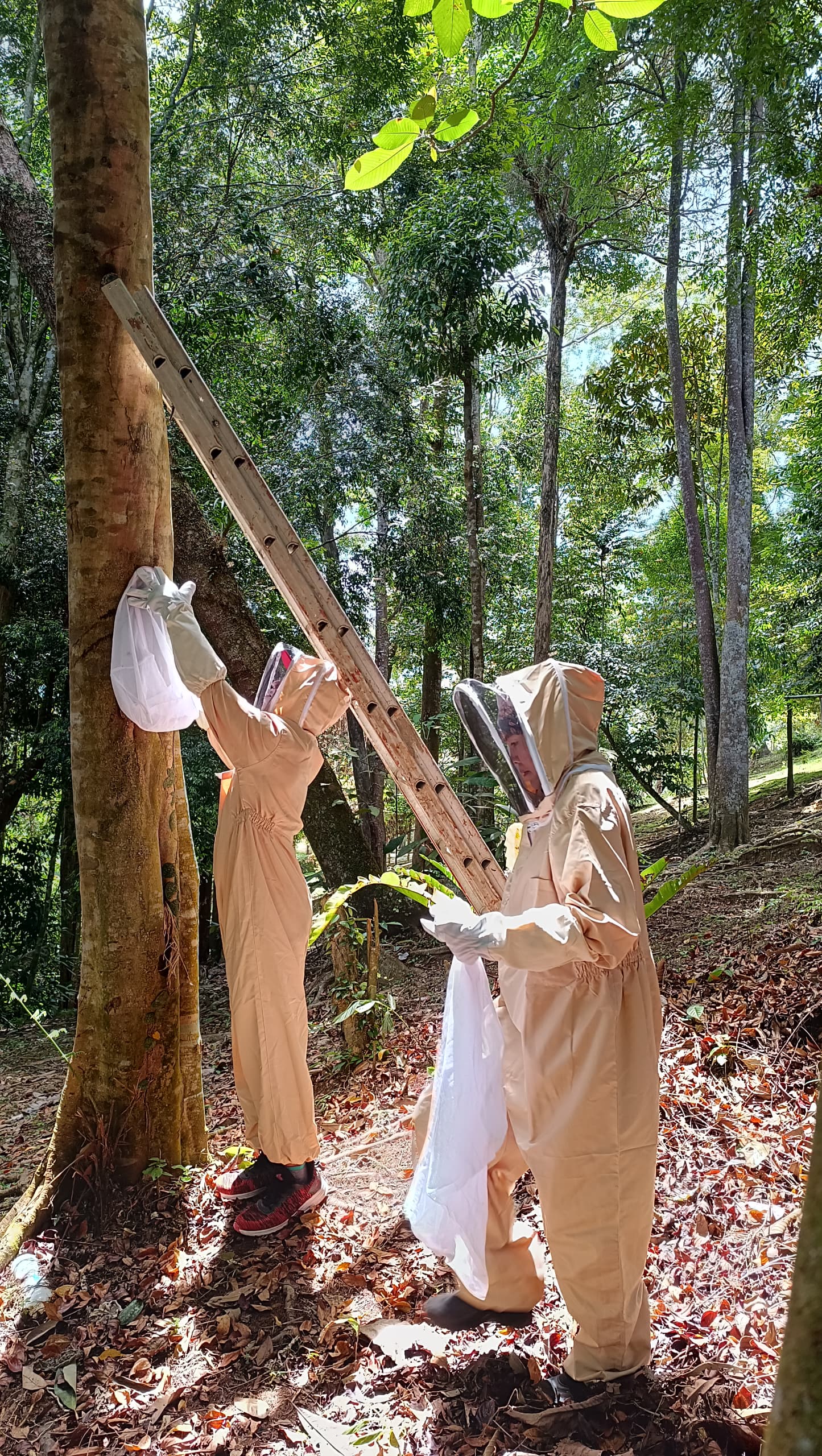
My favorite social insect is the bee, including honeybees. I learned a lot about bees and their importance to our ecosystem from my co-author (Dr. Yek Sze Huei). I had the opportunity to help her with her research on bees in the field, and this influenced my fondness for bees.
IS: What is the best moment/discovery in your research so far? What made it so memorable?
The influence of temperature on bees’ survival. As a plant scientist, I never expected that climate would affect insect survival.
IS: Do you teach or do outreach/science communication? How do you incorporate your research into these areas?
Sometimes, I am invited to give talks to the public and school children to share my research activities. I incorporate my research by sharing fun facts about the organisms I work with. This attracts their interest and makes them curious to learn more.
IS: What do you think are some of the important current questions in social insect research, and what is essential for future research?
Some important current questions in social insect research are related to the impact of environmental change. How are social insect populations responding to environmental changes like habitat loss, climate change, and pesticide exposure? What are the consequences of these changes for ecosystem services provided by social insects, such as pollination and pest control? For future research, it is essential to conduct long-term studies to track changes in social insect populations and communities over time and understand the long-term impacts of environmental change.
IS: Outside of science, what are your favorite activities, hobbies, or sports?
I love outdoor and adventurous activities like hiking, rafting, and camping. I also enjoy drawing and playing traditional musical instruments such as the bamboo flute and Sompoton.
IS: What is the last book you read? Would you recommend it? Why or why not?
It is not the last book I read, but this book influenced me a lot. The book’s title is “Exploration of Mount Kinabalu,” by John Whitehead a naturalist who came to North Borneo in 1884. He made the first collection of specimens in Borneo, and many new species were described based on his collection. His writing style inspires me to write about my fieldwork and encourages me to write anything that comes from my heart.
IS: How do you keep going when things get tough?
I will face it and process all the emotions involved. I will slowly recover and go through it.
IS: If you were to go live on an uninhabited island and could only bring three things, what would you bring? Why?
I will bring matches, a machete, and a survival skills book. Based on my experiences, it is always easier to start a life with matches and a machete. A survival skills book is a bonus; it will make it easier to adapt to a new life on the island. Once I adapt to life on the island, I will have much time to observe all the organisms and feed my curiosity about the ecosystem around me with research projects on everything, gradually increasing my quality of life on the uninhabited island.
IS: Who do you think has had the most considerable influence on your science career?
I have been influenced by books I read about previous scientific discoveries and was later influenced by my former Ph.D. supervisor and senior colleagues. My former Ph.D. supervisor stated that science is about something we are curious about, and we want to find the answer logically and be proven scientifically.
IS: What advice would you give to someone hoping to be a social insect researcher in the future?
I don’t have enough experience as a social insect scientist to give credibility to my advice to fellow young researchers. This is the first paper I have written about social insects, but I believe there is still a lot we can learn and discover from social insect behavior.
IS: Has learning from a mistake ever led you to success?
Yes, it happens all the time. It is difficult the first time, but trying a second time is much better because we already learn from our previous mistakes. So, don’t be afraid to make mistakes and never give up.
IS: What is your favorite place science has taken you?
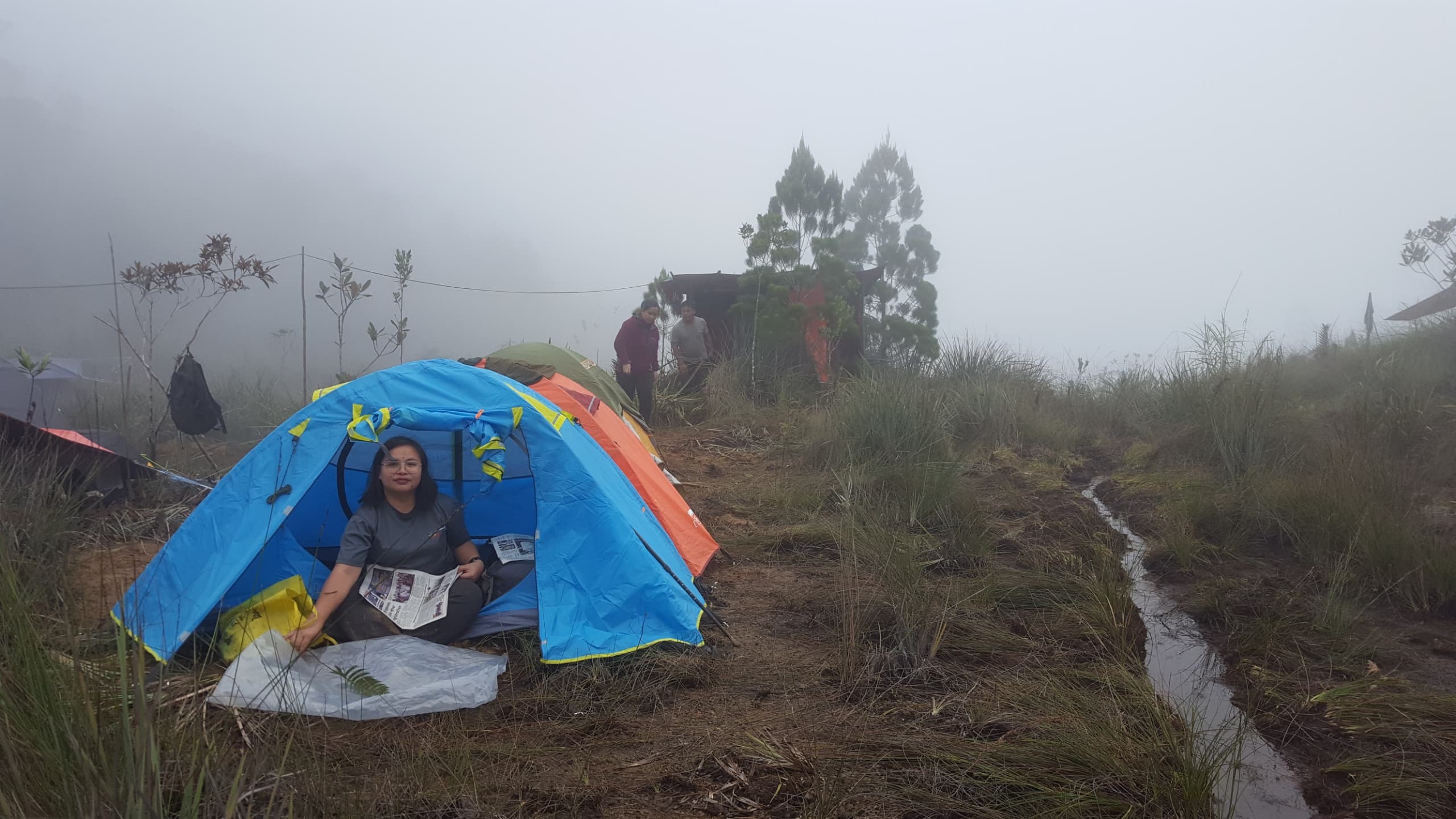
I am a field person, and my favorite places are in the forest, especially on tropical mountains, where I am stress-free, and I feed my passion for the things I am interested in. I love to be in the forest and get to know everything around me.
 insectessociaux