By Mariane Dias-Soares and Cléa S. F. Mariano
In this blog, Mariane Dias-Soares and Cléa Mariano explore the diverse organisms cohabiting ant nests in the Neotropics, from gastropods to myriapods. They explain how do these guests interact with ants, sharing resources and space within the nest environment. Discover more about these intriguing interactions in their latest work for Insectes Sociaux, here.
What attracts these other groups? What are these groups? Are there really gastropods inside ant nests? What are commensals? Do ants benefit from their presence? Why aren’t they expelled? These are some of the most frequent questions when the topic of conversation is our research and our article. Let’s now address each of these questions, the work done so far, and the next steps toward the discoveries that researching an ant nest provides us…
The ant nests provide a protected environment for the workers, the queen, and all of their immatures, as well as storing food and maintaining stable temperature and humidity. When studying these nests, the presence of other groups was observed, which, attracted by these resources, coexist with the ants. These groups may spend part of their life cycle inside the nests or even their entire existence.
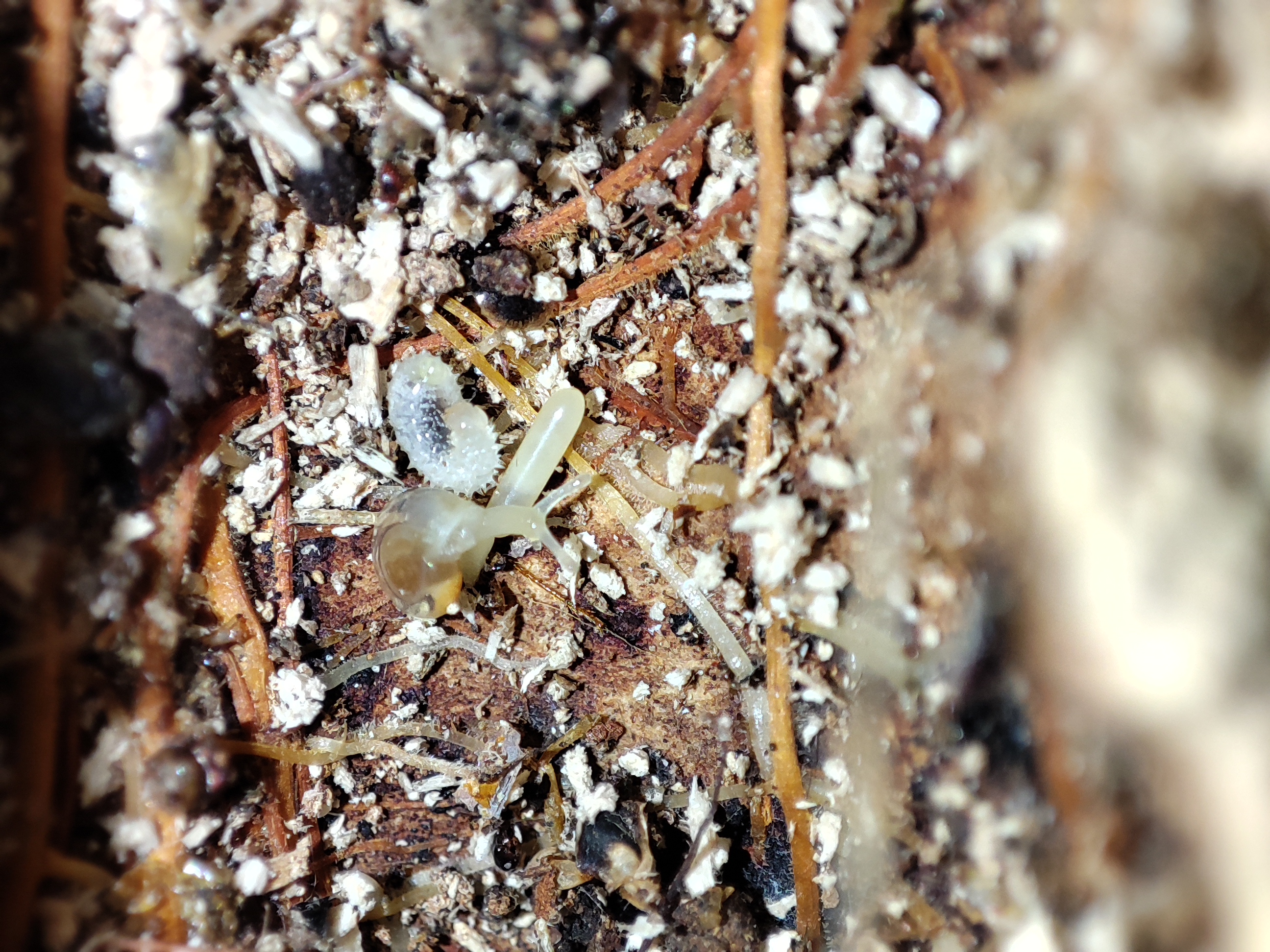
Our research aims to identify which groups are associated with different ant species in a Neotropical region. In my master’s studies, I focused on the species Neoponera verenae, an ant from the subfamily Ponerinae that nests in various substrates such as dry cocoa pods, soil, and decomposing logs. In our study, we found a variety of groups, including Myriapoda, Isopoda, Araneae, Lepidoptera, Pseudoscorpiones, Collembola, Acari, Coleoptera, Diptera, Dermaptera, and Gastropoda, among others. This highlights the great diversity of organisms that coexist within these ant nests.


Noticing the high number of groups within the ant nests sparked in us the need not only to identify which groups inhabit them but also to understand the interactions that occur in these environments. In our article, we studied the facultative commensalism of gastropods in N. verenae nests, presenting novel records and proposing hypotheses about this type of interaction.
There are different types of interactions between ants and gastropods. In the case of facultative commensalism, the gastropods coexist peacefully with the ants, benefiting from the protection provided by the colony, the available food, and the environmental stability, while also being found outside the nests. For the ants, however, we did not observe any apparent benefit or loss. Further research will delve deeper into these issues.

Through various observations and records made in the field and laboratory, we found the presence of several gastropod species inside the ant nests. Among the gastropods found, the family Achatinidae was the most abundant. These gastropods coexisted harmoniously with the workers and the young individuals in the nest (larvae, pupae, and eggs), moving freely without being disturbed by the ants. We also observed that the gastropods produced a foam, which generated a pacifying effect that prevented their expulsion from the nests. This is one of the strategies used by these organisms to inhabit ant nests.
Our study presents novel records of the interaction between ants and gastropods, leading us to explore various unresolved questions. One of these questions is the degree of interaction between immature ants and gastropods, as we found individuals in the chambers that contained the immatures. Additionally, we are investigating the chemical nature of the mucus involved in these interactions and identifying the new species of gastropods found in the nests, in collaboration with Dr. Sthefane D’ávila. Ongoing studies focus on analyzing the chemical strategies used, the morphological adaptations and behaviors exhibited, and the existence of mimicry within these nests. There is still much to be discovered in the vast world that is an ant nest…
 insectessociaux