By Ran Dai
In this blog, Ran Dai, an environmental consultant and researcher, shares fascinating observations of gypsy ants in the forests near Kunming, China. From the interactions between different ant species to the behaviors of Aphaenogaster colonies, Ran provides an intimate look into the lives of these insects. Discover more about the adaptive strategies and behaviors of these ants in her latest work for Insectes Sociaux, here.
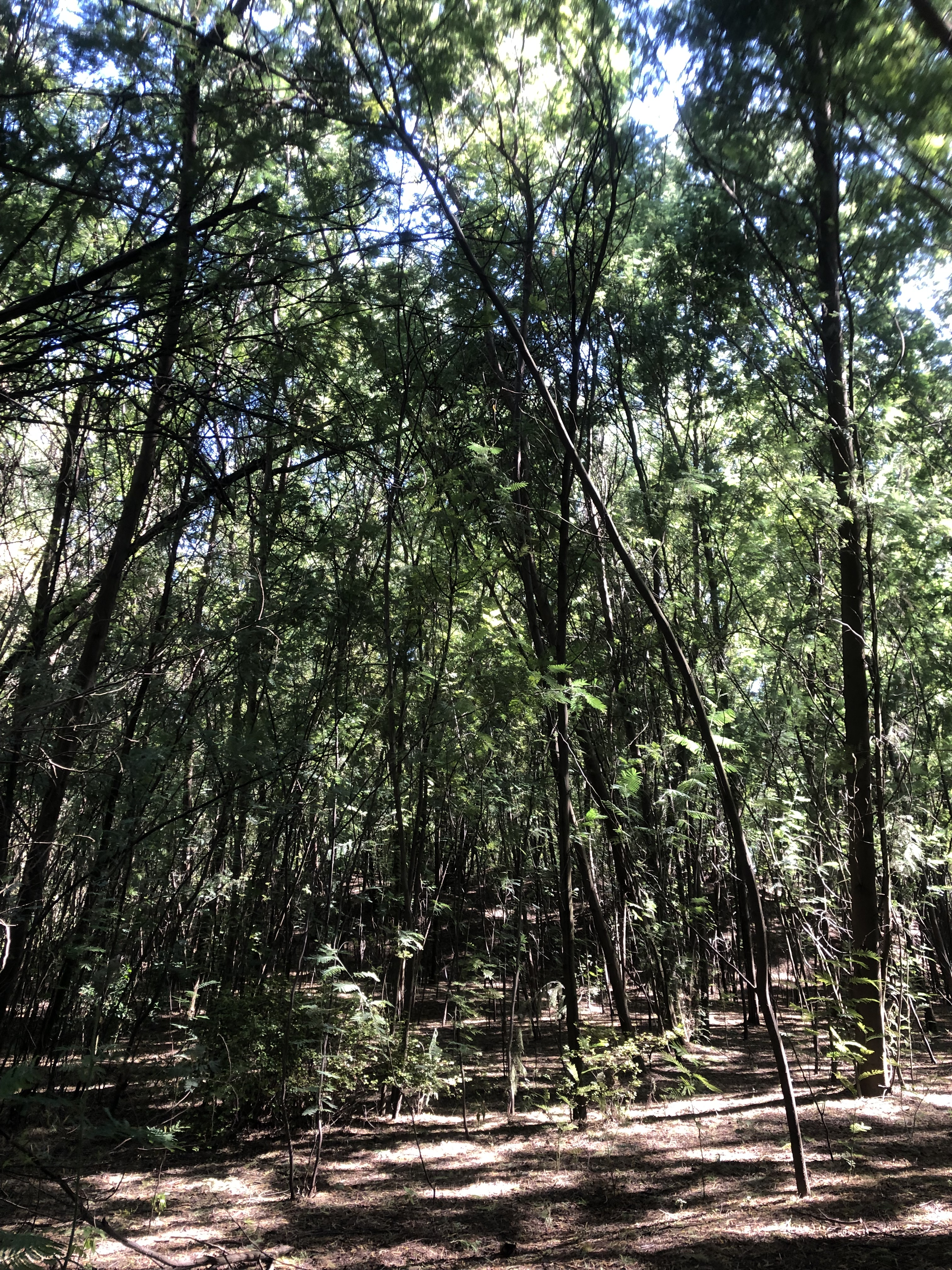
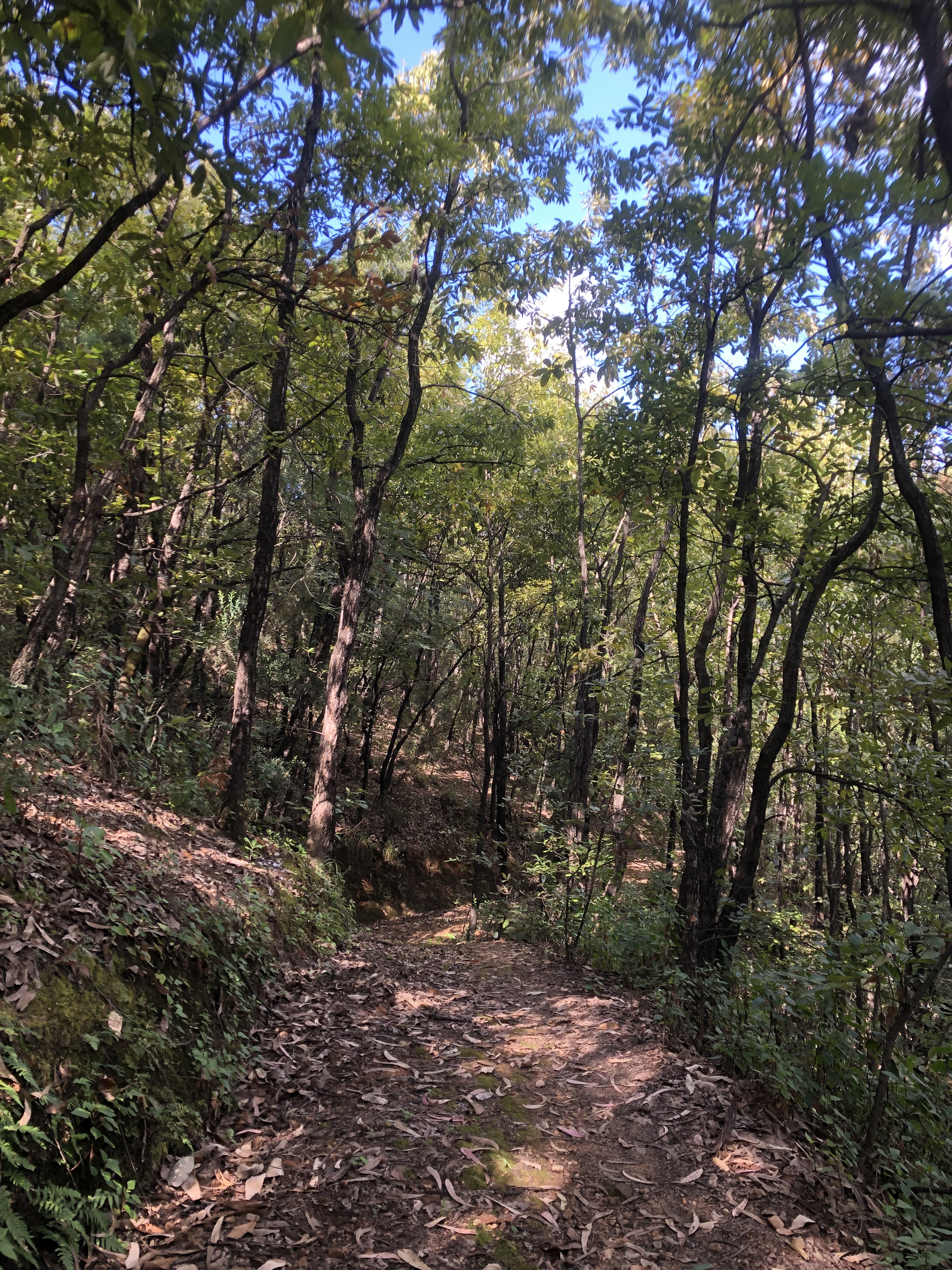
In early mornings, the forests on the outskirt of Kunming, mid-sized city surrounded by hills and small mountains in southwest China, are often soaked following an overnight shower. The ants were up, with only a few workers hauling their cold feet along the forest floor, trying to find food for the nests below. Their bodies are built for agile movements across a complicated world of forest understorey. The ant nests are sometimes big judged by the size of the mound, which might exceed two meters for the largest gypsy ants in the area, Aphaenogaster schurri. There are three Aphaenogaster species: A. schurri, A. japonica (slightly smaller than, and coexist with A. schurri), and A. famelica. The latter is also the smallest among all, building more closely located nests down an artificial plantation of Acacia dealbata, introduced plant that has become locally successful possibly due to its symbiotic relationship with A. famelica, which consumes the elaiosome and helps disperse the seeds.


The sun came in, and the rest of the forest woke up. The ants are now found in great numbers, actively pulling their prey – a dead caterpillar, a fat earthworm, some seeds, etc. – back into the nests. This was done through a small nest opening located on the soil surface. During the rainy days, a piece of curled leaf was sometimes found covering the opening hole, like an umbrella, and absent when the day was clear. The ants frequently exploited the environment near the nest openings, making it easy to observe their behaviors there. Later on, a question occurred to me, after seeing several Aphaenogaster nest openings with busy workers foraging nearby, that what would happen if I put foods between two nest openings?

After some observations on intra-specific and neighborhood competition in the gypsy ants, I found the ant workers simply increased movement speeds foraging under the pressure of competition. I put a Petri-dish to cover one of the ant nest openings in the neighborhood, and calculated the time spent on food discovery, removal and retrieval. I also assigned two different food items: one light and one heavy, in a food patch put at various distances. When an ant nest opening was blocked, ants from the rival nest opening appeared sluggish with an increased time spent on food removal and retrieval. Now that the neighbors are being suppressed by some strange human being using glassware to do stuff, what’s the hurry? There was also no apparent selectivity shown over the light/heavy foods. Therefore, to “grab and run” was the rule in the neighborhood relationships.

Life wasn’t all about work, though. Once, two Aphaenogaster workers found their way on the writing board I was holding. That must feel strange, that the world around suddenly became plain and white, which somehow became an opportunity for temporary escapement from the busy work scene down there. What the ants did was to sit down and groom self, rubbing head and neck with their long legs. They must have enjoyed the moment. When bathed under the afternoon sunlight, their heads were up with mandibles wide open. I’ve never seen a happy ant so closely.

Another time, I was honored to meet the queen which accompanied a group of workers pulling a tuna bait (used for the field experiment) back to their nest. The female had a distinct body structure with strong shoulders once boring a pair of wings bringing her here to establish the colony. She waggled along the team, occasionally making an eager grab at the food being carried, like someone who couldn’t wait for the dinner to begin a few hours later. Her colony was yet small, however was located near a much larger neighboring colony. Though the gypsy ants here seldom show real aggressions to each other, indirect competition through reducing common food sources can be lethal to the subdominant colonies. Life is challenging also because of other ant species living in the area, such as the big-headed ants (Pheidole spp.), which came in large numbers and give painful bites, and the arrow ants (Ectomomyrmex astutus), which steal without notice. In some rare cases, the yellow-footed hornet (Vespa velutina) took baits into the sky, and no one could do anything about it…
 insectessociaux