Andrea Ferrari is a PhD student (soon to be a PhD!) at the University of Milan. He studies the impact of urbanisation on wild bees’ morphology and physiology. His latest work in Insectes Sociaux can be found here.
IS: Who are you, and what do you do?
I’m currently a third-year PhD student at the Department of Environmental Science and Policy at the University of Milan (Italy). Our group “INSEvEc” focuses on the evolution and ecology of insects, especially Hymenoptera. My main interest is wild bees and in the last three years I have studied how anthropisation, especially urbanisation, affects wild bees from different biological aspects. For example, how certain body structures look like in urban or natural areas? (morphology) or how certain molecular processes are shaped by urbanisation? (physiology).
IS: How did you develop an interest in your research?
To be completely honest, I’m not the kind of person who has a lifelong relationship with insects. I should say that my passion for wild bees (for those not familiar with the term, basically all the bees except the honeybee Apis mellifera) broke out during my Master’s thesis. At that time, I was not working specifically on wild bees, but rather on plant-pollinator networks. Somehow, I started to be fascinated by them. Inspired by my supervisor, I started going out at weekends just to see what they were doing. I think it was day after day of observation that I realised I wanted to do research on these insects after my degree, and try to discover something new and useful.
IS: What is your favorite social insect, and why?
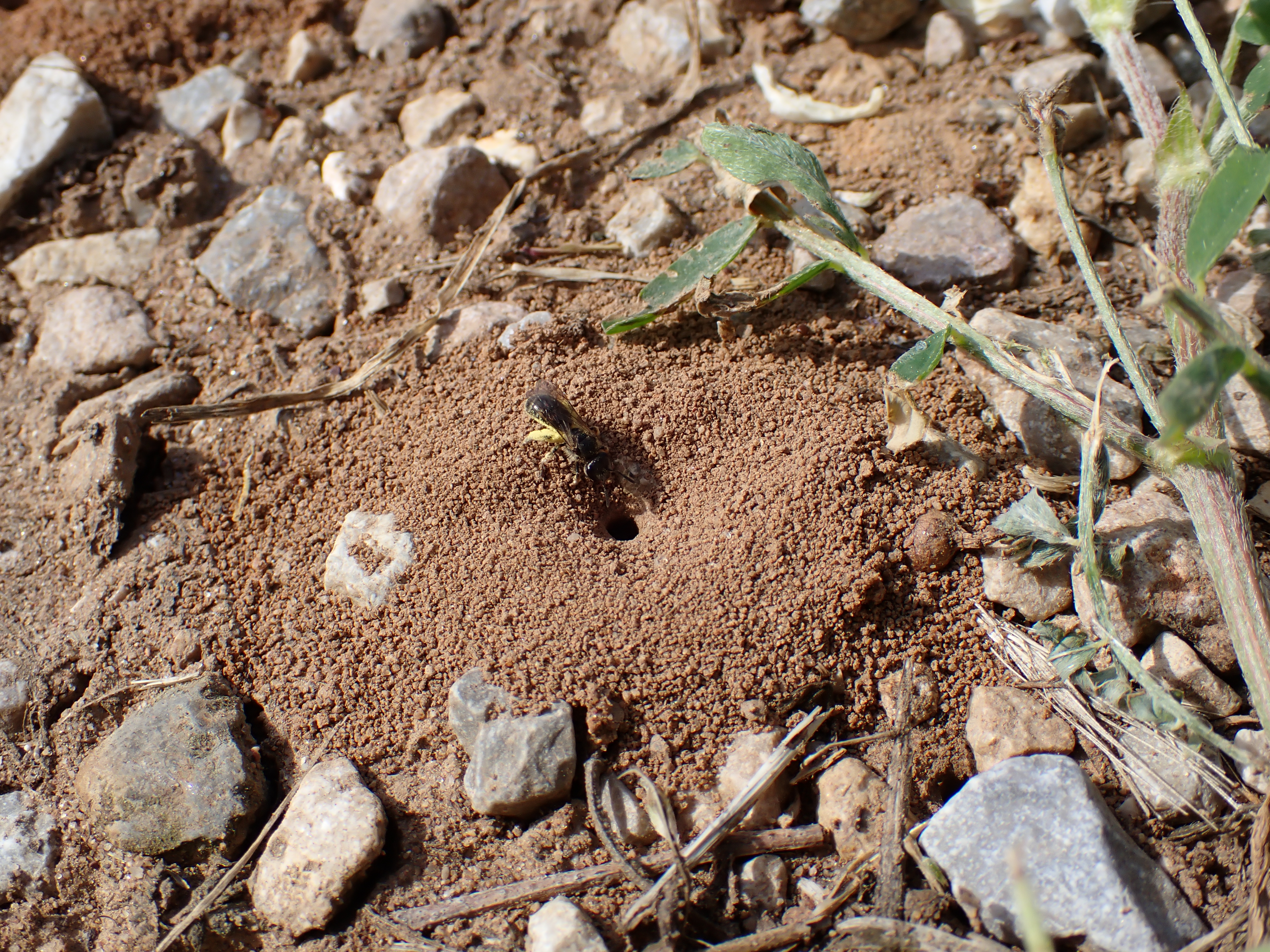
Definitely wild bees! I guess if I had to choose a favourite species it would probably be Halictus scabiosae, most of my PhD research is based on this species. Nevertheless, I really love these insects, but as with everything, saying why you love something is a real challenge! I guess there is no rational thought behind our tastes, sometimes you just like something for the way it is. However, now that I think about it, my passion for nature in general has probably helped. I really enjoy being outdoors, walking along a mountain trail or a country road in my spare time. So why not take the opportunity to study wild bees? They are so complex, come in so many different shapes and colours, I think I was captivated by them! I think you just have to go for it, if you love something then just go for it.
IS: What is the best moment/discovery in your research so far?
What made it so memorable? I am still “academically young”, so I have not had the opportunity to discover anything big. I would rather say that I really enjoy the feeling of doing something, even the smallest thing, that no one has ever thought of doing. Just to add that little brick to the wall of general knowledge, that brick with my name on it. Having said that, we have had the opportunity to discover some new morpho-physiological ways in which wild bees respond to urbanisation, so I guess that is what I am proud of at the moment.

IS: Do you teach or do outreach/science communication? How do you incorporate your research into these areas?
As I said, I am still young to do proper teaching. However, I always try to tell people, especially students or young people, something about what I do or what may not be known to the general public, but I think deserves attention. I really stress the fact that wild bees, and wild insects in general, are among the animals most exposed to environmental change. I always try to transfer my energy and passion to my audience. I think that energy and spontaneity when talking about your research topic can really inspire people. It also helps that everyone knows bees (mostly honeybees), so I find it easy to talk about my research even outside the academic world.
IS: What do you think are some of the important current questions in social insect research, and what is essential for future research?
This is a question that probably goes beyond my current understanding of all the things that go on with social insects! From what I have seen in the last few years, I really think that most people automatically associate “social insects” with honeybees or ants. This is a shame, because I think there is still room for improvement in our understanding of how sociality has evolved in insects. How environmental changes are threatening social insects, and also discover new social insects! What I can say is that collaboration is going to be the keyword for future research. The sooner we understand that we are all on the same planet, the sooner we will start working together, breaking down gender/ethnic or whatever barriers you can think of. I really think that in the future research there is no space for “I”, but only for “We”. Social insect research, but I think all types of research, should really make an effort to reach as many people as possible, to communicate the findings, and to provide the next generations with new and useful information to make the world a better place.
IS: Outside of science, what are your favorite activities, hobbies, or sports?
Well, what I like most is having fun with my friends! Either going for a walk on a lazy weekend or partying at some cool places! I have been lucky enough to meet some really great people who make my life easier and happier. I also enjoy outdoor activities, be it hiking or biking, and I also really enjoy sports; I am a football fan and FC Inter is my favourite team. I also enjoy reading and playing chess.
IS: What is the last book you read? Would you recommend it? Why or why not?
Well, for non-Italian readers this might be difficult to understand, but I read the latest comic by Zerocalcare, an author who recounts episodes from his life and his reflections through drawings, super recommended! I am currently reading “The Bee Sting” by Paul Murray, which has nothing to do with bees, but my parents bought it when they went to Edinburgh, so that is what I am reading now.
IS: How do you keep going when things get tough?
I recently had an unpleasant episode that prevented me from going abroad for a field study. Life is made up of choices, sometimes they lead to positive outcomes, sometimes not. I tell myself that as long as I try to be the best person I can be, I should have no regrets. I think it is important to realise that things are not always going to go our way, so when life gives you lemons, make lemonade! Try to make the best out of everything, and in the end, hard work will pay off!
IS: If you were to go live on an uninhabited island and could only bring three things, what would you bring? Why?
I hate these questions; I can never come up with anything that makes sense. Off the top of my head, I would say a Swiss Army knife as a tool, a camera to capture some moments and a satellite phone to call someone and get me home when I get bored!
IS: Who do you think has had the most considerable influence on your science career?
Certainly my current PhD supervisor Carlo. He is incredibly inspiring and always has a good balance between giving you instructions and letting you think with your head. I also have to mention Nicola, Paolo, and Andrea from my Master’s internship, who lit the spark in me to do research on wild bees.
IS: What advice would you give to someone hoping to be a social insect researcher in the future?
Just follow your dreams for as long as you can. Find an area of research that suits you best and be prepared to work really hard. Like I said, I really believe that hard work will pay off. The harder you work, the more grateful you will be in the end. And be passionate about what you are doing.
IS: Has learning from a mistake ever led you to success?
Can you even learn without making mistakes? I think science is about trying and failing, over and over again, until you get what you want. As humans, we make mistakes, and only those that do not work do not make mistakes. So yes, I always try to learn from my mistakes and try not to make the same mistake twice (but I still need to work on that).
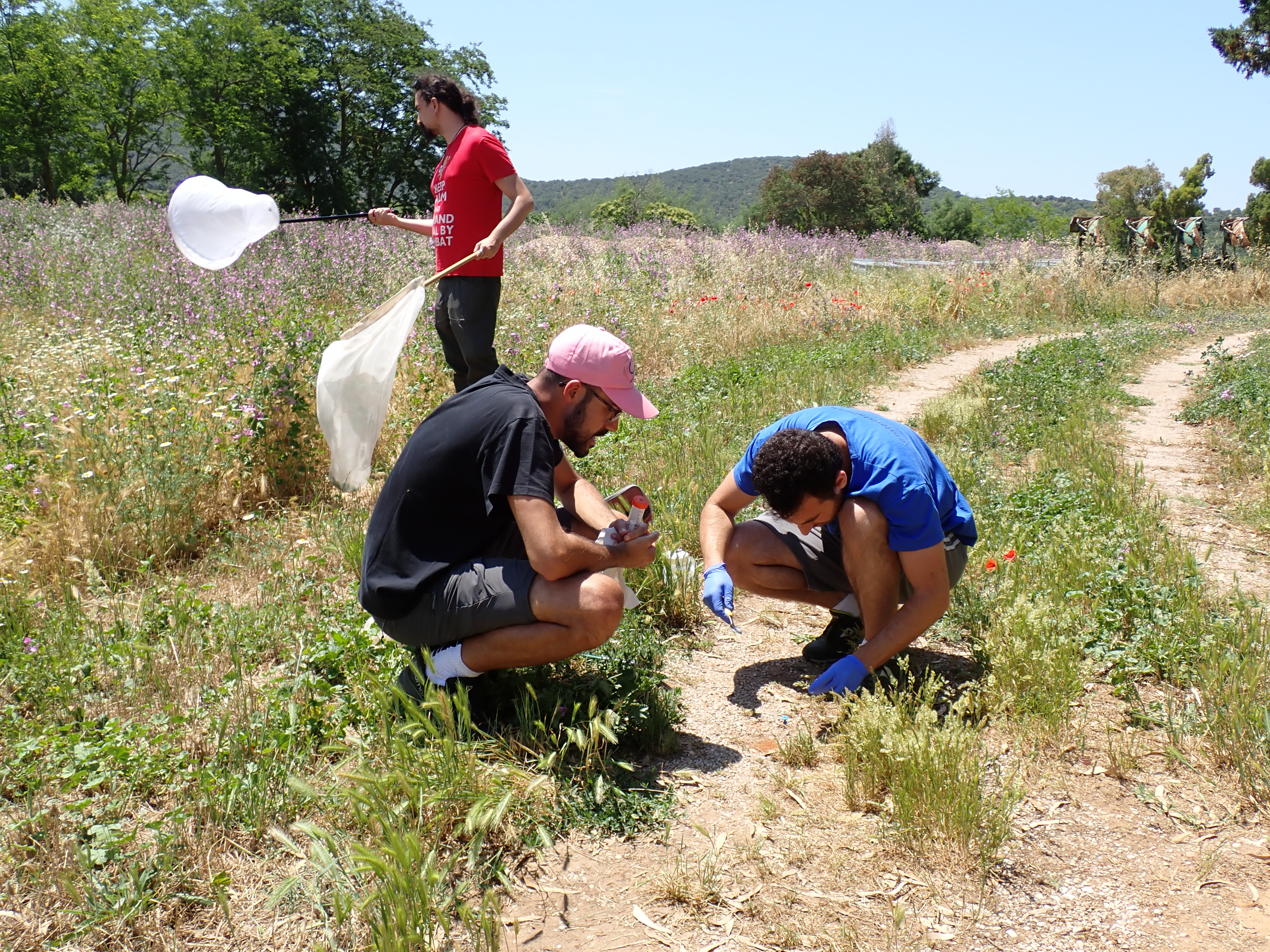
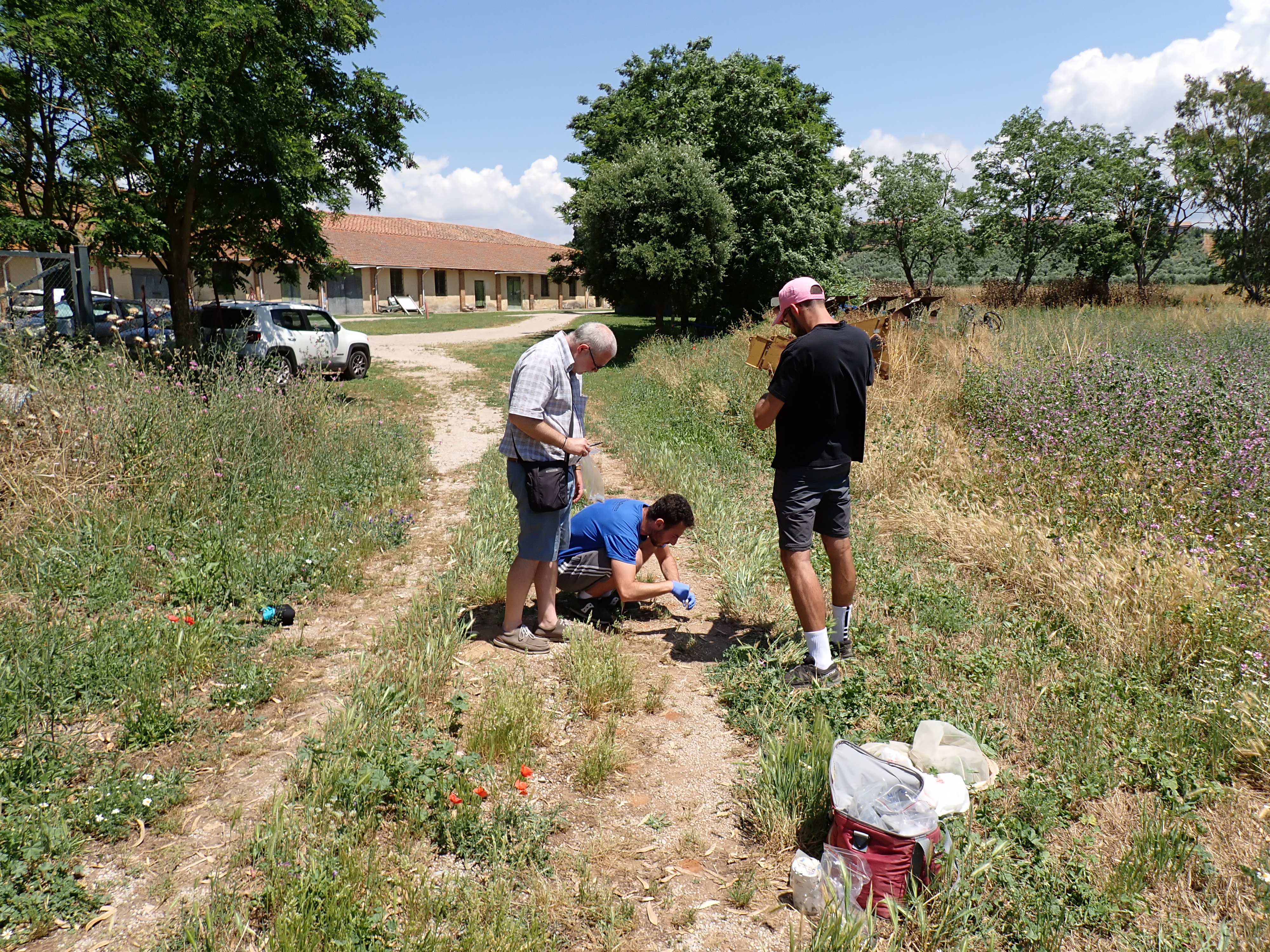
IS: What is your favorite place science has taken you? I have not travelled that much so far, I have basically been around my city (Milan) and now I am doing my sampling activities in another big city in Northern Italy (Turin). I enjoyed working in the Parco della Maremma: beautiful places, bees and great food! If I may speak metaphorically, science has taken me to a place where I can really decide what I want to do and follow my dreams. It has brought me to a place where I have had (and hopefully will continue to have) the chance to meet extraordinary people who have really opened my mind.
 insectessociaux